Mole cricket
Little known to the public, the mole cricket is a burrowing insect that lives and feeds mainly underground. Its sturdy body and shovel-shaped front legs make it an excellent digger, able to open tunnels in the first few centimetres of soil. In Quebec it remains rare and localised, found above all in sandy, damp or freshly amended ground: vegetable gardens, flower beds, greenhouses and newly laid lawns. Where a population settles in, young plants wilt for no apparent reason, seedlings disappear and lines of raised earth betray the night’s work. This is a pest of horticulture rather than of the home, but the damage in a garden can be significant if nothing is done.
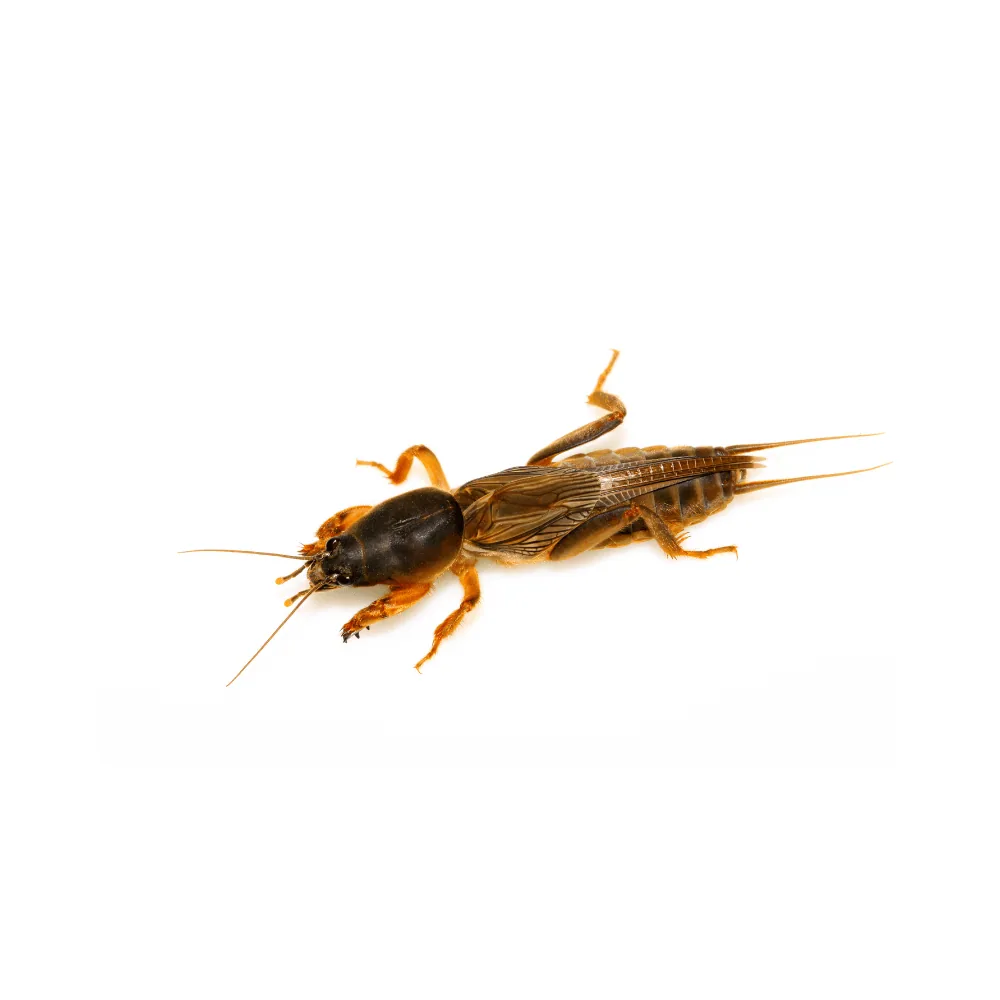
Appearance
- Elongated, sturdy body 2 to 5 cm long depending on the species, brown to reddish-brown, covered in fine velvety down
- Front legs short, broad and toothed, shaped like spades, much like a mole’s
- Head with short antennae and well-developed chewing mouthparts
- A silhouette somewhere between a cricket and a crayfish, disconcerting at first sight
Behaviour
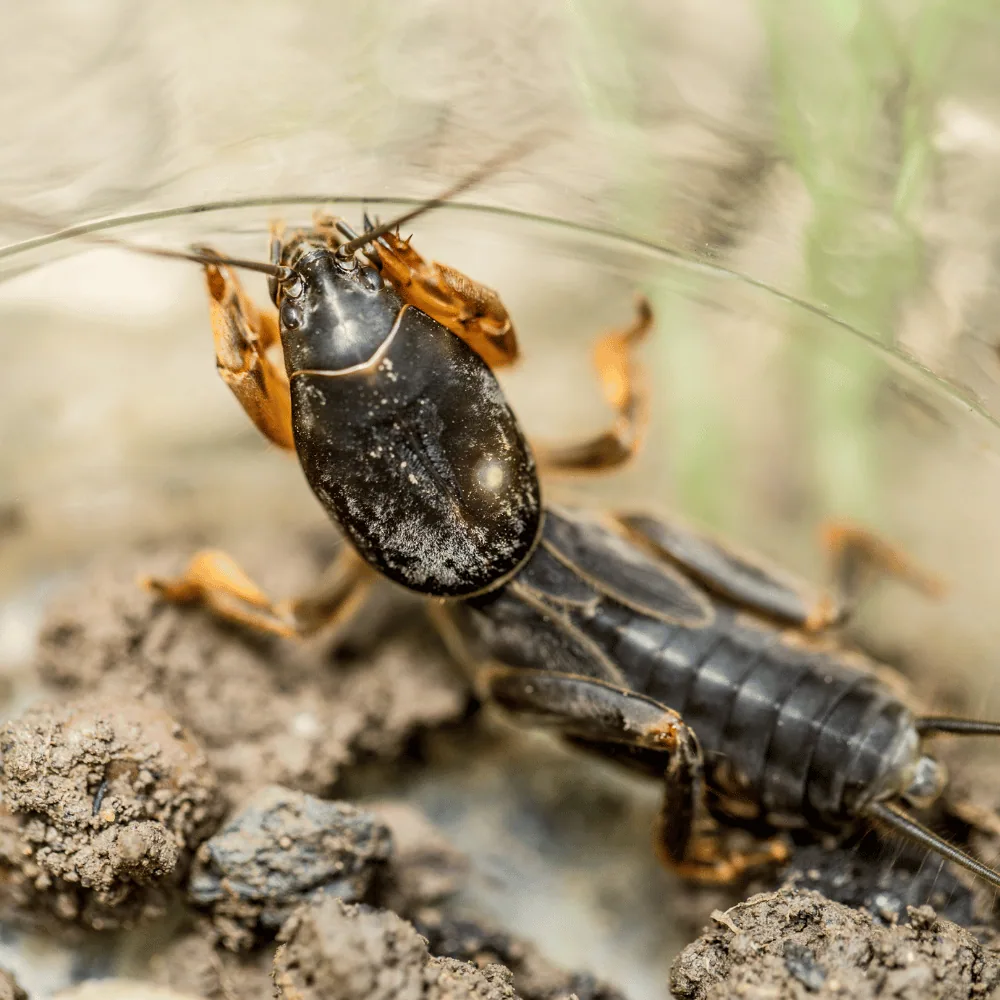
- Lives almost entirely underground, digging tunnels in the first few centimetres of soil
- Active mainly at night, particularly in mild, damp weather
- The male chirps at the mouth of his tunnel in spring to attract females
- Stocky as it looks, it can fly on warm nights and move from one property to another
- Prefers loose, sandy, damp soil: vegetable gardens, greenhouses, banks and irrigated lawns
Life cycle
- The female builds an underground chamber where she lays several dozen, sometimes a few hundred, eggs
- The young look like miniature adults and moult several times before maturity
- The full cycle can run one to two years depending on the climate
- Overwinters deeper in the soil, below the frost
Diet
- Omnivorous: roots, tubers and young seedlings, but also worms and soil-dwelling insect larvae
- Cuts roots and stems at the collar as it tunnels, even without eating them
- Readily attacks root vegetables such as carrots, potatoes and beets
- Also eats chafer grubs, slugs and wireworms, which makes it a useful ally at times
UNDERSTAND, PREVENT, ACT
In Quebec the mole cricket is not a household pest: it poses no risk to people or to buildings. The real issue is horticultural. The common mistakes are to blame the damage on rodents or grubs, to spread broad-spectrum insecticides — of little use and hard on soil life — or to wait until you actually see the insect before acting. The right approach starts with reading the signs (shallow tunnels, seedlings cut off at the base), then turns to cultural measures: working and turning the soil at the end of the season to destroy the overwintering tunnels; deep, spaced watering rather than the frequent light watering that draws activity to the surface; mechanical traps (sunken cups set flush with the soil, baited with damp plant matter); physical barriers along the rows (fine mesh buried 10 to 15 cm deep); and ground netting while seedlings come up. In a city or community garden, coordinating with neighbours avoids simply pushing the problem from one plot to the next.
Where pressure persists in one spot, a professional inspection can confirm the pest, locate the active areas (tunnels, egg chambers) and adjust the measures — barriers, watering changes, how compost is added. Most situations are handled without chemicals, through good soil practice and protection of young plants.
Related species
Request a quote
Need help? We’re here!
A certified technician assesses your situation and proposes a treatment plan suited to it.