Silverfish
The silverfish (Lepisma saccharinum) is a small, wingless insect covered in shiny silver-grey scales that darts for cover the moment you switch on a light. In Quebec homes it turns up mostly in bathrooms, basements and laundry rooms — anywhere the air stays damp. It doesn't bite and carries no disease, but it damages paper, books and fabrics, and finding it regularly almost always points to a moisture problem.
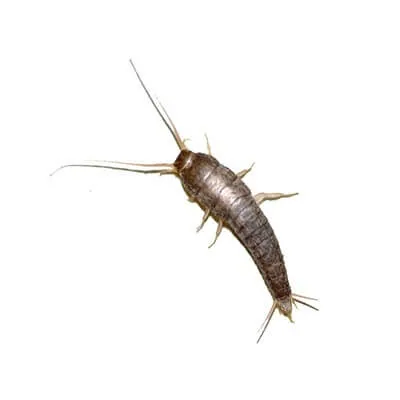
Appearance
- Carrot-shaped, flattened, wingless body
- About 1 to 1.5 cm (½ in) long as an adult, not counting antennae and tail filaments
- Covered in silver-grey scales with a metallic sheen
- Two long, thin antennae at the front and three long bristles at the rear
- Young silverfish look like small, paler adults
Behaviour
- Nocturnal: avoids light and slips into a crack as soon as a light comes on
- Runs fast with a wiggling motion that looks like a fish swimming
- Seeks out damp spots: bathrooms, basements, laundry rooms, under sinks
- Can't climb smooth surfaces, so it often gets trapped in the tub or sink
- Does not bite or sting and carries no disease
Life cycle
- Thrives in humid air and declines when relative humidity stays below 50%
- Travels along pipes and service chases from the basement to upper floors
- Hides behind baseboards, door and window trim, in bookcases and cardboard boxes
- Females lay eggs in damp cracks and crevices
- Can live several years and keeps moulting throughout its life
Diet
- Starch and cellulose: paper, book glue, wallpaper paste, cardboard
- Natural or starched fabrics: cotton, linen, rayon
- Dry foods: flour, cereal, oats
- Mould, crumbs, hair and debris found in household dust
- Can go months without food, but not without moisture
How to identify a silverfish
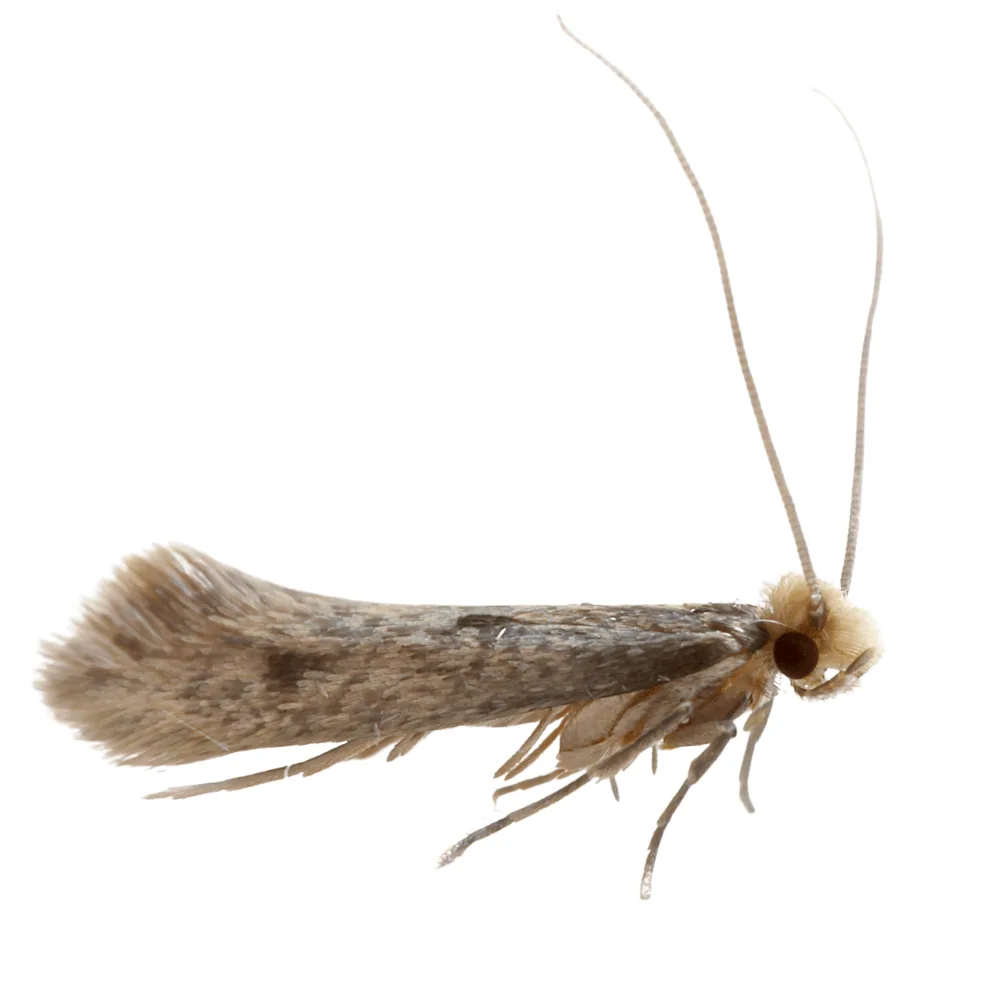
Silverfish are among the oldest insects on Earth. Three features give them away: a tapered, carrot-shaped body that is wider at the front, silver-grey scales that shimmer under light, and three long bristles at the tail end. Adults are about 1 to 1.5 cm long. They have no wings and don't jump — they run, very fast, with a side-to-side wiggle.
A few other damp-loving pests are easy to mix up with them:
- the firebrat (Thermobia domestica), a close relative with a mottled brownish body, prefers heat instead and lives near the furnace, dryer or water heater;
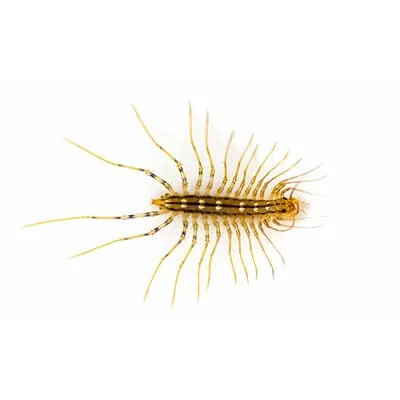
- the house centipede is much bigger and has 15 pairs of long legs;
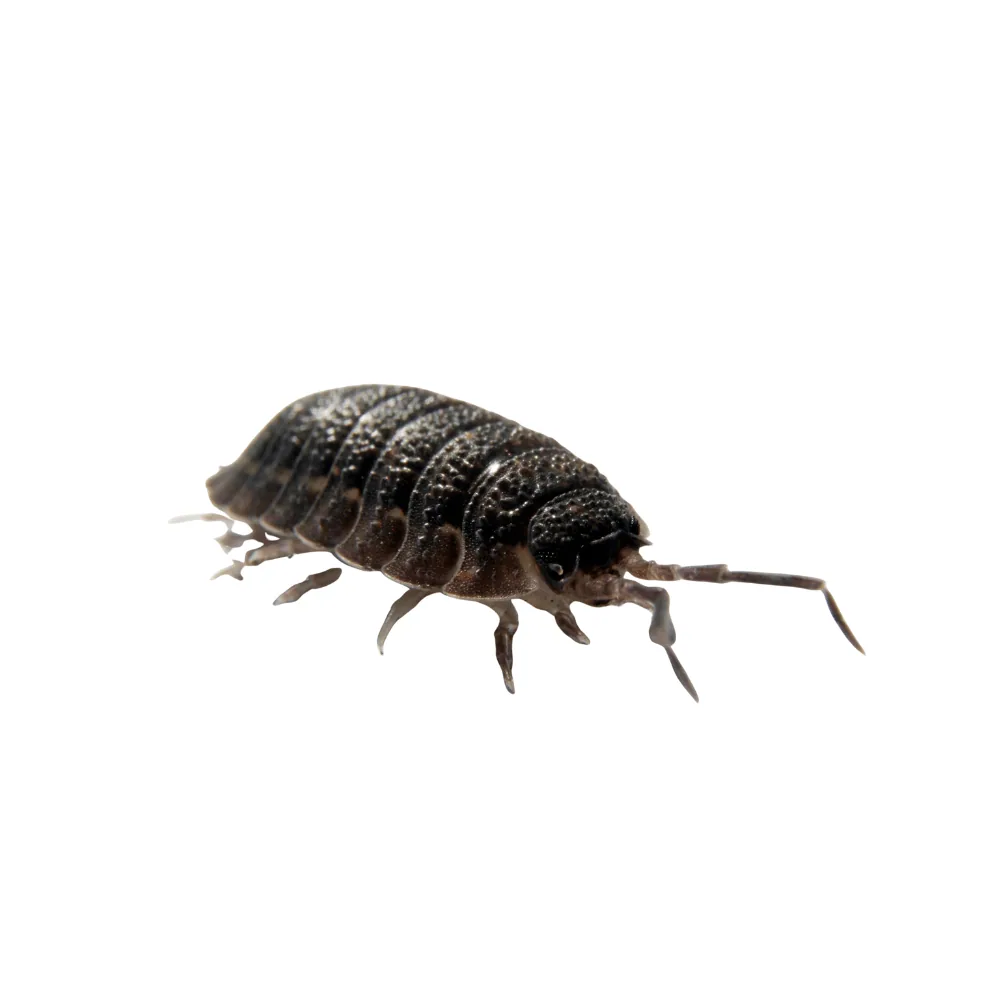
- the woodlouse is grey, oval, domed and slow;
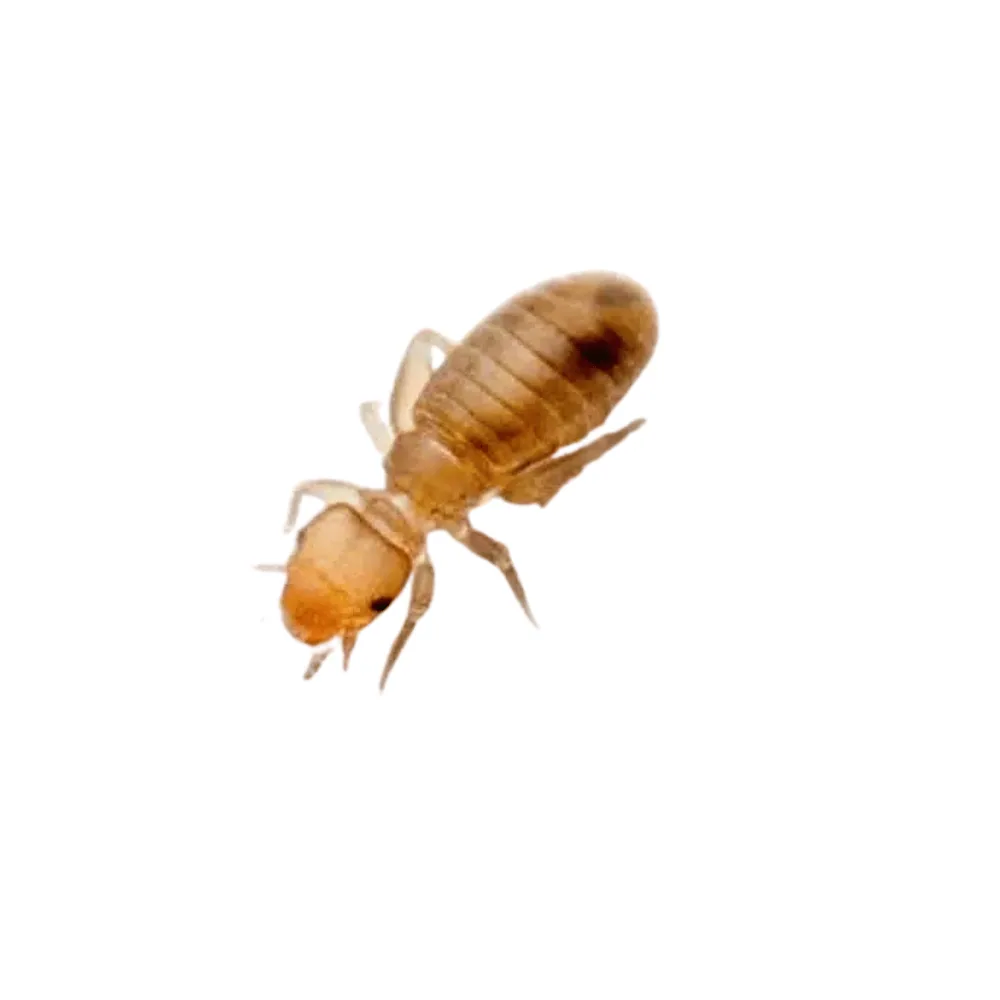
- the booklouse is only 1 or 2 mm long and has no scales.
Where silverfish hide in Quebec homes
Silverfish need humid air. They thrive where relative humidity stays high and become scarce once it is kept below 50%. In a typical Quebec home, the hot spots are the bathroom (under the tub, behind the toilet, under the vanity), a poorly ventilated basement, the laundry room, the cabinet under the kitchen sink and storage areas full of cardboard boxes sitting on the concrete floor.
From there they move through the walls along plumbing lines, which is why you may also see them upstairs or, in apartment buildings, why they spread from one unit to the next. They are present year-round, with more visible activity during humid summer weather.
A silverfish in the bathtub didn't come up the drain: it fell in while looking for moisture and can't climb back up the smooth sides.
Damage and real risks
Silverfish are a nuisance pest, not a health hazard. They don't bite or sting, don't spread disease and don't damage the structure of the house. The damage they do is slow and material, but it can hit things you can't replace:
- irregular holes and scraped surfaces on books, documents, photos and labels;
- wallpaper grazed or lifting where the paste is;
- yellowish stains on cotton or linen stored for a long time;
- dry food contaminated in a damp pantry.
Other clues include tiny black droppings that look like ground pepper, loose silvery scales and translucent shed skins in drawers or on shelves.
How to get rid of silverfish for good
Spraying the ones you see doesn't solve anything: most of the population lives out of sight in cracks and wall voids. What works is removing the conditions that keep them alive.
- Lower the humidity. Put a hygrometer in the basement and aim for relative humidity below 50%. Run a dehumidifier, use the bathroom fan during and after showers, fix leaks and insulate sweating cold-water pipes.
- Take away shelter and food. Swap cardboard boxes for sealed plastic bins, keep valuable books, photos and papers out of the basement, store flour and cereal in airtight containers and vacuum along baseboards and shelves.
- Close up hiding places. Caulk gaps along baseboards, door and window trim, and around pipe penetrations.
- Monitor. Sticky traps set along walls in dark corners show where the population is concentrated and whether your efforts are working.
Silverfish share their habitat with other moisture pests. Our article on eliminating moisture bugs explains how to find and fix the water sources that attract all of them. Keep in mind, too, that a silverfish population often feeds the house centipedes you may be seeing.
WHEN TO CALL EXTERMINATEK
A few silverfish a year is nothing to worry about. It's worth calling a professional when you keep seeing them even after drying out the basement, when books, documents or stored papers start showing damage, or when they appear in several rooms or several units of the same building.
During the visit, an Exterminatek technician inspects the damp areas, locates where the population is hiding in cracks and wall voids, applies a targeted treatment there if needed and tells you what to correct so the problem doesn't come back. See our pest control services or contact us to talk to an expert.
Request a quote
Need help? We’re here!
A certified technician assesses your situation and proposes a treatment plan suited to it.