House centipede
The house centipede (Scutigera coleoptrata) startles people with its speed and its long, fringe-like legs. Despite its looks, it is practically harmless to humans: it's a night-time hunter that feeds on spiders, silverfish, cockroaches and other insects. Seeing house centipedes regularly in a basement or bathroom does, however, point to excess moisture — and often to other pests nearby.
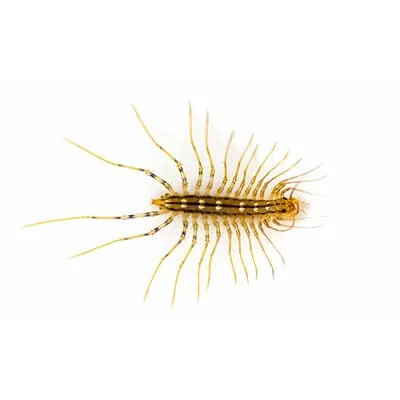
Appearance
- Body 2.5 to 3.5 cm long, but it looks much bigger with its legs and antennae
- 15 pairs of long legs as an adult; the last pair looks like a second set of antennae
- Beige to greyish-yellow, with three dark stripes running down the back
- Legs banded with dark rings, and very long antennae
- Hatchlings have only four pairs of legs and gain more with each moult
Behaviour
- Extremely fast, which makes it alarming despite being harmless
- Active mainly at night; it avoids light and vanishes when a lamp comes on
- Hides in cracks, under objects and in dark, damp places
- Can shed a leg to escape a predator
- Bites only if handled; the rare bite feels like a mild bee sting
Life cycle
- In Quebec it spends the winter inside heated buildings
- Seeks out moisture: basements, bathrooms, laundry rooms, crawl spaces
- Females lay their eggs in damp cracks or in soil
- Can live several years, a long lifespan for a household arthropod
- A steady presence can reveal a moisture problem or other insects
Diet
- Predator of spiders, silverfish, cockroaches, ants and flies
- Will also catch bed bugs and earwigs
- Subdues prey with venom delivered through modified front legs (forcipules)
- Actively hunts at night rather than waiting in a web
Identifying the house centipede
The house centipede isn't an insect but a myriapod, a relative of other centipedes. Its body is 2.5 to 3.5 cm long, but its 15 pairs of very long legs and its antennae make it look several times bigger. The last pair of legs is longer than the rest and looks like a second set of antennae, so it's hard to tell which end is the front. The body is beige to greyish-yellow with three dark stripes on the back, and the legs are banded with dark rings.
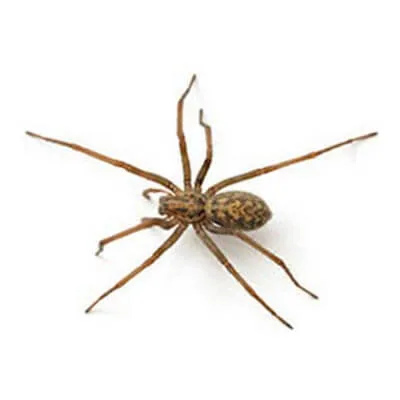
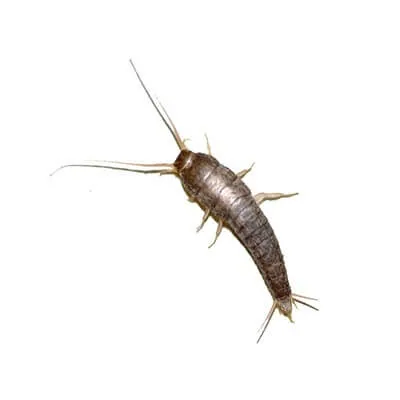
It's often called a "thousand-legger" or simply a "centipede," but it's quite different from a millipede, which has a rounded, dark brown or black body, two pairs of short legs per segment, moves slowly, curls up when disturbed and feeds on decaying plant matter. The house centipede is flat, fast and carnivorous. It can also be mistaken for a spider or a silverfish, but neither has anywhere near as many legs.
Why it's in your house
Native to the Mediterranean region, the house centipede spread across North America by moving into our buildings. In Quebec it overwinters indoors, in the warm, damp parts of the house. Two things keep it there:
- moisture: a poorly ventilated basement, crawl space, bathroom, laundry room, floor drain or foundation cracks where water seeps in;
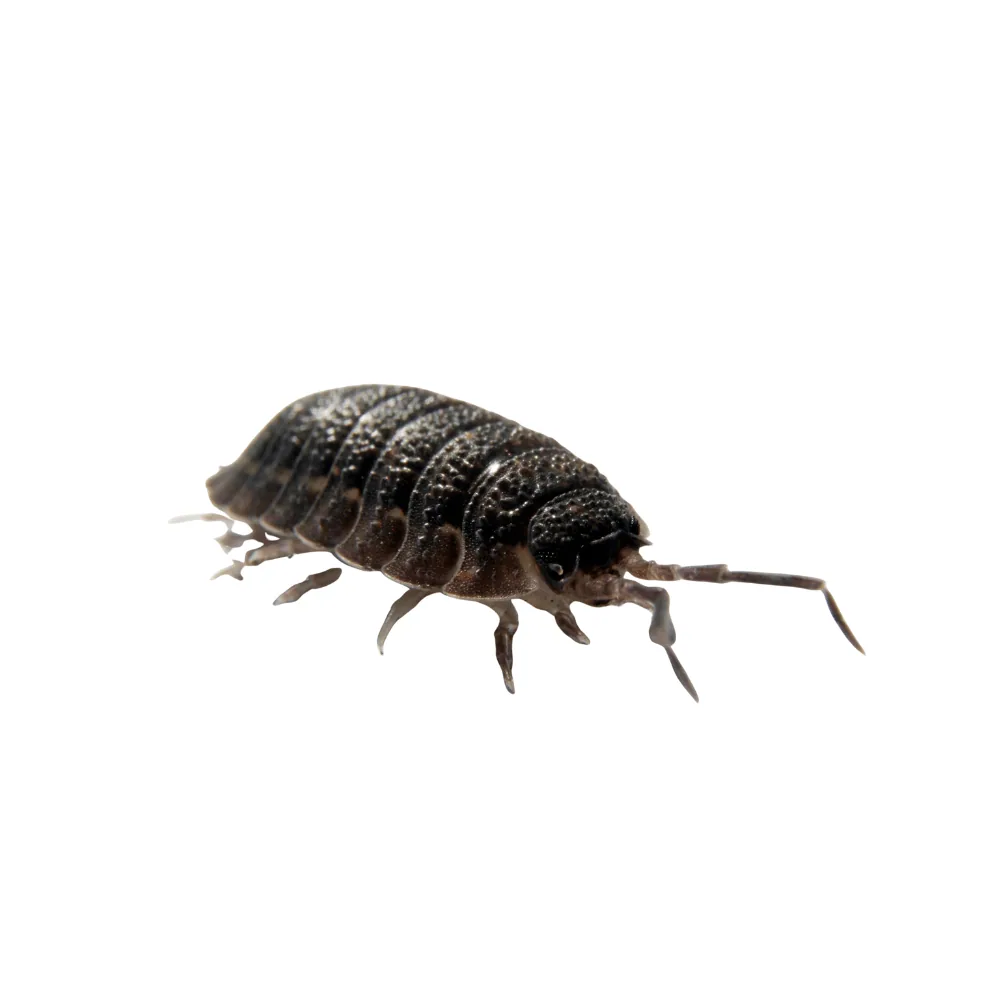
- food: it only settles in where it finds prey such as spiders, silverfish, cockroaches, ants or woodlice.
You'll usually see one at night or when you switch on the light in a room you don't use much. Like silverfish, it sometimes falls into the tub or sink and can't climb out. It lives several years, which is why you may spot individuals of different sizes from one season to the next.
Is it dangerous?
No, or only barely. The house centipede has venom, which it injects into prey through front legs modified into fangs. It very rarely bites people, and almost only when it's grabbed or pressed against the skin. Even then, the bite causes local pain and redness similar to a mild bee sting that fades quickly. It doesn't spread disease, doesn't touch food, fabrics or wood and doesn't nest in beds.
The real issue lies elsewhere: regularly seeing house centipedes, especially large ones, means they are finding plenty to eat. That's often a sign of a silverfish, cockroach or spider population, or of a persistent moisture problem.
Preventing house centipedes
- Dry things out. Run a dehumidifier in the basement, ventilate the bathroom, fix plumbing leaks and correct water seepage through the foundation.
- Cut off their food. Deal with silverfish, woodlice or spiders: with nothing to eat, house centipedes won't stay.
- Reduce hiding spots. Limit clutter on the floor, especially cardboard boxes sitting directly on concrete, and vacuum dark corners.
- Seal entry points. Fill cracks in the foundation and along baseboards, seal around basement windows and pipe penetrations, and fit door sweeps on exterior doors.
- Clear the outside. Pull thick mulch, dead leaves, decorative stone and firewood away from the foundation, where their prey hides.
Spray insecticides only kill the centipedes they hit and leave the conditions that attract them untouched. To go further, read our article on eliminating moisture bugs.
WHEN TO CALL EXTERMINATEK
The odd house centipede doesn't call for any treatment. Bring in a professional if you're seeing several a week even after drying out the basement, if you're also finding silverfish, cockroaches or lots of spiders, or if basement moisture is hard to keep under control.
During the inspection, an Exterminatek technician looks for what is feeding the population — prey insects, water seepage, access from outside — and treats the cause rather than the symptom, with a targeted crack-and-crevice or perimeter treatment if needed. If a cockroach or spider problem is behind it, it's dealt with at the same time. See our pest control services or contact us to talk to an expert.
Related species
Request a quote
Need help? We’re here!
A certified technician assesses your situation and proposes a treatment plan suited to it.