Tick
Ticks are external parasites commonly found in tall grass, forests, and even gardens. They feed on the blood of animals and humans, and although they are small, they can pose health risks due to the diseases they may transmit. Ticks are particularly prevalent in Quebec during the warmer months, when people and their pets spend more time outdoors.
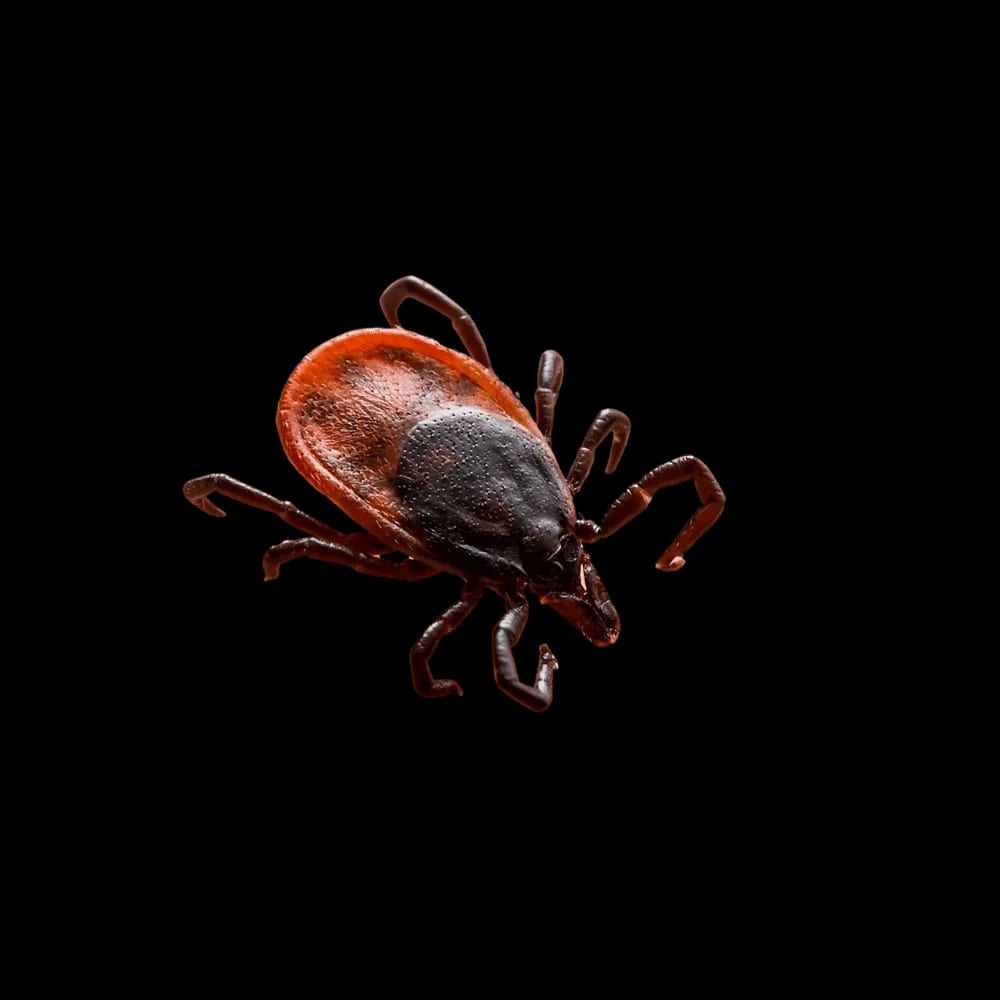
Appearance
- Ticks measure between 3 and 5 mm before feeding but can triple in size after engorging on blood.
- They have a flattened, oval body with eight legs, which classifies them as arachnids.
- The color of ticks varies from brown to reddish depending on the species and life stage.
Behaviour
- Ticks latch onto animals and humans to feed on their blood.
- They wait in tall grass or bushes, ready to attach to a passing host.
- They can transmit serious diseases such as Lyme disease, though they do not bite immediately after attaching.
Life cycle
- Ticks go through three developmental stages: larva, nymph, and adult, each requiring a host to feed.
- They primarily live in wooded areas, meadows, and gardens, where they wait for a host to pass by.
- They can survive for several months without feeding and prefer humid, temperate environments.
Diet
- Ticks feed exclusively on blood, which they draw from humans, pets, or wildlife.
- Each blood meal can last several days before they detach themselves.
- The larval and nymph stages each require a blood meal before reaching adulthood.
Have you noticed ticks in your environment? Don’t hesitate to contact us for advice on prevention and control practices. At Exterminatek, our experts are here to assist you.
We are available to answer your questions and guide you through the necessary steps.
Request a quote
Need help? We’re here!
A certified technician assesses your situation and proposes a treatment plan suited to it.