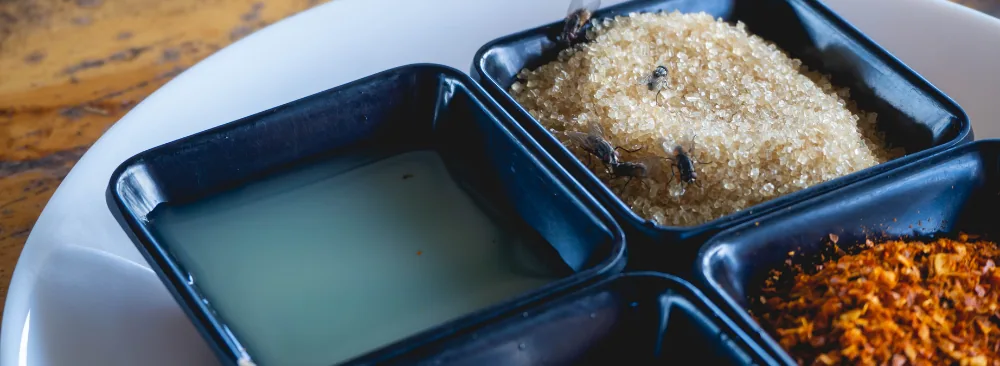
HOW TO CONTROL FLIES IN A RESTAURANT
Flying insect infestations, particularly those involving houseflies, are common problems in restaurants across Quebec. Not only can they create disgust among customers, but they can also cause food contamination and damage a restaurant’s reputation. It is therefore crucial to take measures to ensure impeccable hygiene and implement an effective strategy to control them and prevent them from becoming a persistent issue.
In this article, we will explore in detail the reasons why flies invade restaurants, the most common types of flies, their dangers, and both preventive and corrective solutions to eliminate them effectively.
Why are flies attracted to restaurants?
Flies are naturally attracted to food sources, moisture, and waste. Restaurants provide all these conditions, making them ideal breeding grounds. Here are the main reasons for their presence:
- Food in open access: Whether in the kitchen, dining area, or storage areas, food attracts flies. Fruits, vegetables, meats, and sugary foods are particularly appealing.
- Organic waste: Poorly covered trash bins, food residues on countertops, and composting areas serve as perfect breeding grounds for flies.
- Moisture and standing water: Flies, particularly drain flies, thrive in humid environments such as sinks, clogged drains, and poorly maintained dishwashers.
- Open doors and windows: A restaurant with frequently open doors, especially in summer, is an open invitation to flying insects.
What are the most common types of flies in a restaurant?
In a restaurant setting, you will primarily encounter three types of flies:
1. Housefly (Musca domestica)
The most common fly in food establishments. It carries over 100 types of bacteria, including E. coli and Salmonella, which can contaminate food.
- Attracted to: food waste, leftovers, and sugary liquids.
- Where to find them? Near trash bins, on tables, and in the kitchen.
2. Fruit fly (Drosophila melanogaster)
These tiny flies are drawn to ripe and fermented fruits as well as sugary beverages.
- Attracted to: decaying fruits and vegetables, open bottles of wine or juice.
- Where to find them? Around bar counters, near sinks, and in storage areas.
3. Drain fly (Psychodidae)
These small brown flies thrive in humid environments, particularly in sewers and drainage systems.
- Attracted to: moisture and organic residues accumulated in drains.
- Where to find them? In sinks, drains, and around dishwashing appliances.
The dangers of flies in a restaurant
1. High health risk
Flies are vectors of diseases and dangerous bacteria. By landing on food, they can contaminate it and cause food poisoning.
2. Reputation damage
A customer seeing flies in a restaurant can leave a negative review and harm the restaurant’s reputation. With social media, a single complaint can quickly escalate into a public relations issue.
3. Compliance issues
Health inspections strictly regulate the presence of insects in restaurants. A fly infestation can result in fines or even a temporary closure.
Solutions to control and prevent fly infestations in restaurants
1. Keep your restaurant clean and organized
Flies are attracted to food and waste, so ensure regular cleaning of your restaurant and dispose of waste as soon as possible.
2. Use fly traps
Fly traps can be highly effective in controlling fly populations in a restaurant. Several types of traps are available, including pheromone traps and ultraviolet neon traps with sticky boards, commonly known as “light traps” or “Fly lights.”
3. Use insecticidal products to control flies
There are several chemical products specifically designed to kill or repel flies. These can be used alone or in combination with other control methods. Always check the product’s approval to ensure it is authorized.
4. Keep doors and windows closed
Flies can enter a restaurant through open doors and windows. Ensure they are properly closed to prevent flies from entering your establishment.
5. Install anti-insect screens
If you have doors or windows that must remain open, you can use anti-insect screens to prevent flies from entering your restaurant.
6. Apply regular treatments
To prevent a fly infestation, it is essential to apply regular preventive treatments in your restaurant. Professional exterminators can help you establish a regular treatment plan to protect your establishment against flies.
By implementing these techniques, you should be able to effectively control flies in your restaurant. If you have persistent issues or are unsure about the best way to handle a fly infestation, consider hiring a specialized exterminator to ensure a healthy and regulation-compliant environment.
Conclusion
Controlling flies in a restaurant is crucial to ensuring customer satisfaction and compliance with health regulations. By implementing a proactive strategy that includes good hygiene, preventive measures, and appropriate solutions, you can avoid infestations and protect your restaurant’s reputation.
If your restaurant is facing a fly problem, don’t wait for it to worsen! Contact a professional pest control specialist for a quick and effective intervention.