Potter wasp
The potter wasp is a solitary wasp that intrigues as much as it worries. Unlike social wasps such as the German or common wasp, it does not live in a colony, does not defend a central nest and is only very rarely aggressive towards people. What sets it apart above all is the way it builds: small, precisely shaped clay vessels, often compared to miniature flower pots, which is where its name comes from.
Very active through the warm months, it frequents gardens, balconies, sheds and outdoor structures. It is no serious threat, but its presence can unsettle anyone unfamiliar with its peaceable habits.
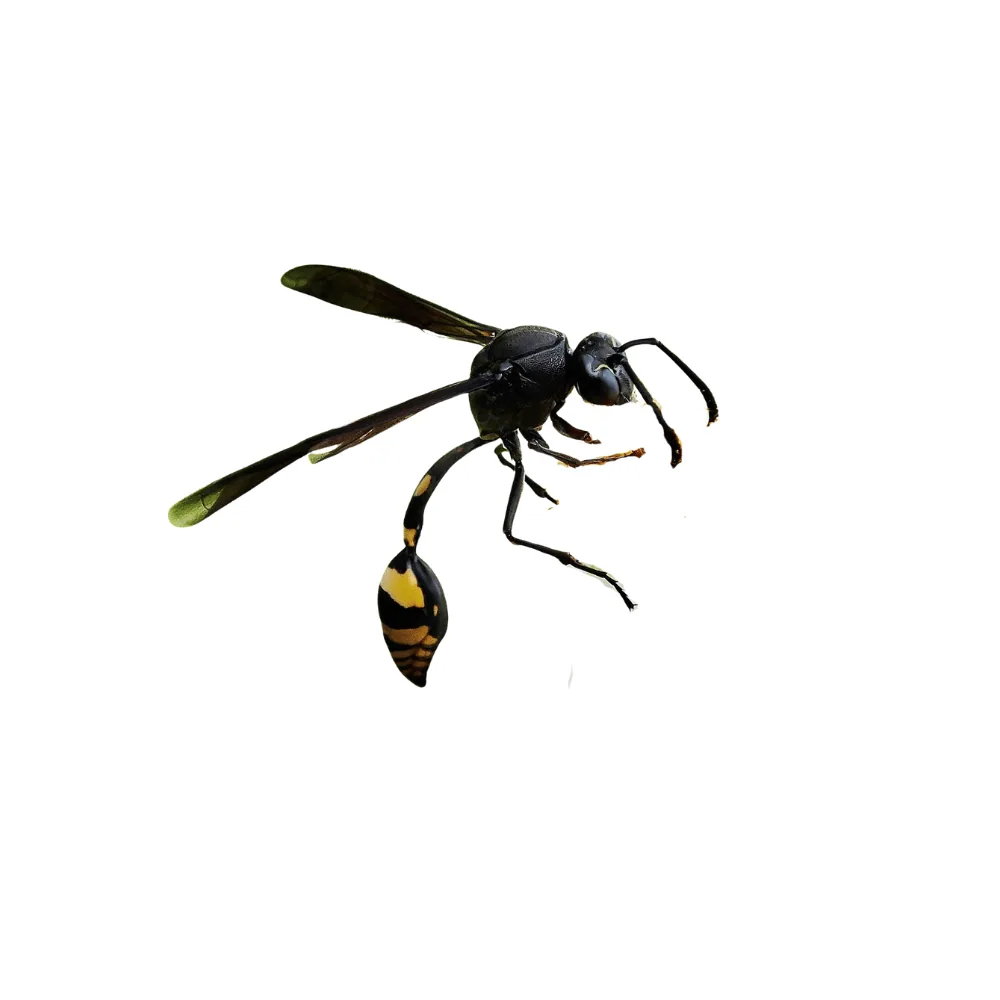
Appearance
- Size: about 15 to 25 mm
- Slender, elongated body, usually black with yellow or orange markings
- Abdomen joined by a narrow stalk (petiole)
- Clear wings folded flat at rest
- Similar in appearance to other wasps, but far calmer in behaviour
Behaviour
- A solitary, non-aggressive wasp: it defends no colony and stings only if handled or trapped
- The female hunts caterpillars and other larvae, paralysing them with a sting before carrying them to the nest
- Gathers mud near water and shapes it, cell by cell, into small clay urns
- Often seen foraging on flowers or patrolling foliage in search of prey
- Only the female has a stinger; stings are rare and not very painful
Life cycle
- Active from spring into early autumn
- Each female produces several separate small nests
- The full cycle, egg to adult, takes a few weeks
- The wasp dies before her offspring reach adulthood
- Some twenty species of potter and mason wasps are recorded in Quebec
Diet
- Adult: feeds on nectar, fruit juice or dead insects
- Larva: eats the paralysed prey left in the nest
- Prey is paralysed rather than killed, which keeps it fresh until the larva hatches
- Each cell is stocked with several prey items before being sealed with a mud plug
UNDERSTAND, PREVENT, ACT
Some twenty species of potter and mason wasps frequent Quebec gardens, balconies, sheds and outdoor structures through the warm months. Unlike social wasps, the potter wasp lives alone and defends no central nest: it stings only if handled or crushed, and it causes no damage to structures. Its little clay pots fixed to walls, stems or under eaves mainly indicate ground favourable to nesting — quiet, sheltered, with access to water and mud — and a healthy ecosystem well supplied with the prey insects it hunts.
The common mistakes are mistaking it for a social wasp (they look alike, but behave nothing alike), destroying nests as a matter of course when they are harmless and often already abandoned, or reaching for insecticide, which is pointless in most cases against a beneficial, non-aggressive species. The right reflex is to watch before acting: a single, calm wasp that is not circling insistently is probably a potter wasp. If a nest does need to go, remove the empty ones gently with a flat tool once they have hardened and dried, and avoid disturbing nesting areas during the active season.
Professional help is rarely needed for this species. It is warranted if nests multiply in a busy area, if someone in the household is allergic to stings, or if the identification is in doubt: a paper nest, or heavy coming and going, points to social wasps instead. A certified technician can confirm the species during an inspection, remove nests safely and recommend the right corrections.
Related species
Request a quote
Need help? We’re here!
A certified technician assesses your situation and proposes a treatment plan suited to it.