Hornet
Large and loud in flight, the hornet is often taken for an oversized wasp. It defends its nest actively and its sting is very painful, which makes it an insect to take seriously near a home. In Quebec you will mainly encounter the European hornet (Vespa crabro), which is sporadic here, and various large social wasps that resemble it and build paper nests. The Asian hornet is not established in the province. Colonies settle in tree cavities, attics, eaves, sheds and wall voids; activity peaks in late summer, when the population is at its largest.
Appearance
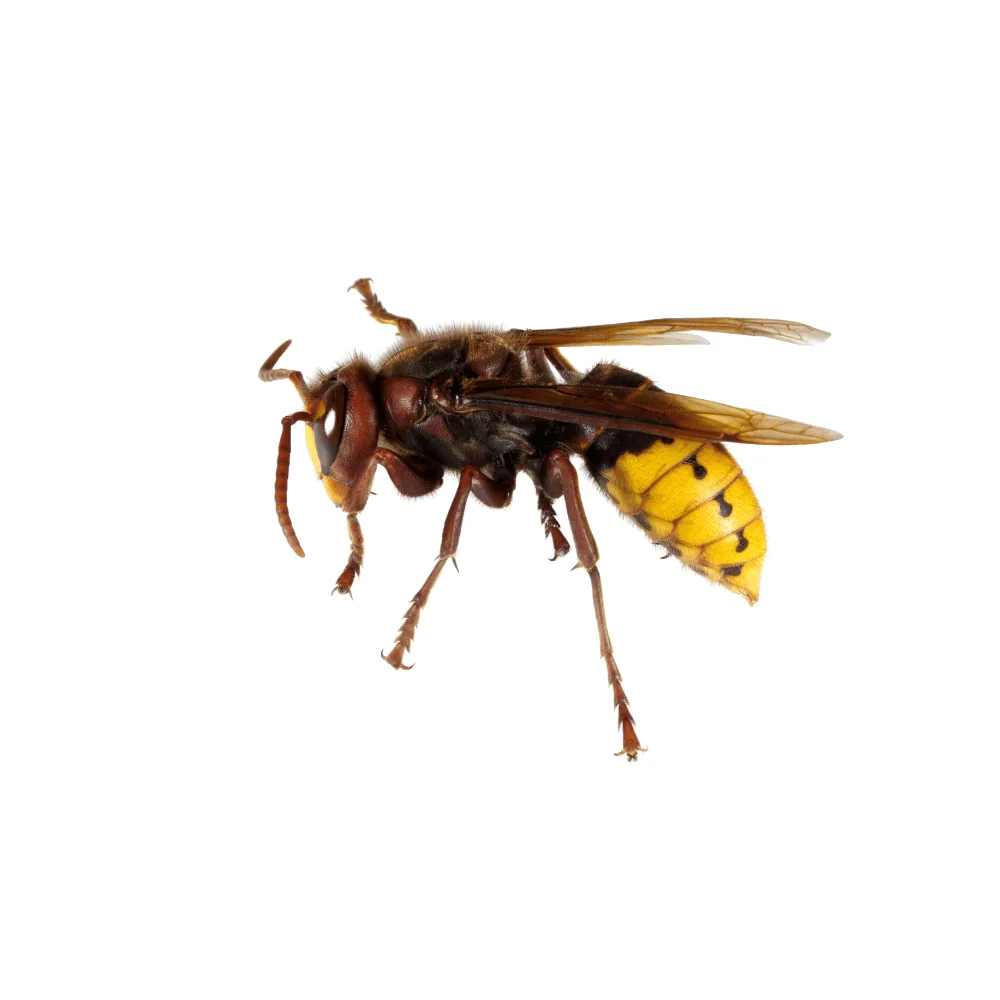
- Quebec’s "bald-faced hornet" is in fact a large wasp of the genus Dolichovespula, black with white markings on the face and abdomen
- Workers about 15 to 20 mm; the queen can exceed 20 mm
- Heavier, stockier outline than the common yellowjacket
- Antennae entirely black, with no yellow
- The true European hornet (Vespa crabro), reddish-brown and yellow, remains exceptional in Quebec
Behaviour
- Defends its nest actively: a vibration or an approach within a few metres can trigger a group attack
- Can sting repeatedly, as its smooth stinger is not left behind in the skin
- Able to spray venom towards the eyes of an intruder threatening the nest
- A useful predator that catches flies, caterpillars, spiders and even other wasps to feed its larvae
Life cycle
- Annual cycle: only the mated queen survives the winter, sheltered in a trunk, under bark or in the ground
- In spring the queen founds a small nest alone and raises the first generation of workers
- Grey paper nest hung high up — in a tree, on a cornice, on a building — and able to exceed 50 cm in length
- A colony of a few hundred individuals at its late-summer peak
- The nest is never reused the following year
Diet
- Adults take nectar, sap and the juice of ripe fruit
- Larvae are fed chewed insects caught by the workers
- Hunts flies, caterpillars and smaller wasps in particular
- Late in the season a taste for sugar brings workers close to fallen fruit and bins
UNDERSTAND, PREVENT, ACT
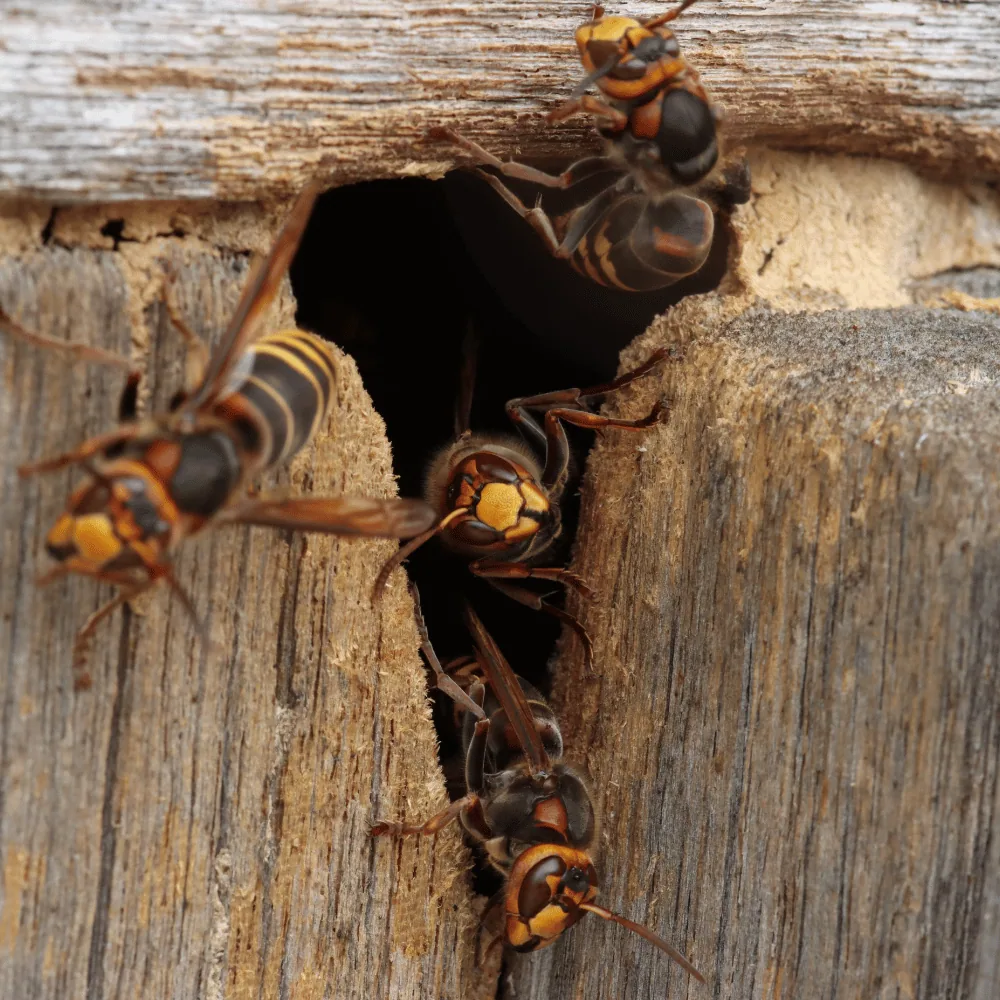
Hornets pose a real risk: multiple stings, intense local reactions and, in sensitive people, a systemic reaction. The common mistakes are approaching or spraying a nest yourself, sealing it while it is still active — the insects then look for another way out, often into the building — or confusing hornets with common wasps, which leads to the wrong strategy.
Prevention means managing what attracts them (fallen fruit, sugar, waste), securing the structure (sealing gaps early in the season, before anything settles in) and watching for primary nests in spring, the small paper cups that appear under a soffit. Near walkways, doors, balconies or play areas, do not intervene yourself: a properly equipped professional, in a full suit and with the right equipment, removes the nest safely, controls access and advises on the corrections needed — caulking, screening vents, managing outdoor bins. In rural or wooded settings, moving composters away from living areas and keeping lids tight limits visits.
If a sting is followed by general symptoms — widespread hives, dizziness, difficulty breathing — seek medical help immediately.
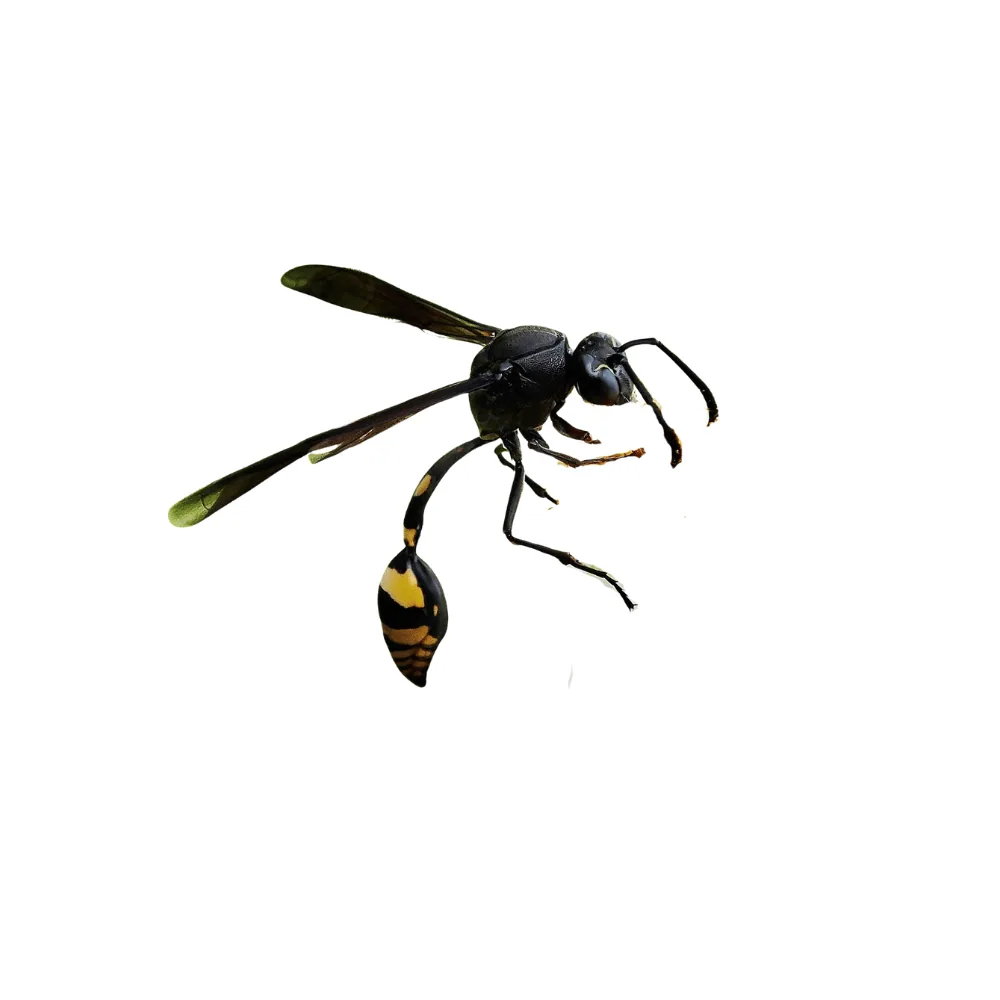
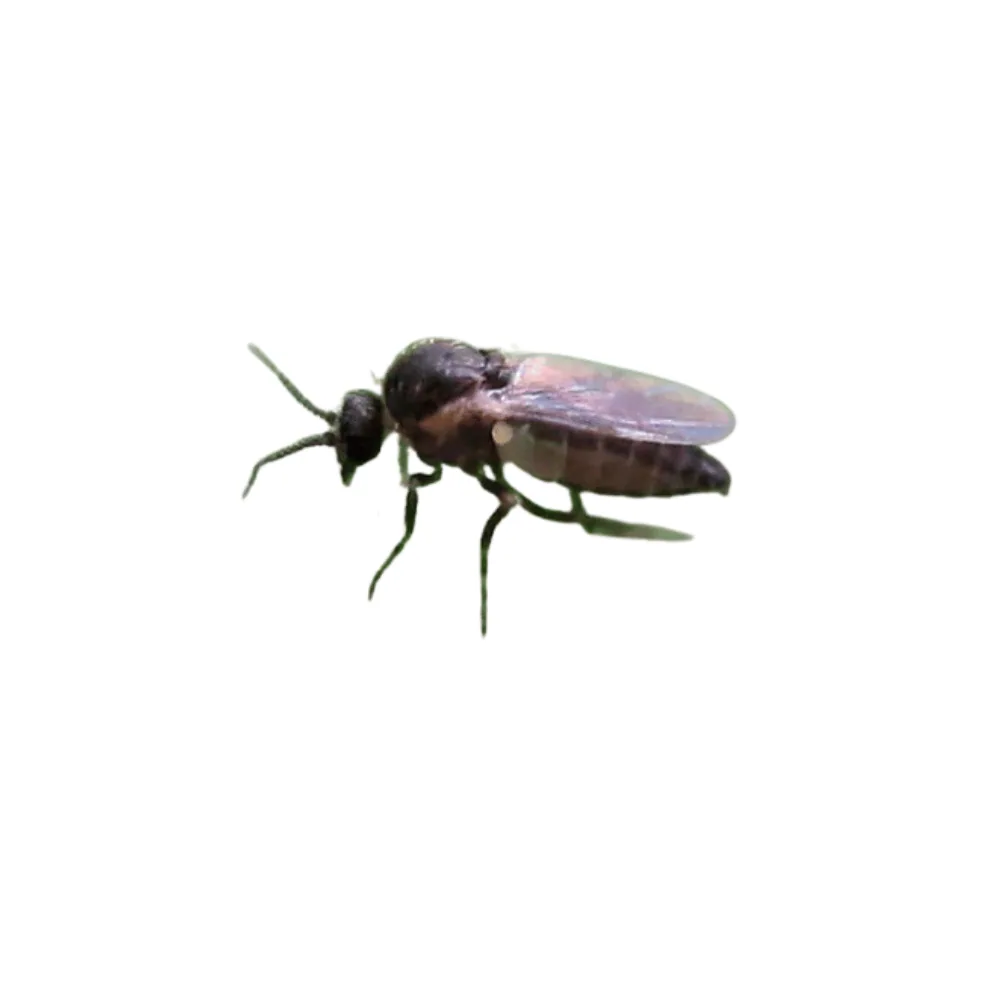
Related species
Request a quote
Need help? We’re here!
A certified technician assesses your situation and proposes a treatment plan suited to it.