Carpet beetle
The carpet beetle is a dreaded pest in homes, museums and commercial premises. Its larva feeds on keratin, a protein found in materials of animal origin such as wool, silk, hair, feathers and even some dry foodstuffs. The adult is harmless and feeds mainly on pollen, but the larva causes damage to textiles, clothing and stored objects that is often beyond repair. In Quebec this insect is most active indoors between spring and autumn. It is a discreet but persistent pest, often mistaken for other, more harmless beetles.
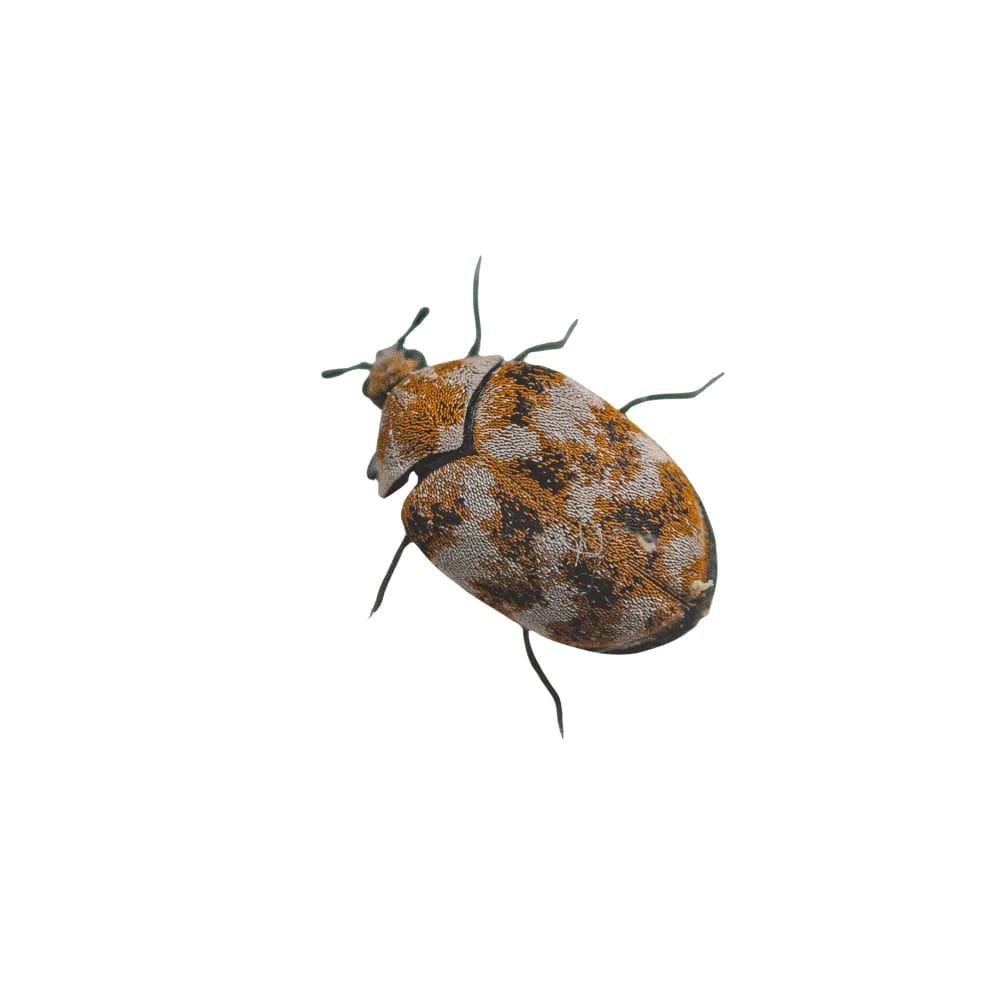
Appearance
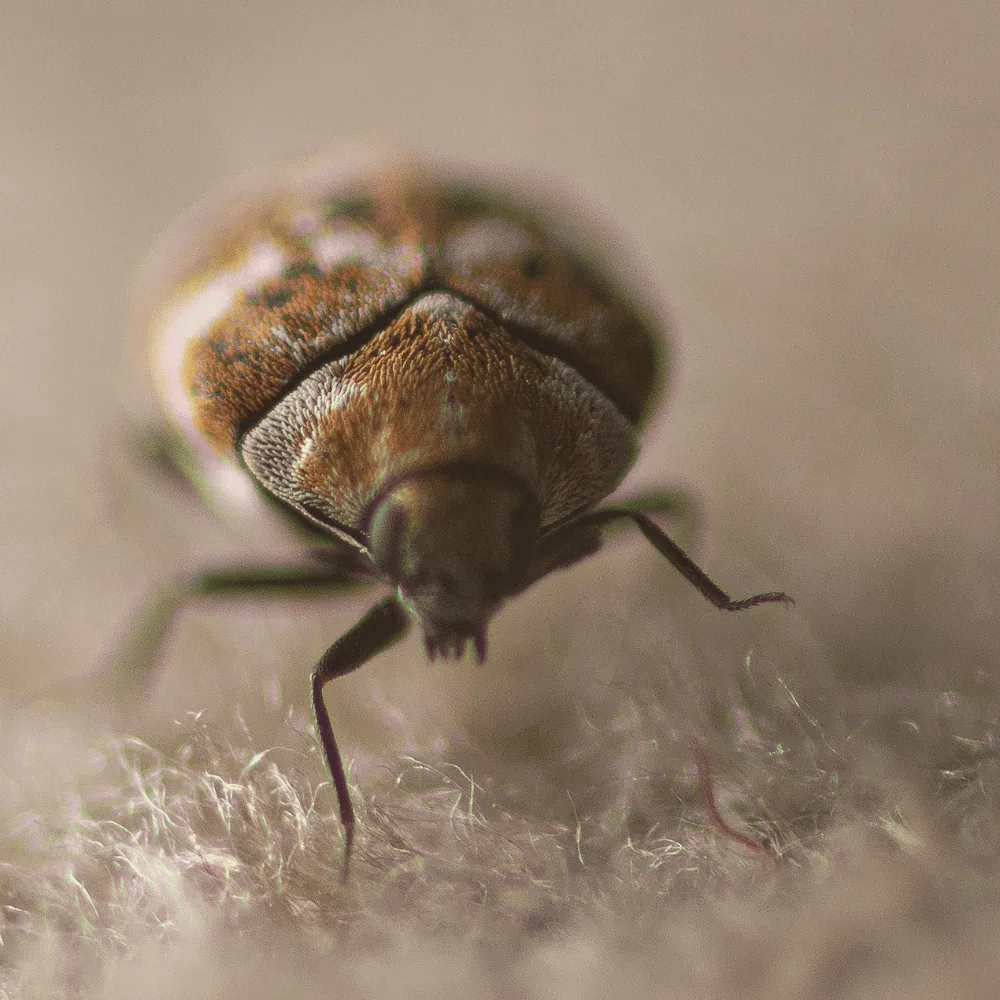
- Adult 2 to 3.5 mm long, with an oval, domed body resembling a small ladybug
- Wing cases covered in scales forming a mottled pattern of white, brown and yellowish spots
- Short antennae ending in a club
- Larva 4 to 5 mm long, brownish and very hairy — the "woolly bear" — with three tufts of raised bristles at the rear
Behaviour
- The adult flies well and is drawn to light: it is often spotted near windows in spring
- When disturbed it tucks in its legs and plays dead
- The adult lives outdoors and feeds on pollen; only the larva causes damage indoors
- The larva avoids light and shelters in dark, undisturbed places: baseboards, closets, under furniture and rugs
- The larva’s bristles can irritate the skin, a reaction sometimes mistaken for bed bug bites
Life cycle
- A female lays between 30 and 100 eggs, often in cracks or in fabric
- They hatch after 2 to 3 weeks
- The larva goes through 5 to 10 moults, which can take from 2 months to more than a year
- Pupation takes place in a cocoon of fibres or inside a damaged object
- The adult emerges in spring or summer and lives a few weeks
Diet
- Animal fibres: wool, silk, feathers, leather, animal hair, horn, bone
- Dry foodstuffs of animal origin: fish meal, pet kibble
- Organic residue trapped in carpets or vents (dander, hair)
- More rarely, cotton or linen if it is soiled
UNDERSTAND, PREVENT, ACT
In Montreal and across much of Quebec, the carpet beetle is one of the most common pests in older dwellings, in closets that are rarely opened and in poorly ventilated storage. It poses no risk to human health, but its larvae can cause real financial loss when they reach expensive clothing, handmade rugs or heirloom pieces.
An infestation often goes unnoticed for months, until small holes appear in a fabric or brownish cast skins are found. Treating the surface with an insecticide is usually ineffective: the larvae sit deep in the fibres. Regular vacuuming of carpets, maintenance of air ducts and periodic checks of clothing kept in open bins are what matter. Store fragile items in airtight containers and avoid places where dust is allowed to settle.
A professional inspection may use pheromone traps to locate the adults, but the source is usually found by examining the damaged textiles and the residue around them. If the problem persists despite thorough cleaning, targeted treatment by a certified technician is advisable — a contact or residual insecticide, with a follow-up a few weeks later to confirm it worked.
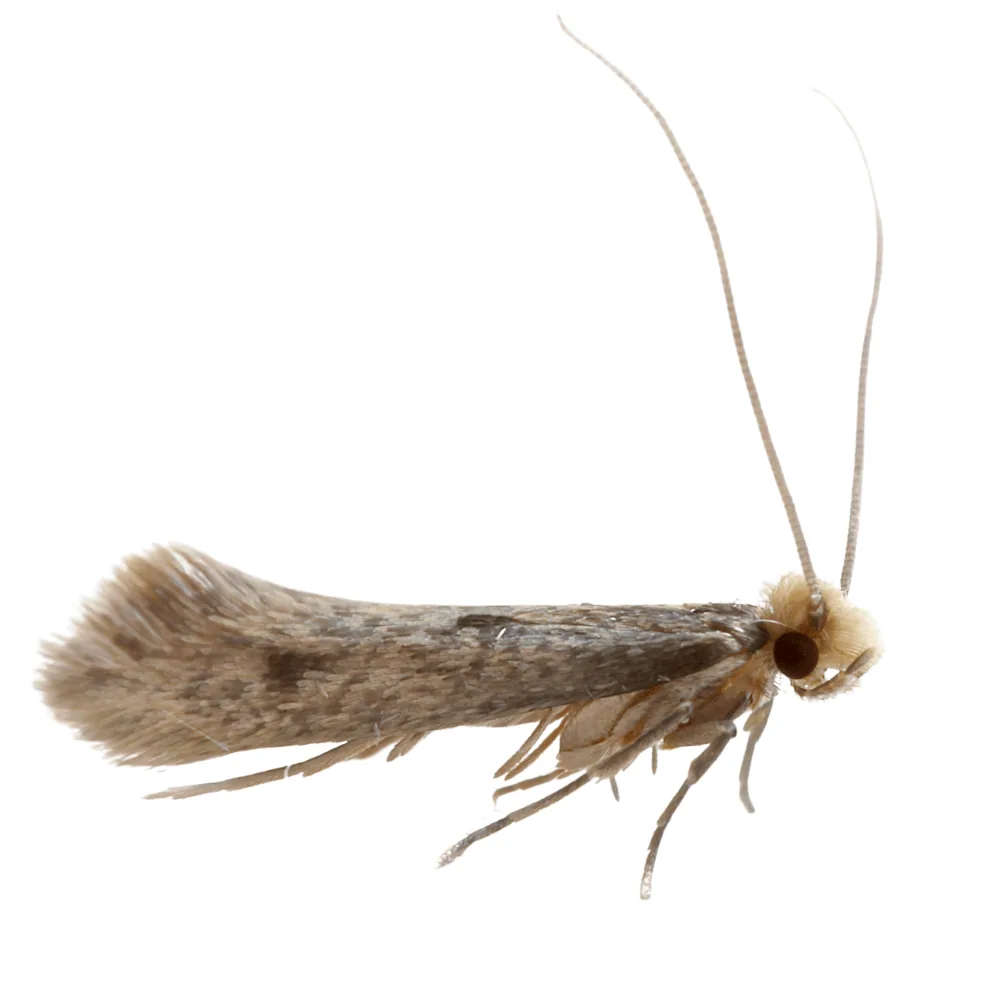
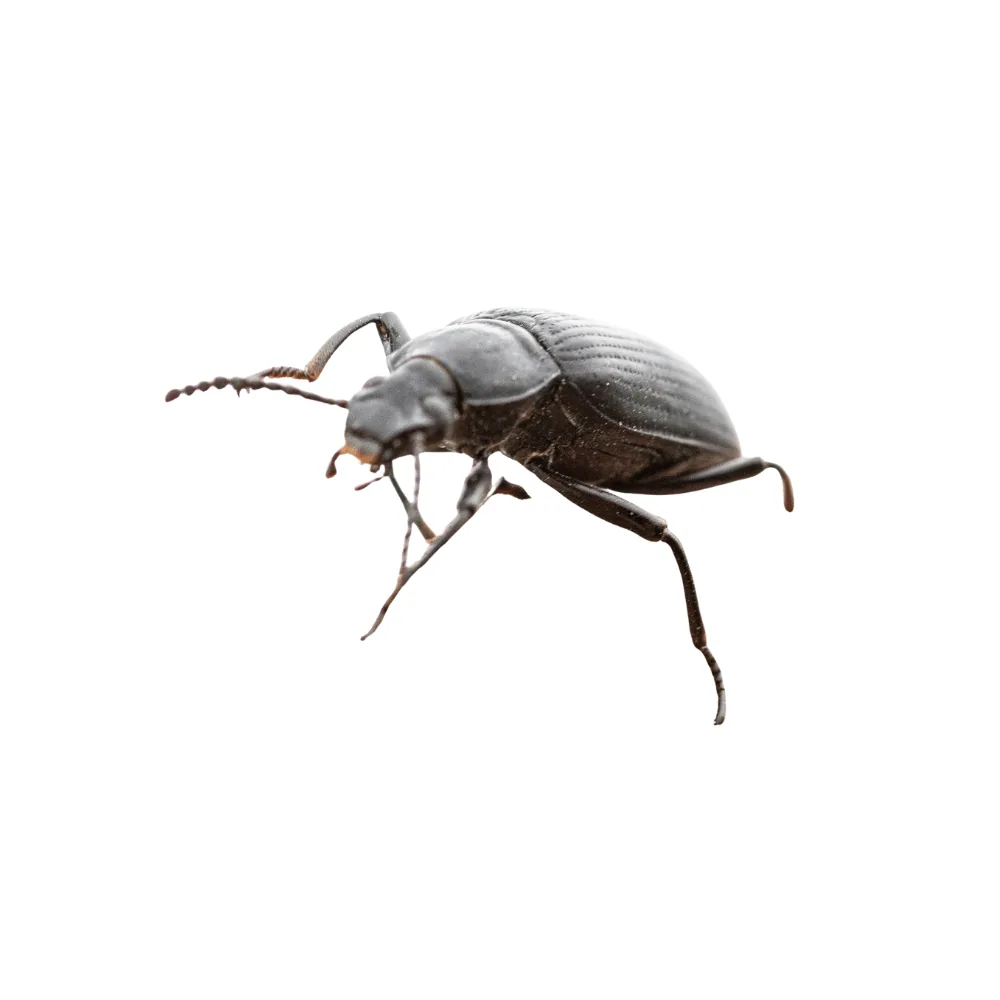
Related species
Request a quote
Need help? We’re here!
A certified technician assesses your situation and proposes a treatment plan suited to it.