Clothes moth
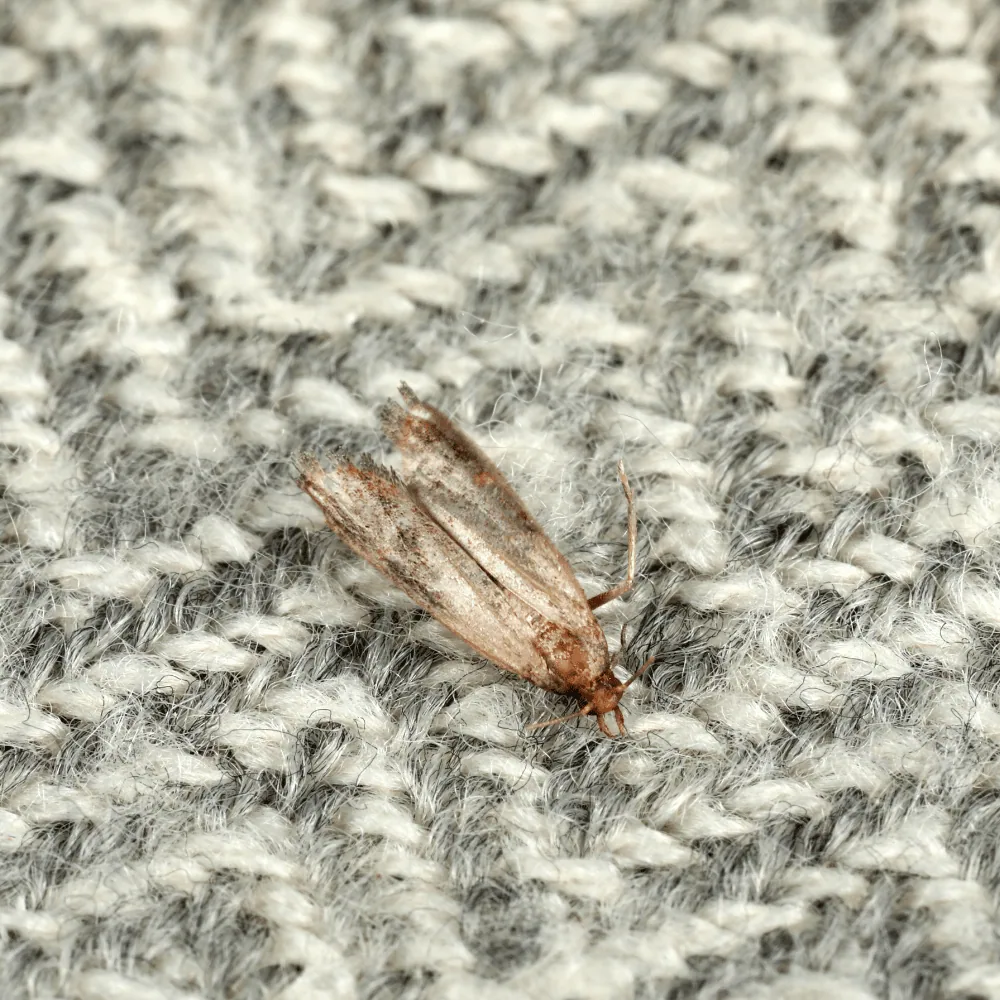
In everyday Quebec usage, "mites" means clothes moths: small household moths whose larvae bore holes in wool, silk, cashmere, felt, fur and carpets made of animal fibre. They are often confused with pantry insects, but this is a different problem — here it is the keratin in textiles that is the target. Damage shows up above all in closets that are rarely opened, in chests, boxes and storage bins, or on clothes put away without being washed first. In greater Montreal cases occur all year round in heated buildings, peaking when the seasons turn and coats, woollens and blankets come back out.
Appearance
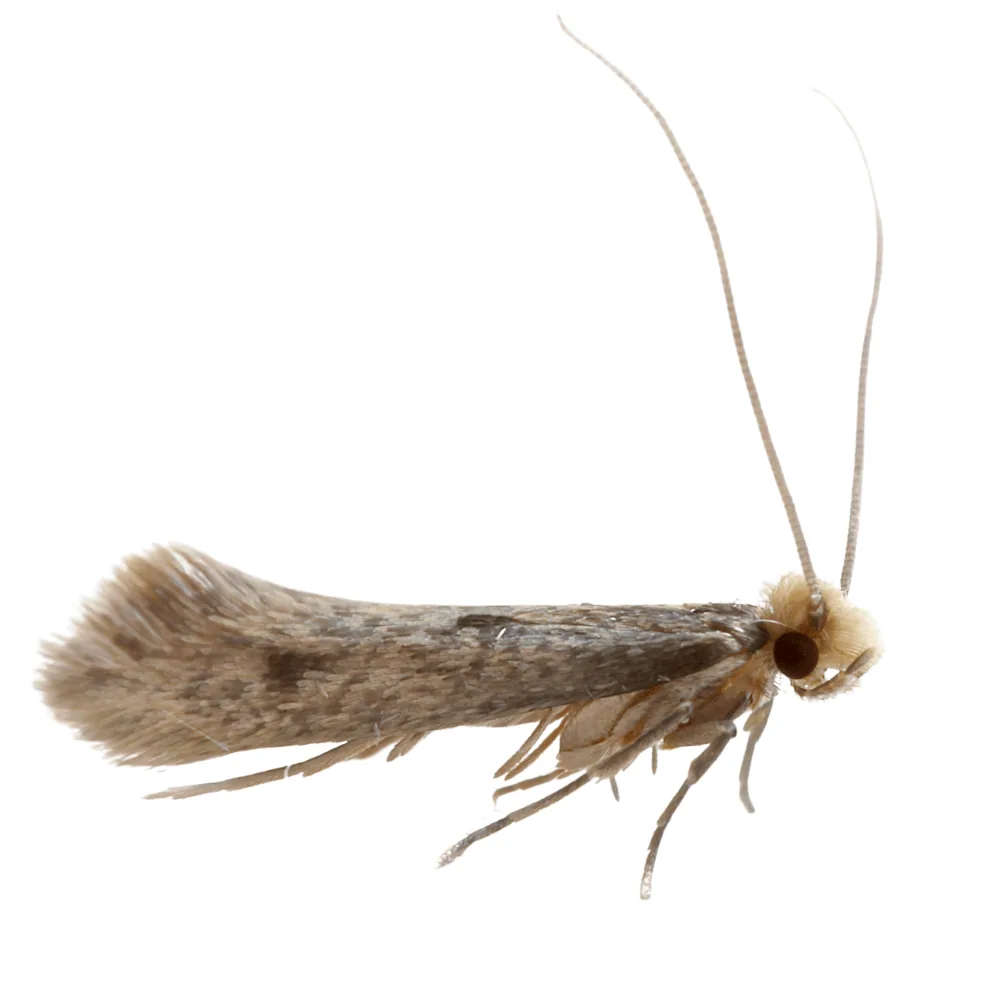
- A small golden-beige moth about 7 mm long, with a wingspan of 10 to 14 mm
- Narrow, satiny wings fringed with long hairs, without contrasting markings
- A tuft of reddish hairs on the head
- Larva: a whitish caterpillar with a brown head, reaching up to 12 mm
Behaviour
- Avoids light and shelters in the dark corners of closets, chests and storage boxes
- Flies poorly and prefers to run across surfaces; a short, erratic flight near clothing usually means a male
- Not drawn to lamps, unlike most night-flying moths
- The larva spins cases or galleries of silk mixed with fibre on the surface of textiles
Life cycle
- The female lays forty to fifty eggs, placed directly on the fibres
- The adult lives 2 to 4 weeks and causes no damage
- Development from egg to adult runs from a few weeks to several months depending on warmth and humidity
- Several generations can follow one another in the same year in a heated building
Diet
- Only the larva feeds; the adult does not eat
- Digests the keratin in animal fibres: wool, silk, cashmere, fur, felt, feathers
- Prefers textiles soiled with sweat, body oils or food residue
- Can attack blends and, more rarely, soiled plant fibres
UNDERSTAND, PREVENT, ACT
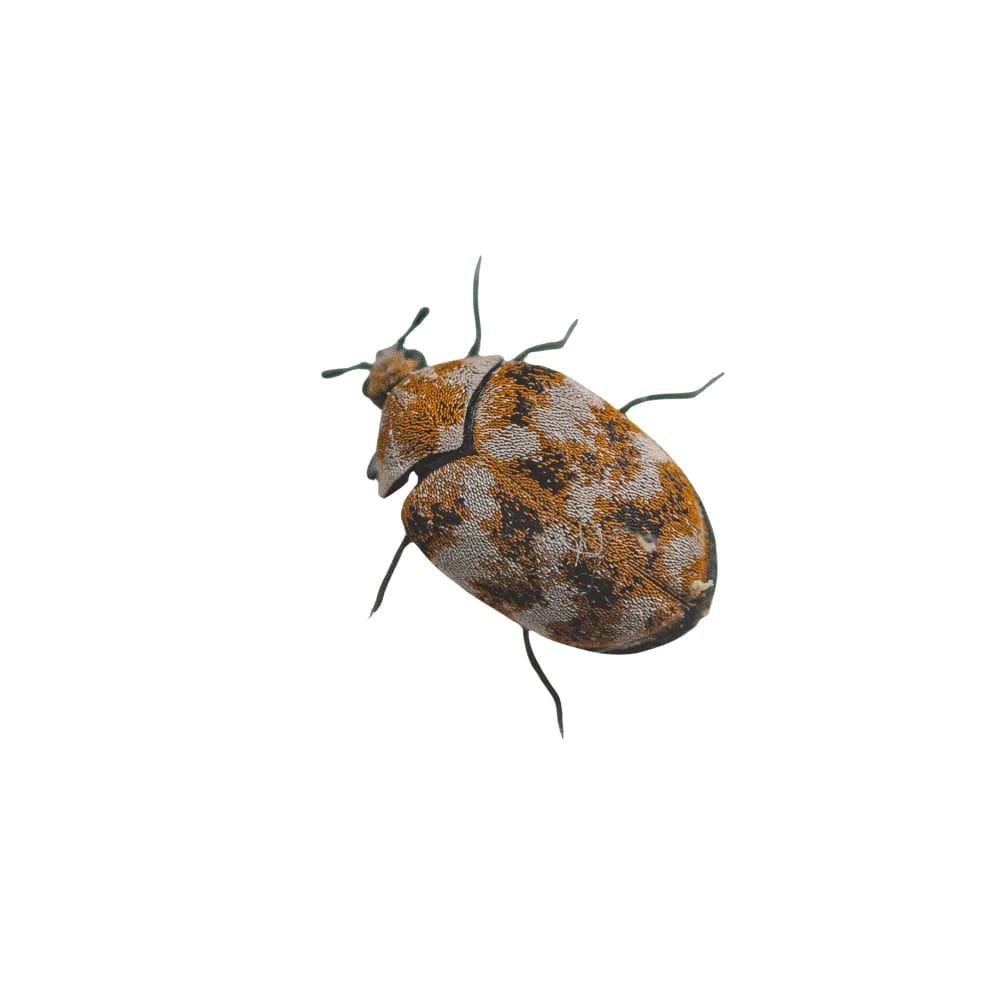
The key is to prevent egg laying and to deny the larvae both fibre and soiling. The common mistakes: spraying insecticide inside closets (of little use against eggs and larvae, and unwelcome next to clothing), settling for chasing the moths you can see, storing woollens unwashed, or overlooking the real sources — carpets, linings, blankets, cardboard boxes. What works:
- Textile hygiene: wash or dry-clean before seasonal storage, paying attention to contact points such as collars, cuffs and underarms.
- Sealed storage: use airtight containers (rigid plastic with a gasket) or moth-proof garment bags; avoid cardboard and porous fabric bags.
- Targeted inspection: check hems, folds, seams, carpet undersides and the inside of chests; vacuum carefully with brush and crevice tool, and discard the bag afterwards.
- Physical treatment: freezing for 72 hours at -18 °C (then back to room temperature inside the closed bag) kills eggs and larvae; controlled heat, such as high-temperature drying where the textile allows, works too.
- Better conditions: reduce clutter, air out closets, and prefer rails to deep shelves so clothes are not left compressed.
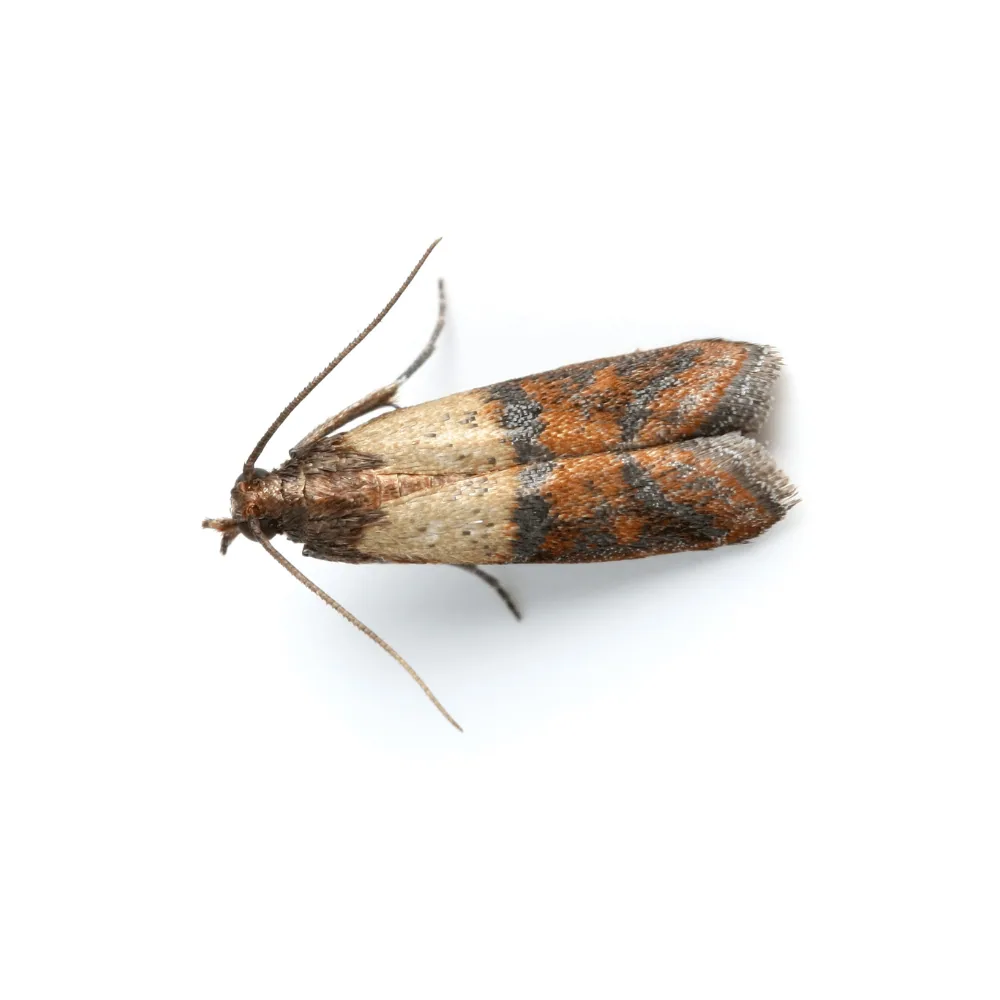
Where the damage is widespread — carpets, drapes, stage costumes, collections — a professional inspection helps locate every source and set out a protocol, sometimes with monitoring traps to follow adult activity and confirm the problem is gone. Note that clothes moths are distinct from the pantry insects covered elsewhere: small moths near food are a different problem, handled differently.
Related species
Request a quote
Need help? We’re here!
A certified technician assesses your situation and proposes a treatment plan suited to it.