Mealworm beetle
The mealworm beetle can, at first glance, be taken for a small cockroach, thanks to its elongated outline and dark shell. It is a quite distinct insect, though, usually found where dry food is stored or in heated structures such as mills, bakeries, attics and pantries. Several species are recorded in Canada, but the most common in buildings are the yellow mealworm (Tenebrio molitor) and the confused flour beetle (Tribolium confusum). Largely harmless to human health, they become pests once they reach stored food or building materials.
Appearance
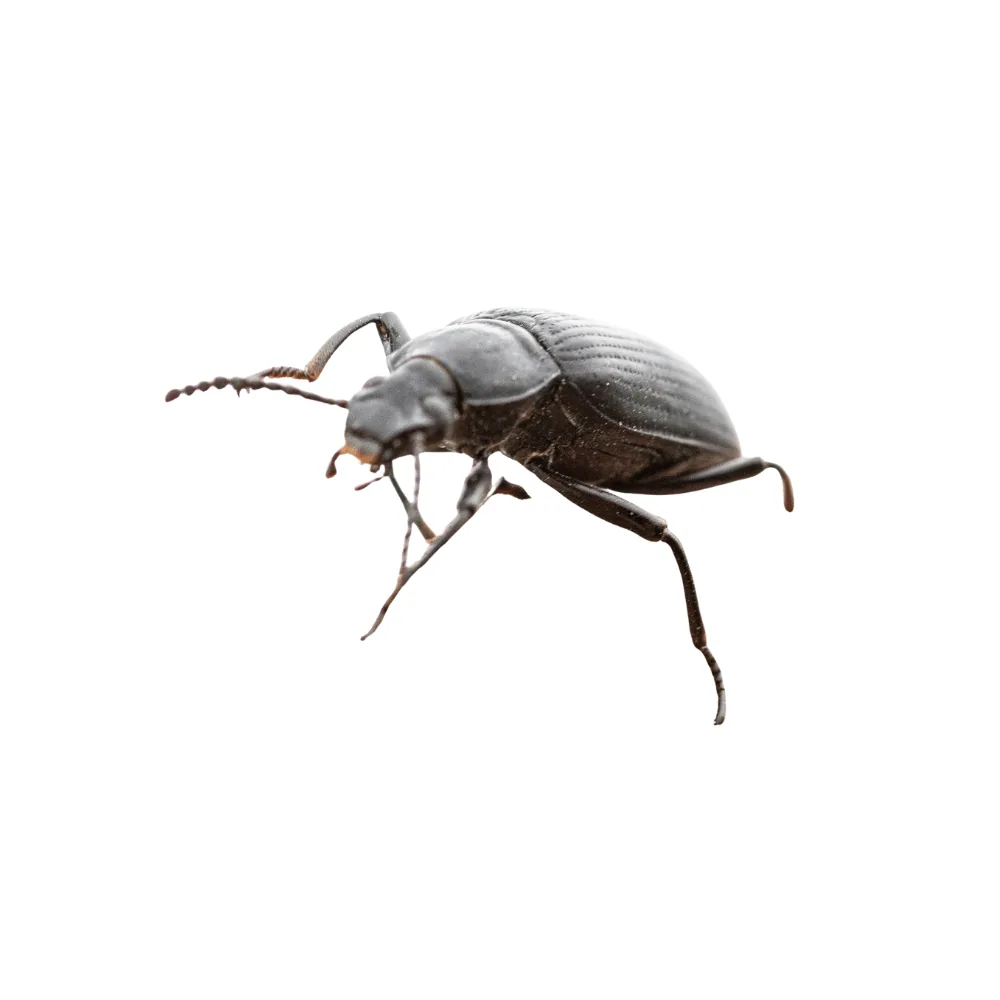
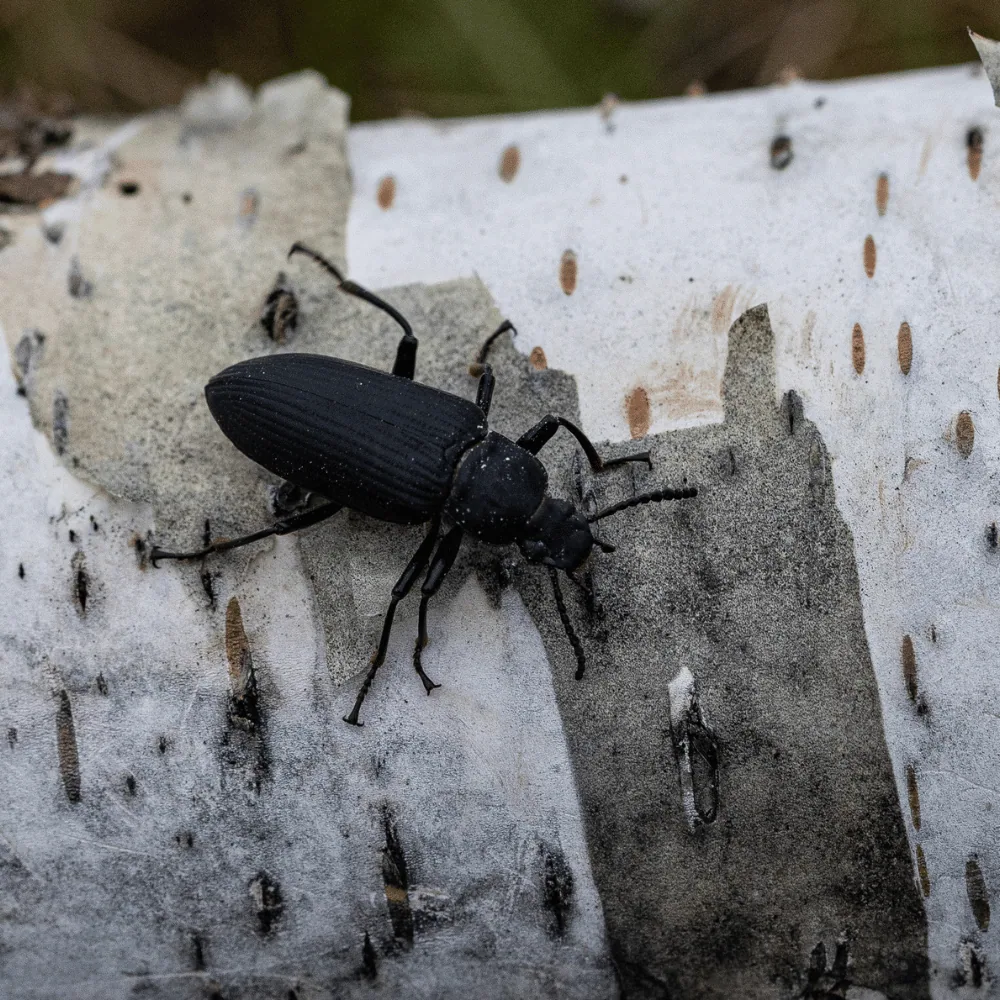
- Adult 14 to 18 mm long, with an elongated, slightly convex, glossy body
- Dark brown to black, sometimes reddish-brown
- Wing cases marked with fine lengthwise grooves
- Short, bead-like antennae
- Cylindrical golden-yellow larva, the "mealworm", reaching about 30 mm
Behaviour
- The adult is mainly nocturnal, avoiding light and hiding by day in cracks and dark corners
- Able to fly, it can be drawn indoors by lights on summer evenings
- Moves slowly across the floor, unlike the cockroach it is mistaken for
- Frequents dark, undisturbed places where flour and grain gather: warehouses, attics, pantries
Life cycle
- The female lays between 100 and 500 eggs in the food itself
- Hatching occurs in 4 to 12 days
- The larval stage lasts 1 to 3 months depending on conditions
- The pupa forms in 6 to 10 days
- The adult then lives 1 to 2 months
Diet
- Flour, cereals, semolina, pasta, kibble
- Residue from dry products: crumbs, biscuit powder, processed food
- Rotten wood or decaying organic matter, in some cases
- Exceptionally, materials containing animal protein
UNDERSTAND, PREVENT, ACT
In Quebec the mealworm beetle turns up in older dwellings, sheds, garages and food-processing plants. It transmits no disease and does not bite, but it counts as a food pest: flour or cereal contaminated by droppings or larval cast skins is no longer fit to eat.
Mistakes to avoid:
- Discarding only the contaminated product: without a full inspection, other containers may be affected
- Spraying an aerosol insecticide inside cupboards: dangerous near food and useless against eggs
- Not checking pet food, often overlooked and frequently infested
- Keeping food in its original bag rather than an airtight container
To prevent an infestation:
- Clean cupboards, pantries and storage areas thoroughly
- Use airtight plastic bins for everything that has been opened
- Check damp areas, pet food and dark corners regularly
- Get rid of forgotten bags of flour or cereal
- Keep temperature and humidity moderate, avoiding attics that are too dry or too hot
If you are unsure, or if the problem returns, a certified technician can inspect and suggest corrective measures, sometimes combining pheromone traps with targeted treatment at the entry points.
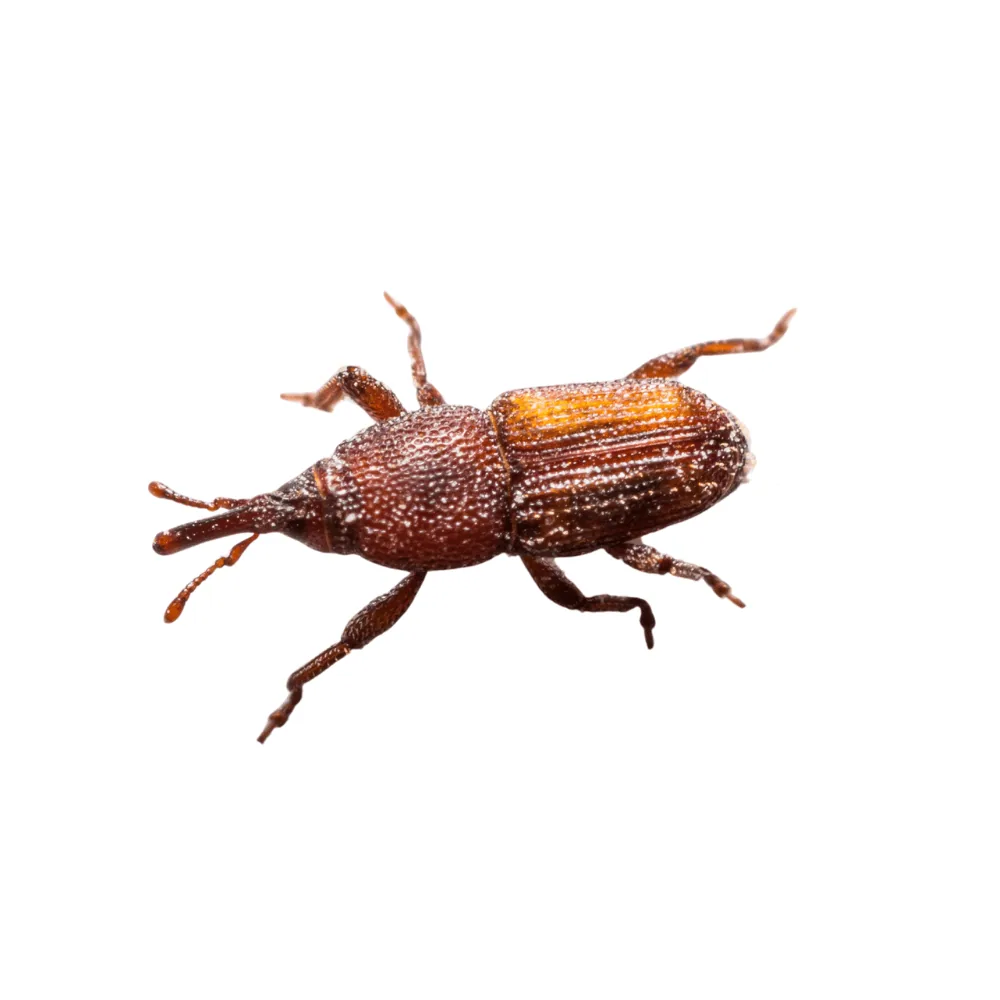
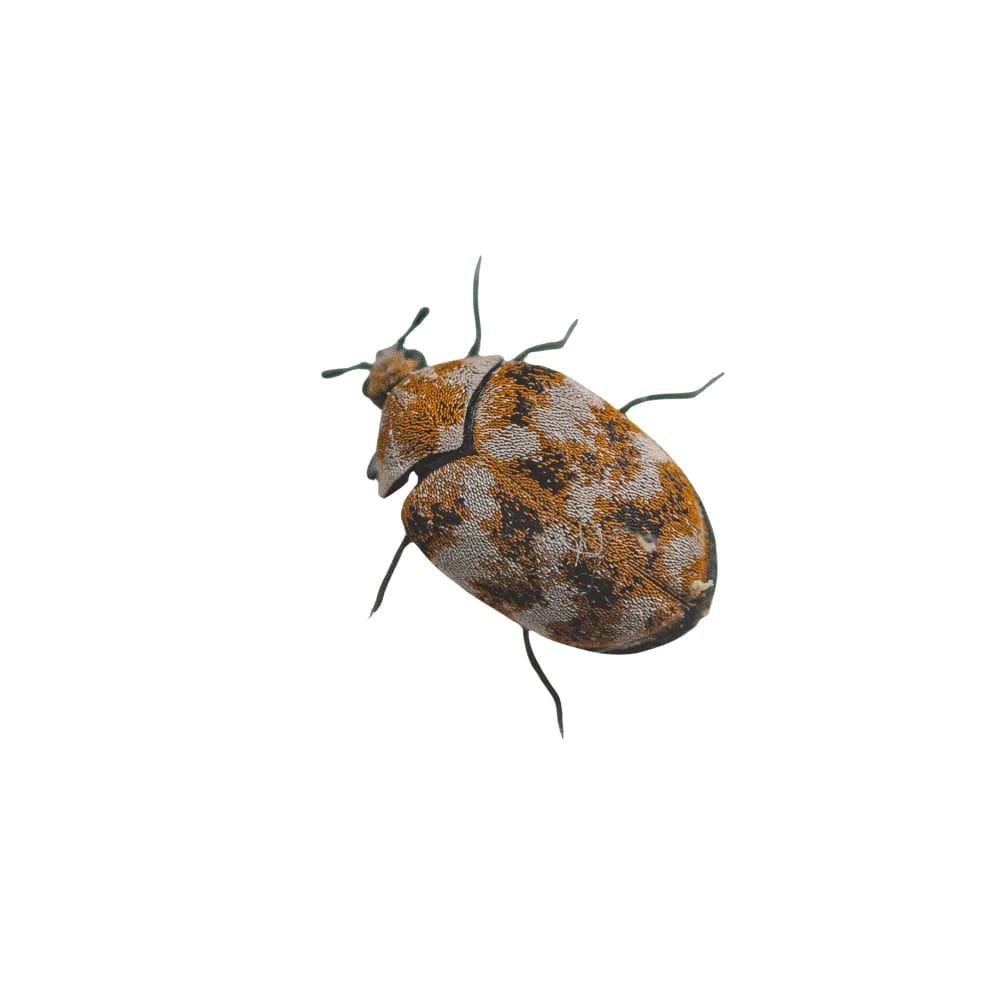
Related species
Request a quote
Need help? We’re here!
A certified technician assesses your situation and proposes a treatment plan suited to it.