Black fly (biting midge)
The black fly, along with the biting midge Quebecers call the "brûlot", is a tiny biting insect well known across the province, above all in rural and forested areas. Small as it is, it can make the outdoors miserable. It bites to feed on blood, often leaving pronounced skin reactions in people and animals alike.
In the wooded, humid regions of the Laurentians, Lanaudière and Mauricie, these insects are a seasonal scourge from May through July. Even in more urban settings such as Montreal’s parks, they turn up wherever drainage is poor. For campers, outdoor workers and walkers, they are among the most dreaded insects of the summer.
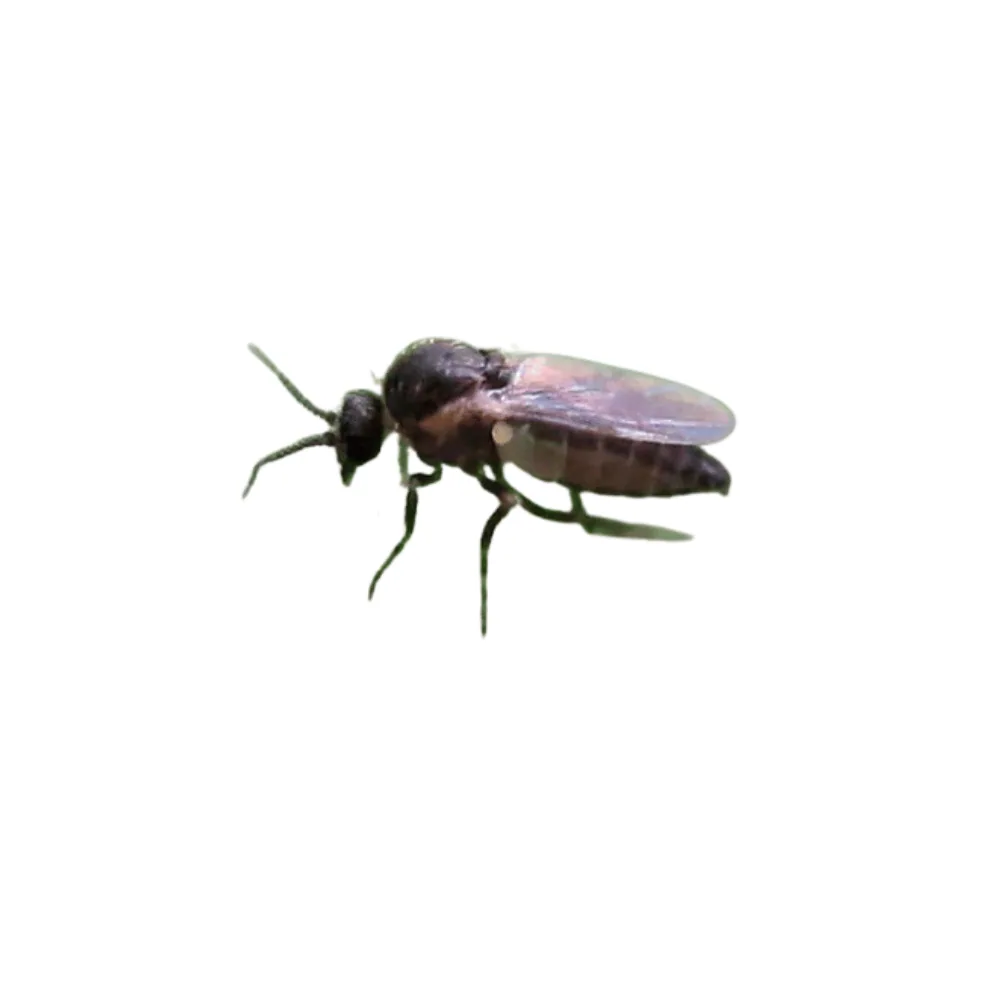
Appearance
- Size: 1 to 5 mm
- Colour: matte black or very dark brown
- Stocky body, with short antennae and dark wings
- Discreet, silent flight, usually in groups
Behaviour
- Active mainly by day, unlike mosquitoes, peaking in late afternoon
- Finds its hosts by the carbon dioxide they breathe out
- Attracted to dark, contrasting clothing
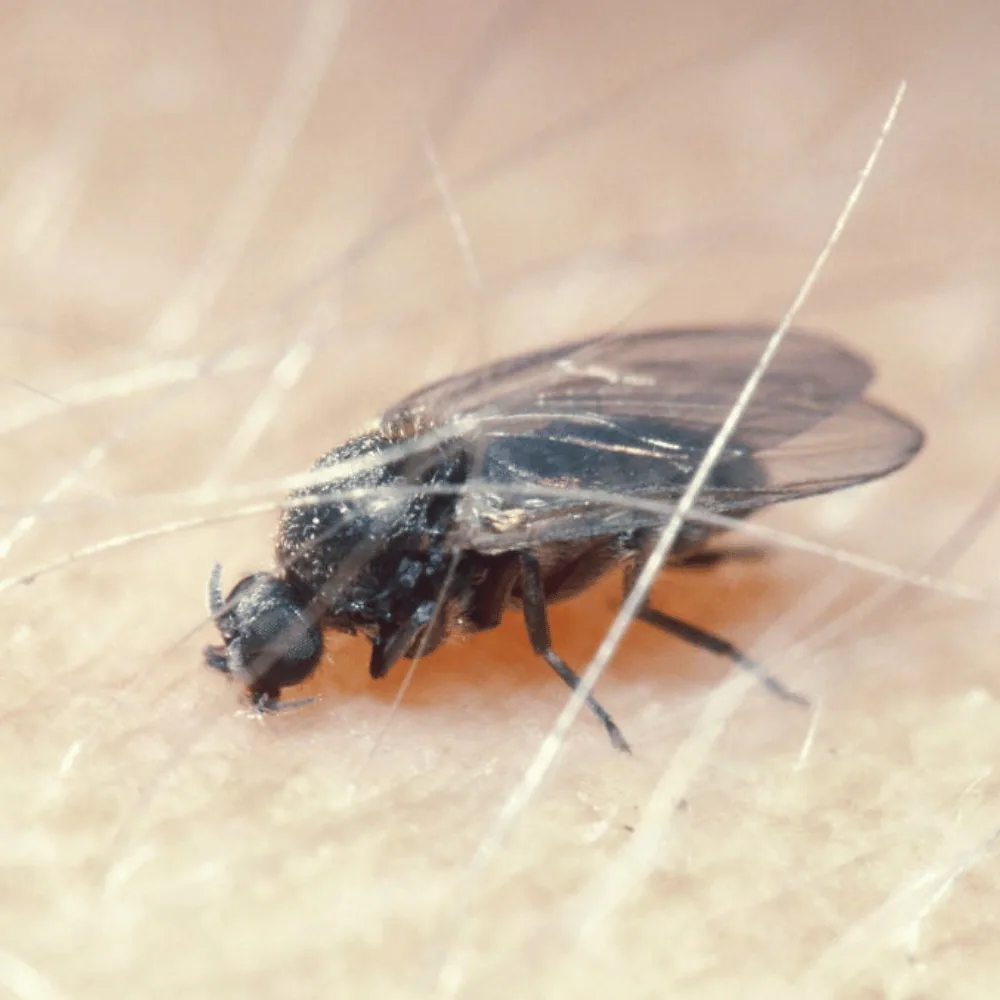
- Moves in swarms and targets exposed skin: the nape, behind the ears, ankles and hairline
- Rarely bites indoors — its activity is concentrated outside
Life cycle
- Full life cycle: about 3 to 4 weeks
- Egg laying: several hundred eggs on vegetation near water
- Eggs hatch quickly (24 to 48 hours)
- Adults live 2 to 3 weeks
Diet
- Females bite for the blood they need to lay eggs
- Males feed on nectar
- Larvae develop in water — running streams and rivers for black flies, muddy banks and standing water for biting midges — where they feed on organic matter
UNDERSTAND, PREVENT, ACT
They carry no disease in our region, but their bites bring intense itching, swelling, redness and lasting inflammation, and allergic reactions in sensitive people. In Quebec the nuisance is felt most in humid, forested areas, though discomfort is also reported in city parks, playgrounds and poorly drained back yards. Pets and livestock suffer from repeated bites too. It is worth knowing what they do not do: they never establish themselves indoors and cause no material damage. The nuisance is entirely outdoors and entirely seasonal.
A few mistakes keep the problem going: underestimating them, when they are active even at mild temperatures and travel in groups; wearing dark clothing, since they are drawn to dark, contrasting colours; and relying on the wrong repellent, as many mosquito products offer no protection against them. Wear long, light-coloured clothing fitted at the wrists and ankles, use a repellent containing DEET, icaridin or lemon eucalyptus, and stay out of wooded or marshy ground at dawn and dusk, when they are at their peak.
On a property that is overrun year after year, netting over decks, tents or outdoor work areas gives immediate relief, and dealing with standing water around the house removes breeding sites. If the nuisance returns season after season, a professional inspection can identify the wet or poorly drained ground that lets them breed nearby and recommend the right corrections. A certified technician can also tell a black fly from other biting insects and propose measures suited to your property.
Request a quote
Need help? We’re here!
A certified technician assesses your situation and proposes a treatment plan suited to it.