Ant Colony in Quebec – How to Identify, Prevent and Eliminate It Effectively
In Quebec, an early spring or a humid summer is often enough for ants to show up indoors. Understanding how a colony works helps you react quickly and avoid costly structural damage.
What is an ant colony?
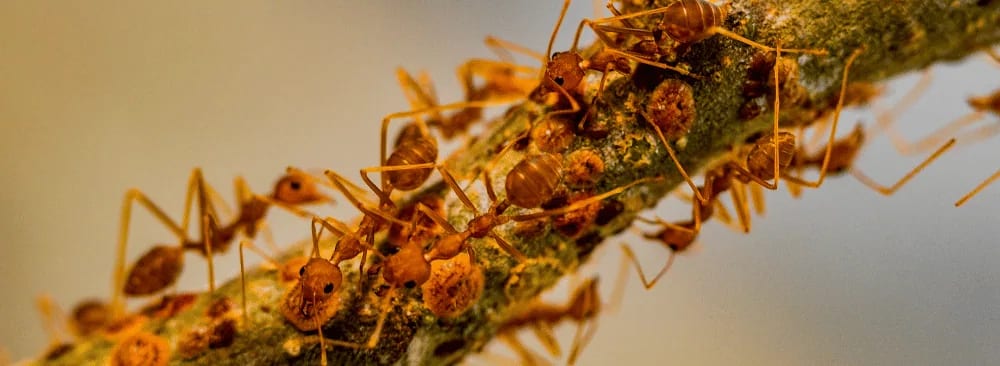
An ant colony is an organized group of individuals that share specific tasks: the queen lays eggs, workers tend the nest and gather food, and males ensure reproduction. This social structure relies on chemical communication: pheromone trails guide other members and keep the group coordinated.
In a house, the nest — the heart of the colony — may be built in soil, wall voids or damp wood. As long as the queen is alive, the colony can rebound even after a partial treatment. That’s why surface sprays rarely solve the problem: you must target the source, i.e., the nest centre.
Recognizing a colony in your home
Colonies move quietly into Quebec homes. Early signs are subtle: ant trails along baseboards, fine sawdust near wood, or winged insects appearing in spring. These clues suggest the nest is already established, sometimes inside the structure itself. Carpenter ants, for example, excavate galleries in wood to house the queen and brood.
In winter, seeing active ants indoors is a reliable indicator of an indoor colony. Outdoor nests remain inactive during the cold season.
Why colonies settle in Quebec homes
Three factors attract ants inside Quebec homes: food, moisture and warmth. Forgotten crumbs, a leak under the sink or an unsealed joint are enough for a queen to settle. Older or poorly insulated buildings often provide ideal refuges, as do homes surrounded by dense vegetation or stacked firewood. Once established, a colony can quickly spread through wall voids and crawlspaces.
The most common ant species in Quebec
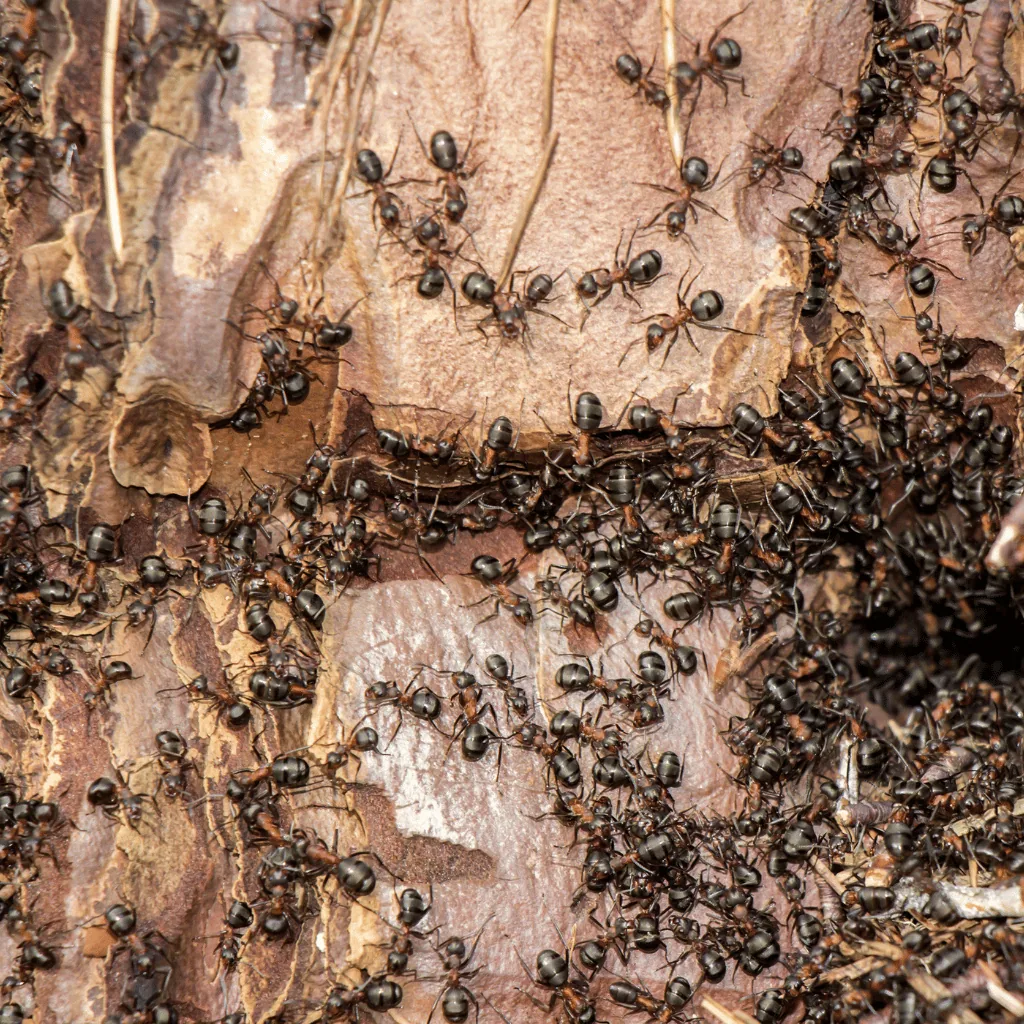
Several species are particularly frequent in Quebec: the carpenter ant, the pavement ant and the Pharaoh ant. Carpenter ants, the most concerning, don’t consume wood; they carve galleries in damp wood to protect the colony. Pavement ants are smaller, nest under sidewalks or pavers, and enter homes in search of sugar. Pharaoh ants thrive in buildings heated year-round and easily move from one unit to another through conduits.
How to destroy an ant colony
To eliminate a colony, you must reach the queen and interrupt reproduction. Crushing visible ants or spraying a surface insecticide won’t fix the problem: the colony quickly rebuilds. The plan should combine prevention and professional treatment.
Natural and preventive methods
Before calling a professional, simple steps can limit spread: keep surfaces clean, store food in airtight containers, fix leaks and seal cracks. These actions cut off what ants need to thrive. However, if the nest is inside the building envelope, DIY measures quickly reach their limit.
Professional treatments and long-lasting extermination
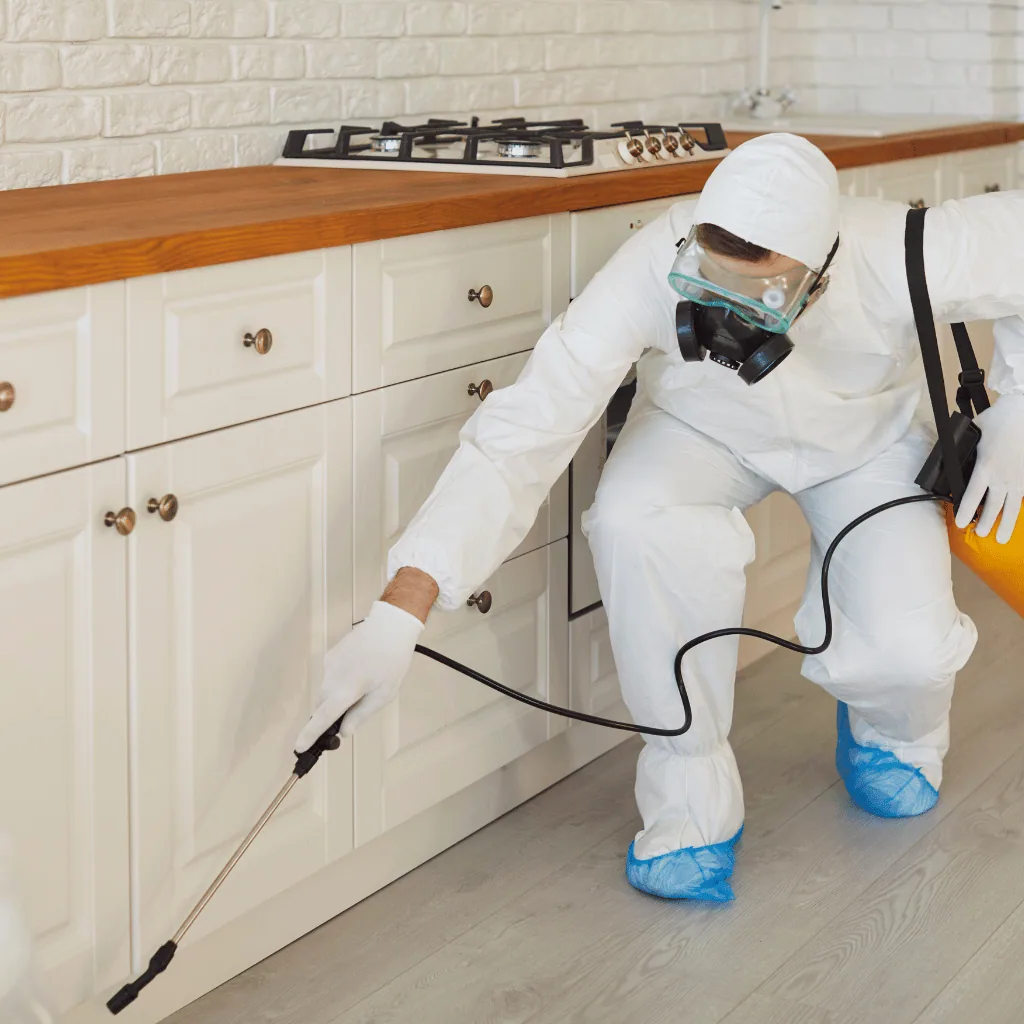
A qualified exterminator works in stages: inspection, species identification, targeted baiting, treatment of risk areas and follow-up. The goal is full nest elimination, including any satellite nests. For best practices and how to choose a certified company, see the Government of Québec website.
Preventing a colony from reappearing
Once the colony is gone, vigilance matters. Maintain the home, reduce moisture and avoid food residues. Outdoors, keep firewood away from walls, trim shrubs touching the house and inspect cracks seasonally. For comprehensive prevention and safe management tips, visit Health Canada – Ants.
When to call a professional in Quebec
Certain signs call for immediate action: winged ants indoors, sawdust under walls, or activity observed in mid-winter. If DIY attempts fail, or if you live in a multi-unit building, a specialist is essential. Contact Exterminatek for a prompt inspection and a customized plan.
Conclusion
An ant colony is a resilient, organized society. Eliminating it requires a strategic approach: precise detection, targeted baiting and durable prevention. By combining sound home practices with professional expertise, you can restore a healthy environment and avoid repeat infestations.
Frequently asked questions (FAQ)
Colony or nest: what’s the difference?
The colony refers to all the ants (queen, workers, brood, etc.), while the nest is the physical place they live. A single colony can occupy multiple connected nests.
Why are carpenter ants a problem?
They excavate galleries in damp wood to house the colony. Over time, this can weaken framing and trim. If you find sawdust at the base of walls, book an inspection quickly.
How much does extermination cost?
Pricing depends on the species, colony size and property type. A professional inspection provides an accurate estimate and a tailored treatment plan.