Boxelder Bugs: Why They Invade Your House and How to Get Rid of Them
It happens every fall. On a warm afternoon in September or October, dozens or even hundreds of small black and orange bugs gather on the sunniest wall of your house. Then, in April, just when you had forgotten about them, they show up again on your window sills, this time inside. These are almost always boxelder bugs. The good news: they don’t bite, they don’t spread disease and they don’t damage your home. The bad news: they can become a real nuisance. This guide explains how to identify boxelder bugs, why they keep coming back, and what actually works to get rid of them in Montreal and across Quebec.
What do boxelder bugs look like?
The boxelder bug (Boisea trivittata) is about 12 mm (½ inch) long, with an elongated, somewhat flattened body. Here is how to recognize it:
- Adults are black or brownish-black, with three red-orange stripes on the thorax (just behind the head) and red-orange edges along the wings.
- The abdomen is red-orange, which you mostly see when the bug spreads its wings to fly.
- Young bugs (nymphs) have no wings and are bright red, getting darker over their five growth stages. You mostly see them in summer, on trees and at the base of trunks.
Boxelder bugs live in groups. Seeing dozens of them in the same spot is a strong clue that you have the right insect.
Where does the name come from?
Their favourite host is the boxelder tree, also called Manitoba maple (Acer negundo). They feed on the sap of its leaves and especially on its seeds, the familiar “helicopters”. Populations are largest around female trees, the ones that carry seed clusters. Boxelder bugs are also found, in smaller numbers, on other maples and on ash. The damage they do to trees is minor. Their real problem is their taste for our houses.
Why are there boxelder bugs in my house?
In the fall: looking for a place to spend the winter
Boxelder bugs survive the winter as adults. From late summer, and especially from mid-September through October, adults leave the trees in search of a dry, sheltered spot. They gather in large numbers on south- and west-facing walls, which soak up the afternoon sun: siding, window frames, foundations and sheds.
From there, they slip into any opening they can find: cracks in the siding, worn seals around windows and doors, torn screens, gaps around pipes and wires, soffits and door sweeps. Most of them spend the winter inside the walls, in the attic or behind the siding without ever reaching your living space. But when the population is large, some end up indoors.
In winter and spring: the unexpected comeback
This is the question we hear most often: why are there boxelder bugs in my house in the middle of winter, or in April? Bugs hibernating in your walls wake up on mild days. Indoor heating and the late-winter sun warm the walls, and some bugs head the wrong way. Instead of going back outside, they end up in the house, often near windows, pot lights, baseboards or bathroom fans.
This spring comeback is normal. It does not mean new bugs got in or that they are breeding in your home: boxelder bugs do not reproduce indoors. According to Colorado State University Extension, the nuisance usually ends by late May, once the adults have flown back to their host trees to lay eggs.
Are boxelder bugs harmful?
No. Boxelder bugs are a nuisance, not a threat:
- They don’t bite: bites on people are very rarely reported and are harmless.
- They don’t damage your home: they don’t chew wood, fabric or food.
- They don’t spread disease.
They do have two downsides. Their droppings can stain curtains, walls and light-coloured surfaces. And a crushed boxelder bug gives off an unpleasant odour and leaves an orange stain. So rule number one is simple: don’t squash them.
How to get rid of boxelder bugs in the house
Indoors, the goal is not to exterminate them but to remove them cleanly until the season is over.
- Vacuum them up. It is the most effective and cleanest method. A small hand vacuum or a shop vac works best. Empty it into a sealed bag and put it straight into the outdoor garbage.
- Don’t crush them. They stain and smell.
- Skip the aerosol insecticides indoors. They won’t stop more bugs from coming out of the walls, and they add unnecessary products to your indoor air. We explain why in our article on the dangers of over-the-counter insecticides.
- Don’t treat inside your walls yourself. According to Penn State Extension, dead insects piling up in wall voids or the attic can attract carpet beetles, which then go after wool, rugs and clothing.
- Take note of where they appear. A bug that keeps coming out of the same window frame or light fixture is pointing you to an entry point to seal before next fall.
What to do outside
The real battle is won outdoors, before fall arrives.
Seal openings before September
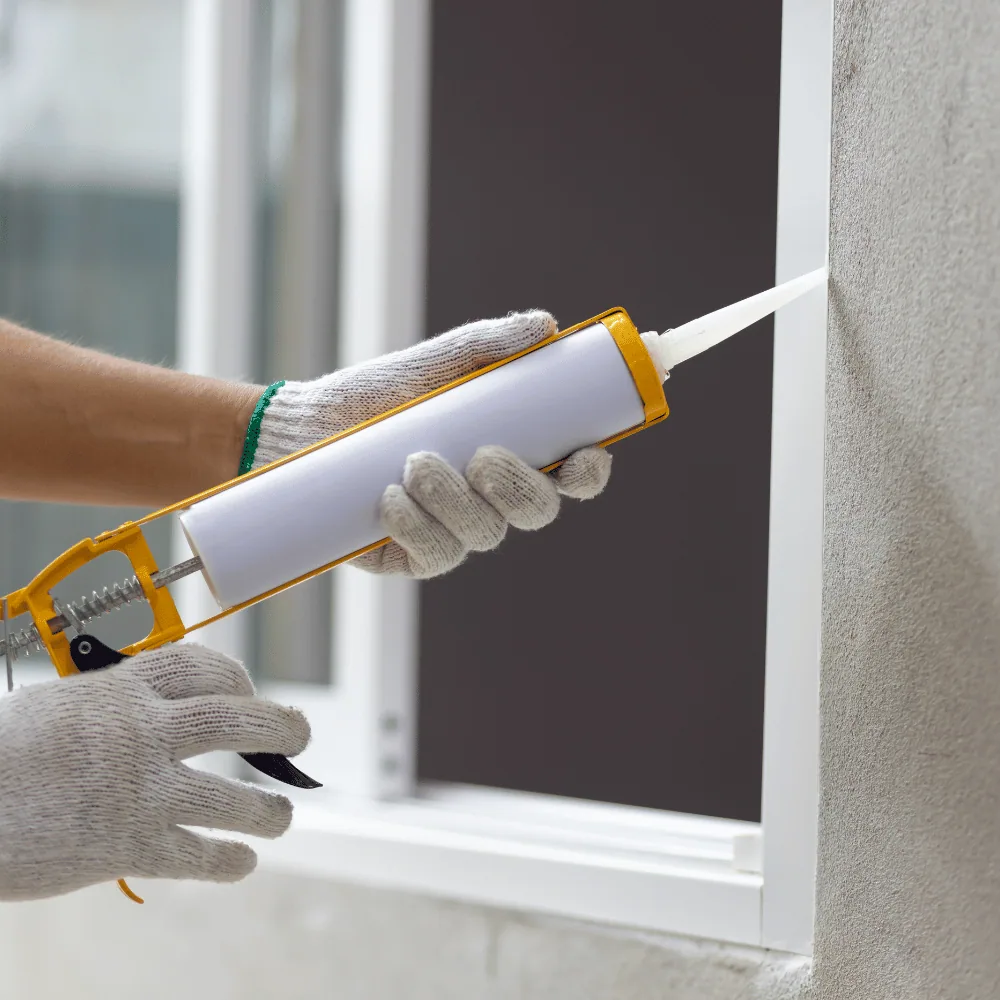
Sealing is the most effective measure: a bug that can’t get into your walls will never come out inside your house. Ideally, finish this work before early September, ahead of the first big gatherings:
- re-caulk around windows, doors and trim with a silicone-based sealant;
- install or replace worn door sweeps and weatherstripping, including on the garage door;
- repair or replace torn window screens;
- seal gaps around pipes, cables, dryer vents and air conditioner lines;
- put fine mesh over attic and soffit vents;
- remove or cover window air conditioners before fall.
Focus your efforts on the south and west sides of the house: that is where boxelder bugs land first.
Soapy water on the clusters
When the bugs cluster on the wall, a mix of water and dish soap (roughly one tablespoon per litre) sprayed directly on them will kill them. It only works on contact and has no lasting effect, so you need to target the clusters, repeatedly, during the gathering period. Avoid soaking your flower beds, since soap can harm some plants.
Seed-bearing trees
If a female boxelder tree grows right next to the house, it is probably the source of the problem. Raking up fallen seeds and not planting new boxelders near the building helps reduce the population. Removing a female tree is the most drastic option, but it is not always desirable or enough, since bugs can come from neighbouring properties. Talk to an arborist and check your municipality’s rules before cutting down a tree.
Clean up around the foundation
Remove leaf piles, boards and debris leaning against the foundation. They give boxelder bugs hiding spots right next to your walls.
When should you call an exterminator?
For a few bugs here and there, a vacuum and good caulking are enough. A professional becomes useful when:
- hundreds of boxelder bugs gather every fall despite your efforts;
- they come back inside in large numbers every spring;
- the entry points are out of reach (second storey, soffits, roofline);
- you manage an apartment building or a business where they bother tenants or customers.
A technician starts by inspecting the exterior to find the entry points and the spots where the bugs gather. They can then apply a treatment to the exterior walls, around the perimeter of the building. To be clear about its limits: sunlight breaks down products applied outdoors, so the effect against boxelder bugs is short-lived. The treatment has to be timed just before the late-summer gatherings, and it complements sealing rather than replacing it.
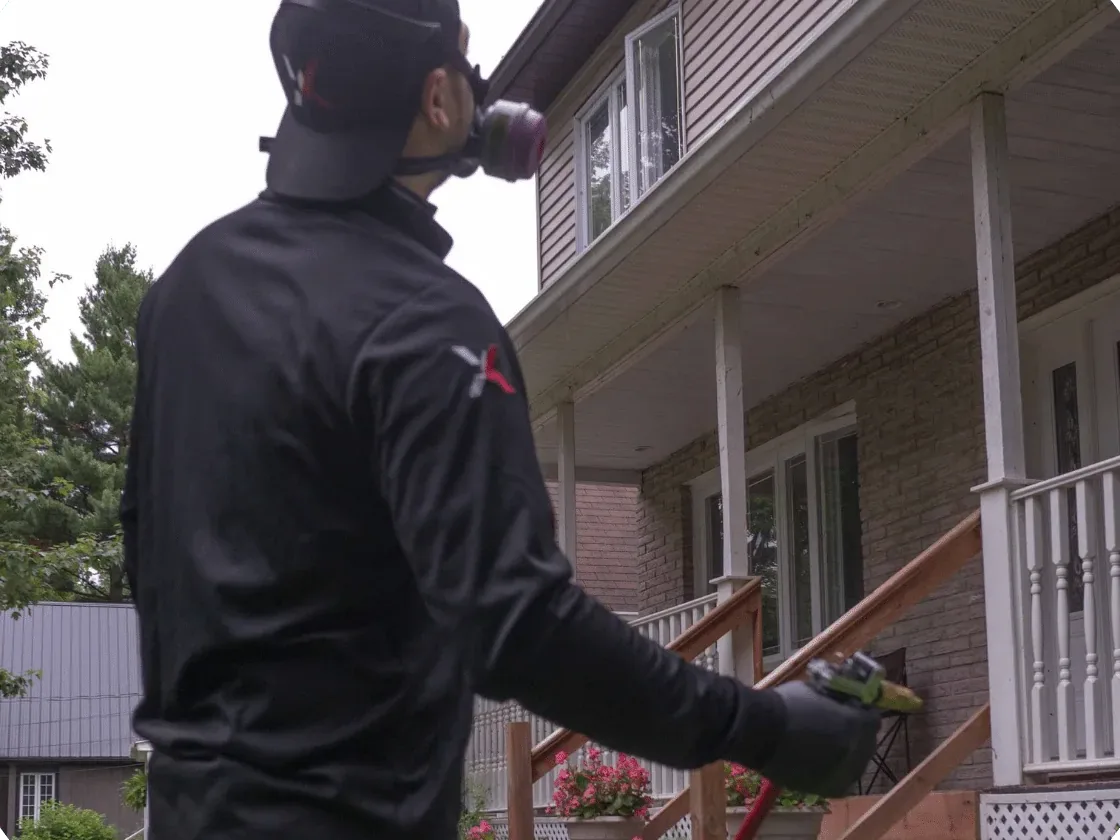
At Exterminatek, outdoor spraying is applied around the perimeter of the property, on the exterior walls. The season generally starts in May, with a second visit planned in August, which lines up with the time boxelder bugs start showing up on walls. To learn more, read A shield against ticks, spiders and ants or see our pest control services.
Boxelder bug prevention calendar
| When | What the bugs are doing | What you can do |
|---|---|---|
| April to May | Adults leave the walls and return to trees; some end up indoors | Vacuum indoors; note where they come out |
| June to July | Eggs and red nymphs on boxelder trees | Inspect the exterior and start caulking |
| August | New adults appear | Finish caulking and screens; book an exterior treatment if needed |
| September to October | Large clusters on south and west walls | Soapy water on clusters; keep doors and windows shut on warm afternoons |
| November to March | Hibernating in walls; a few come out on mild days | Vacuum as needed; don’t treat inside the walls |
Don’t confuse them with…
Several insects move into Quebec homes at the same time of year, and the approach is not quite the same for each:
- Western conifer seed bugs and stink bugs are bigger (up to 2 cm), brown, and give off a strong smell when disturbed. Our guide on the western conifer seed bug and stink bugs will help you tell them apart.
- Bed bugs are a completely different story: small (5 to 7 mm), wingless and brown, they live in your bed, not on your siding. If in doubt, see What do bed bugs look like?
- Asian lady beetles also cluster on sunny walls in the fall, but they are round and dome-shaped. See how to get rid of ladybugs.
- Cluster flies, the big, sluggish flies that show up on windows in rooms you rarely use, also hibernate in walls. Read all about cluster flies.
The good news: late-summer sealing protects you against all of these fall invaders at once.
Frequently asked questions
Do boxelder bugs bite?
Almost never. They feed on plant sap, not blood. Reported bites on people are very rare and harmless. Boxelder bugs are not considered dangerous: it is their numbers, not their bite, that cause the trouble.
Why do I have boxelder bugs in my house in spring?
They are adults that spent the winter in your walls or attic. When the sun and your heating warm the walls, some of them head indoors instead of outdoors. They don’t breed inside, and it usually stops by late spring.
How do I get rid of boxelder bugs fast?
Indoors, vacuuming is the fastest and cleanest method. Outdoors, soapy water sprayed directly on the clusters kills a good share of them. For lasting results year after year, nothing beats sealing your house before September.
Should I cut down the boxelder tree near my house?
Not necessarily. Removing a female boxelder tree can reduce the local population, but the bugs travel and can come from neighbouring yards. Start with sealing, which solves most cases.
Need help with boxelder bugs?
Are your walls covered with boxelder bugs every fall, or do they keep coming back inside every spring? Our technicians can inspect your property, find the entry points and tell you whether an exterior treatment makes sense for you, anywhere in Greater Montreal. Call us at 514-677-7526 or request a quote.