CARPENTER ANTS OR BLACK ANTS?
Confusing carpenter ants with black ants is a common challenge for homeowners in Quebec. While they may look similar at first glance, these two species have very distinct characteristics and behaviours — with very different implications for your home. This article helps you tell them apart and understand why correct identification matters.
Identification: Carpenter Ant vs. Black Ant
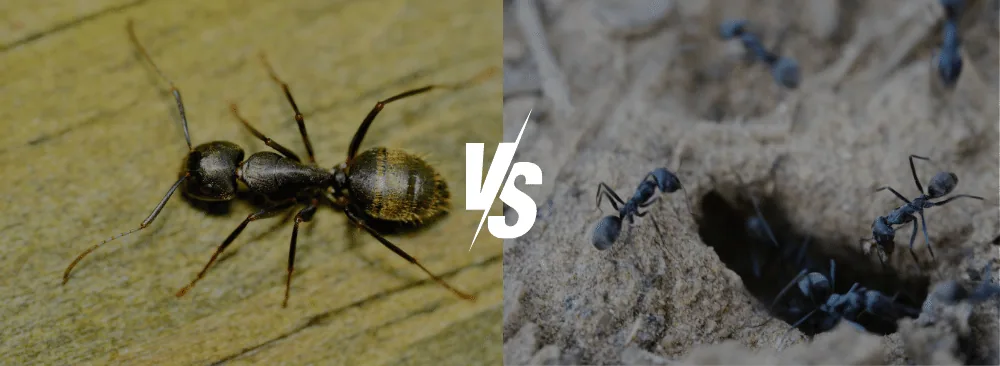
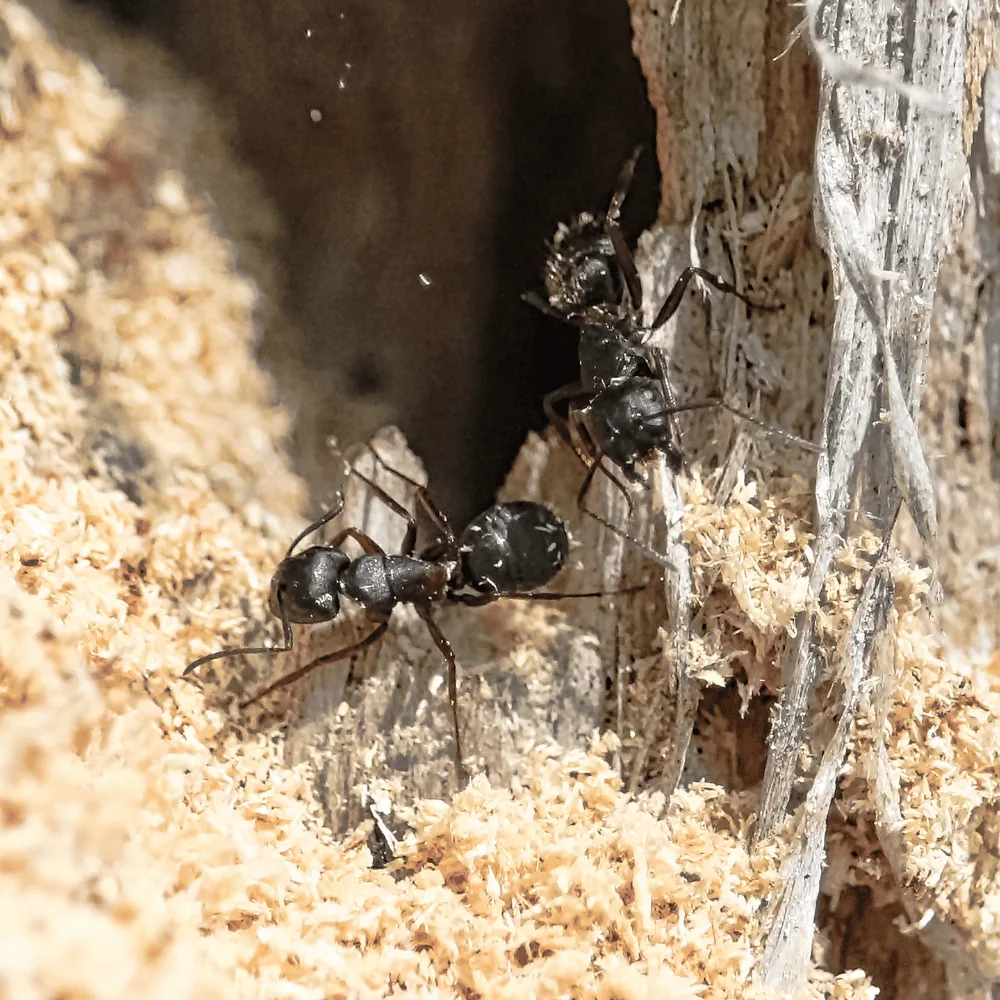
The carpenter ant is noticeably larger than the black ant, reaching up to 13 mm in length, compared to about 4 to 5 mm for the common black ant. Carpenter ants also have a more rounded and uniform thorax, while black ants have a more irregular thorax. In addition, carpenter ants can range in colour from black to reddish-brown, whereas black ants are typically uniformly black.
Habitat and Behaviour
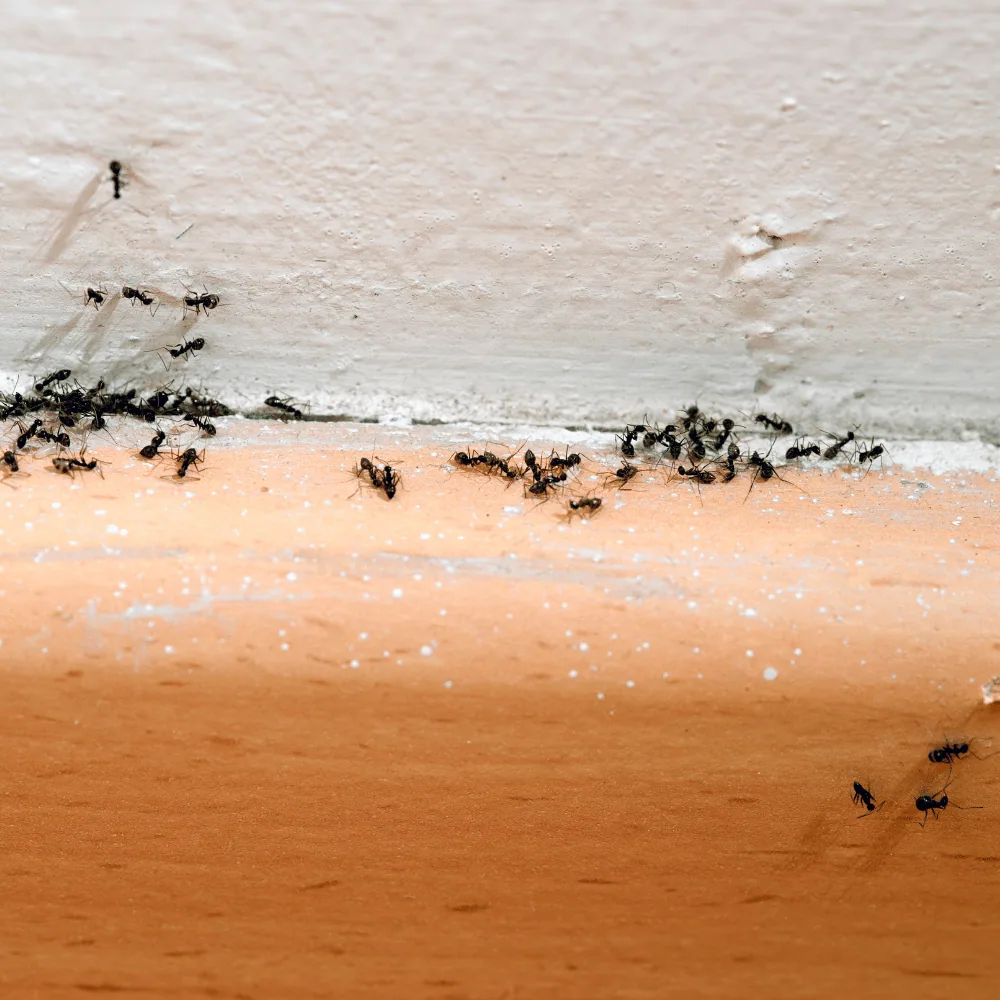
Carpenter ants prefer moist and deteriorating wood to establish their nests, which often leads them to settle inside the wooden structures of homes, potentially causing significant damage to the frame. Black ants, on the other hand, are more versatile in terms of habitat and do not cause structural damage to buildings.
Impact on Structures
The most critical distinction between these two types of ants lies in their impact on home structures. Carpenter ants are known for their ability to damage wood when they establish their colonies inside it. Left unchecked, they can compromise the structural integrity of wooden elements. Black ants, by contrast, pose no such risk — they do not excavate wood to nest.
Comparison Table
To quickly identify which species you are dealing with, here are the key criteria side by side:
| Criterion | Carpenter Ant | Black Ant |
|---|---|---|
| Size | 6 to 13 mm | 4 to 5 mm |
| Colour | Black, reddish-brown, or combination | Uniformly black |
| Thorax | Evenly arched and smooth | Irregular, with bumps |
| Nesting in wood | Yes — excavates to build galleries | No |
| Structural damage | Yes, can compromise framing | No |
| Visible sawdust | Yes — a key identifying sign | No |
| Professional treatment | Recommended promptly | Only if infestation is severe |
When to Call a Pest Control Professional?
The presence of carpenter ants in a property is a warning sign that calls for prompt action from a pest management professional. A specialist can assess the extent of the infestation, locate the main nest, and develop a tailored treatment plan to eliminate the colony while preventing future infestations. Black ants, while a nuisance, generally do not require urgent professional intervention — unless the infestation is severe.
Frequently Asked Questions
How can I tell for certain whether I have carpenter ants or black ants?
The most reliable criterion is size: an ant larger than 6 mm is almost certainly a carpenter ant. Next, check the thorax — evenly arched on a carpenter ant, irregular on a black ant. The most decisive sign is the presence of fine, powdery sawdust near wooden areas: this is exclusive to carpenter ants. If you are still unsure, a professional inspection can confirm the species in minutes.
Can black ants damage wood too?
No. Common black ants do not excavate wood and cause no structural damage. They may enter homes in search of food or moisture, but they nest in soil or under paving — never inside framing. Their presence is a nuisance, not a threat to your home’s structure — unlike carpenter ants.
What should I do if I’m not sure which species I have?
Do not wait to have the insect identified. If you are dealing with carpenter ants, every week without treatment allows the colony to expand and worsen the damage. Take a clear photo of the ant — ideally with a reference object for scale — and contact a certified exterminator for an inspection. Most professionals can confirm the species remotely from a photo, or during a quick on-site visit.