Ladybug Invasion? How to Keep Ladybugs Away from Your Home
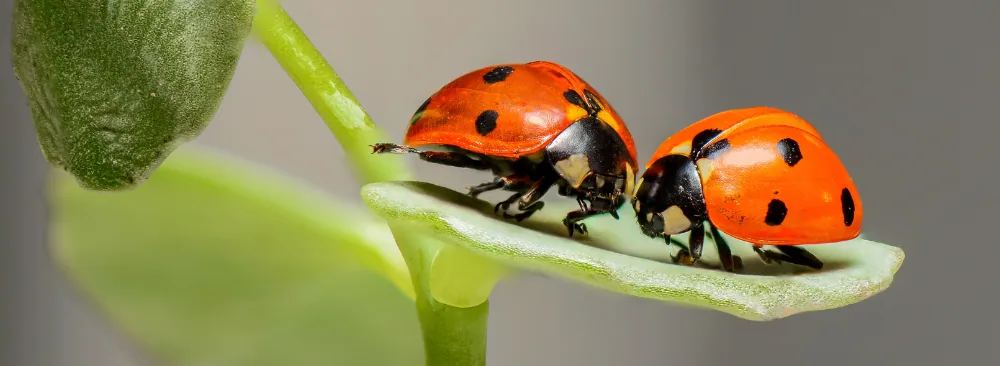
Every fall, Asian lady beetles invade Quebec homes by the hundreds, looking for a warm place to overwinter. If you’re finding them on your walls, window sills, or in your attic, you’re far from alone — and there are practical, effective solutions to get rid of them without crushing them and without reaching for chemical sprays. This guide covers the best ladybug traps, the most reliable prevention strategies, and answers to the questions homeowners ask most often.

Ladybug traps: which ones work and how to use them
When ladybugs are already inside, the first priority is capturing them without killing them. This isn’t just about being humane — it’s a practical concern. Crushing a ladybug releases its hemolymph, an internal fluid that carries aggregation pheromones and a sharp, lingering odour. Those pheromones signal to other beetles that the spot is safe, which means crushing one can effectively invite more. Fortunately, there are several trap options suited to different situations, ranging from commercial products to simple DIY solutions you can put together in minutes.
Light traps: the most effective indoor method
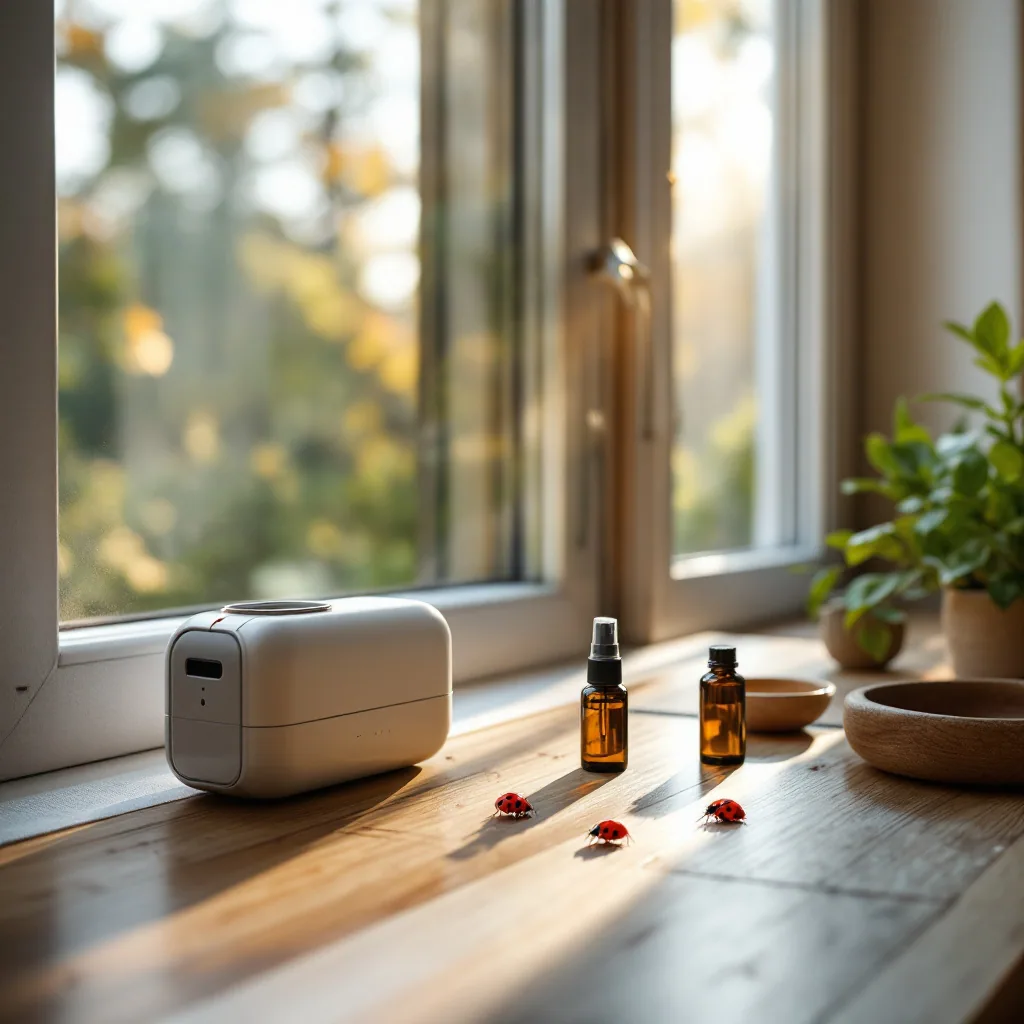
Among all available options, light traps consistently deliver the best results — particularly for larger infestations or hard-to-reach areas like attics, basements, and dark corners. The principle is straightforward: a low-intensity light source attracts ladybugs, which are naturally phototropic, and draws them into a contained chamber they can’t escape from.
- Commercial models: available at most hardware stores, these compact devices combine a small LED bulb with a removable catch tray. They’re easy to empty, reusable season after season, and require no chemicals whatsoever.
- DIY homemade trap: cut the top off a 2-litre plastic bottle and invert it inside the bottle to create a funnel. Place a small LED light at the bottom. Ladybugs attracted to the light fall through the funnel and can’t climb back out. Simple, free, and surprisingly effective.
Where to place your traps: set them near window sills, in attic corners, or wherever you’ve noticed beetles clustering. To maximize their effectiveness, turn off other nearby light sources so the trap becomes the room’s only point of attraction. Empty them regularly and release the beetles outdoors, well away from the house.
Vacuum with a nylon stocking: fast and hands-free
For visible clusters on walls, ceilings, or window frames, this technique is the fastest and most practical option available. It requires no special equipment — just your regular vacuum and a nylon stocking.
Slip a nylon stocking inside the vacuum hose and secure it with a rubber band on the outside of the nozzle. When you vacuum the beetles, they collect in the stocking rather than being drawn into the machine and killed. Once done, tie off the stocking and release the beetles outside, away from the building’s facade. Homeowners tend to appreciate this method because it’s quick, clean, and leaves no odour behind — unlike the alternatives that involve crushing.
Soapy water trap: effective but less humane
This method works on a simple physical principle. Fill a shallow dish or saucer with water and a few drops of liquid dish soap, then place it under a lamp near an active window. Attracted by the light, beetles land on the water’s surface — but the soap breaks the surface tension, and they can’t pull themselves free.
While effective, this approach results in the death of the insects, making it less humane than the two methods above. It’s best reserved for larger infestations where volume makes other methods impractical. Whichever approach you use, empty the dish regularly to prevent odour buildup.
Natural repellents: a complement to traps, not a replacement
Beyond traps, certain natural substances can reduce the appeal of your home to incoming beetles. It’s worth being clear, however, that these solutions work best as a complement to traps — not as a substitute. They help limit new arrivals while you deal with those already present.
- Essential oils — clove, citronella, or citrus: dilute a few drops in water in a spray bottle and apply around window frames and entry points. The scent disrupts the beetles’ navigation without harming them.
- Chrysanthemums (mums): plant them near your home’s entry points. These autumn flowers naturally contain pyrethrins, compounds that repel a wide range of insects, including Asian lady beetles.
- Diluted white vinegar: sprayed along window sills and frames, it also helps neutralize pheromone traces left by previous infestations — a point we’ll explore in more detail in the prevention section below.
Used together, natural repellents and well-placed traps form a two-level strategy: eliminating the beetles currently present while discouraging new ones from settling in.
Prevention: keeping ladybugs out of your home
Traps are essential for managing beetles already inside. However, the most durable solution is to act before they ever cross the threshold. Once ladybugs have established themselves in your attic or wall voids, they leave behind pheromone traces that will draw new waves the following autumn. Prevention, therefore, is not just about comfort this season — it’s about breaking a cycle that can repeat itself for years. Ideally, preventive measures should be in place before the first cold nights of September.
Sealing entry points: the single most important step
Contrary to what many homeowners assume, ladybugs don’t need an open window to get inside. They exploit the smallest imperfections in a building’s envelope: slightly warped window casings, inadequately protected attic vents, cracked soffits, siding seams that have shifted over time. Older homes, particularly those with wood or brick exteriors, tend to offer far more of these entry points than newer construction.
Direct your efforts first toward the southwest-facing wall of your home. That’s where Asian lady beetles tend to mass in greatest numbers during the fall, drawn by the residual heat stored in the wall surface throughout the day — an instinctive behaviour known as thermotaxis. Here are the most effective interventions:
- Apply silicone or acrylic-latex caulk around window frames, door trim, and siding joints
- Install weather stripping around exterior doors and attic hatches to close the millimetre-wide gaps that beetles exploit
- Fit fine mesh screens over attic vents and chimney flues — they block entry without compromising airflow
For a comprehensive approach to sealing your home, our guide on caulking against rodents covers the same techniques in detail — the methods overlap significantly when it comes to blocking small insects as well.
Eliminating pheromone traces to break the cycle
If ladybugs return to the exact same spots in your home year after year, it’s not coincidence — it’s chemistry. Asian lady beetles release aggregation pheromones that mark overwintering sites as safe and suitable. The primary compound, harmonine, can persist on surfaces for months or even years after the beetles themselves are gone. The result: even after a thorough cleanup, next autumn’s arrivals will follow the same invisible trail back to the same locations.
To break this cycle, removing the beetles isn’t enough — you also need to erase their chemical memory. Here’s how:
- Wipe down entry points and congregation areas with a solution of white vinegar and water. The acidity helps dissolve pheromone residues, weakening the signals that draw future beetles to the spot.
- Avoid bleach and ammonia: despite being strong cleaners, these products don’t neutralize pheromones effectively, and they can damage surfaces in the process.
- Clear away leaf litter, woodpiles, and debris from around your foundation. These damp, sheltered zones often serve as staging areas for beetles before they attempt to enter the building.
Additionally, if the same exterior walls are affected season after season, consider repainting them with a darker shade. Light colours — particularly white and pale yellow — reflect more heat and light, making them significantly more attractive to thermotaxis-driven beetles. A change in exterior colour can, on its own, meaningfully reduce clustering on your facade.
Why ladybugs invade homes in Quebec
To address the problem effectively, it helps to understand briefly why it occurs in the first place. The primary culprit behind these autumn invasions is the Asian lady beetle (Harmonia axyridis), an species introduced to North America in the 20th century to control agricultural pests. While it performed well in that role, it also developed a problematic habit: unlike native ladybugs, which overwinter quietly outdoors under leaves or bark, the Asian lady beetle strongly prefers to shelter inside buildings.
The trigger is precise. Once temperatures drop below approximately 12°C — typically between late September and early November — these beetles begin seeking warm, dry shelter for the winter. Your pale-coloured, sun-exposed walls instinctively evoke the rocky cliff faces of their native habitat. They find their way in through the smallest available openings, then release aggregation pheromones that attract other individuals. A handful of beetles can, within days, become a significant swarm.
Once inside, they enter a state of diapause — an insect form of hibernation — and cease feeding and reproducing entirely. Though largely dormant, they may become active again on milder winter days, crawling across walls and windows, staining surfaces with their secretions, and releasing a sharp odour when disturbed. This is precisely why capturing rather than crushing them always yields better long-term results.
Conclusion
Managing a ladybug invasion effectively comes down to two complementary approaches. First, capture the beetles already present using light traps, the nylon stocking vacuum method, or soapy water dishes. Second, prevent new arrivals by sealing entry points before the end of summer and neutralizing pheromone traces with white vinegar after each infestation.
One thing to keep in mind: indoor chemical sprays are best avoided. Not only are they largely ineffective against dormant beetles, but they also carry health risks for people and pets — and killing beetles indoors releases the very pheromones that invite more to follow. In the vast majority of cases, a combination of well-placed traps and targeted preventive measures is all it takes to resolve the problem durably.
If the infestation persists despite these efforts, or if it returns every year without improving, professional help can be valuable for identifying hard-to-find entry points and applying a targeted treatment. Contact a certified Exterminatek technician for a full assessment of your situation.
Frequently Asked Questions (FAQ)
1. What is the best ladybug trap for inside the home?
Light traps are generally the most effective option for indoor use, especially for larger infestations or areas that are difficult to access, such as attics. They attract beetles with a low-intensity light source and contain them without killing them or triggering pheromone release. For visible clusters on walls or ceilings, the vacuum-with-nylon-stocking method is faster and equally effective. Both can be used simultaneously for best results.
2. How do I make a homemade ladybug trap?
Cut the top off a 2-litre plastic bottle and invert it inside the bottle to create a funnel. Place a small LED light at the bottom. Ladybugs attracted to the light enter through the funnel and fall into the bottle, where they can’t climb back out. Empty the trap regularly and release the beetles outdoors, well away from the house. The trap is reusable, costs nothing, and requires no chemicals.
3. Why are there ladybugs in my house in winter?
Asian lady beetles enter homes in the fall to find a warm place to survive the winter — a behaviour triggered by falling temperatures, not by anything specific to your home’s cleanliness or condition. Once inside, they go dormant and do not reproduce or feed. If they keep returning to the same spots year after year, residual pheromones from previous infestations are almost certainly the cause. Cleaning those areas with white vinegar and sealing entry points before September will break the cycle.
4. What does a ladybug invasion in the house mean?
A fall ladybug invasion simply means your home offers ideal overwintering conditions: warmth, a light-coloured exterior, and accessible entry points. It is not a sign of bad luck, poor hygiene, or structural damage. It is, however, a clear signal that some caulking is overdue and that pheromone traces from a previous infestation are likely still present on your walls or window frames. Addressing both of these issues significantly reduces the likelihood of recurrence.
5. How do I stop ladybugs from coming back next year?
Prevention is most effective when started before the end of August. Caulk any gaps around windows, doors, and vents, install fine mesh screens on attic vents and chimney flues, and clean known entry points with white vinegar to neutralize residual pheromones. Planting chrysanthemums near entry points and removing leaf litter from around the foundation also help. If the same exterior walls are consistently affected, repainting them in a darker shade can make a noticeable difference.
6. Should I call an exterminator for ladybugs?
In most cases, traps combined with proper sealing measures are sufficient to resolve the problem without professional help. However, calling a professional becomes worthwhile when the infestation is severe, when it recurs every year despite preventive measures, or when the entry points are too numerous or too difficult to locate without a thorough inspection. Exterminatek offers a complete assessment to identify at-risk areas and recommend the most appropriate course of action for your specific situation.
7. Are chemical sprays effective against ladybugs?
Exterior insecticides can provide temporary relief if applied early in the fall, before the first cold snap. Indoors, however, they are generally ineffective against dormant beetles and pose real risks to the health of people and pets. Beyond that, killing beetles inside the home releases their aggregation pheromones, which can worsen the problem the following year. Physical exclusion and non-chemical trapping methods remain the safer and more durable solution in virtually all cases.