Tick Nest: Myth or Reality?
Heard about « tick nests » and wondering if that’s something to worry about? Short answer: ticks don’t build nests. What people call a tick nest is simply a cluster of eggs laid by a female in a sheltered spot. Here’s what that actually means for your yard, and what to do about it.
Do Tick Nests Actually Exist?
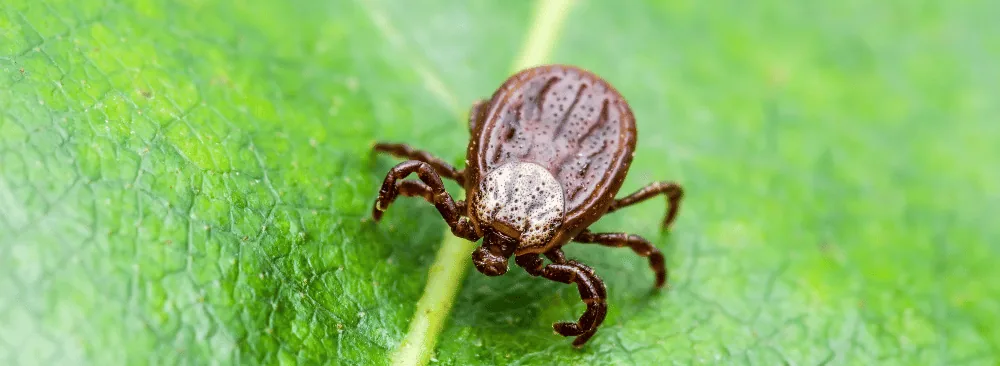
The term « tick nest » causes a lot of confusion. Unlike wasps or ants, which build elaborate structures to house their colonies, ticks are solitary parasites. According to the CIUSSS de la Mauricie-et-du-Centre-du-Québec, they don’t fly or jump. They wait patiently on grass blades or leaves for a host to brush by. They don’t live in groups, communicate, or form colonies of any kind.
What People Actually Mean by a « Tick Nest »
What’s often described as a tick nest is really just an egg mass left behind by a single female. After feeding on a host, a female tick can lay between 1,000 and 3,000 eggs in a sheltered location, forming a compact, brownish cluster visible to the naked eye. It’s not a constructed shelter or a shared dwelling. It’s simply a temporary deposit of future parasites.
Finding one doesn’t mean a colony has taken up residence on your property. It means one female passed through, fed nearby, laid her eggs, and died.
Where Do Ticks Lay Their Eggs?
Ticks choose spots that offer protection, moisture, and shade. Egg clusters are most often found:
- Under piles of dead leaves or plant debris
- In tall grass and unkempt areas
- Under rocks, logs, or boards lying on the ground
- In crawl spaces or damp, shaded areas near the house
These are the same spots where adult ticks wait for hosts. Finding eggs there is a sign that adult ticks have been, or still are, active nearby.

Found Tick Eggs in Your Yard?
How to Recognize Them
A tick egg mass looks like a small, compact cluster of tiny translucent to brownish beads grouped tightly together. Each egg is less than a millimetre across. They’re typically found at ground level, tucked under organic matter. If you’re not sure what you’re looking at, a photo sent to a pest management technician is usually enough to get a quick identification.
What to Do If You Find One
Finding tick eggs in your yard doesn’t call for panic, but it does call for prompt action to prevent the larvae from dispersing once they hatch. According to Health Canada, the risk of Lyme disease transmission depends on the type of tick and how long it stays attached. That’s one more reason to act quickly when you find an egg cluster. Here’s what to do:
- Don’t touch the cluster with bare hands: use gloves or a tool to collect it
- Remove the cluster along with the surrounding debris: seal everything in a bag before disposing of it
- Treat the area: a targeted acaricide applied around the perimeter reduces the risk of larvae establishing themselves nearby
- Check surrounding areas: where there’s one cluster, there may be others in similar conditions close by
How to Keep Ticks Out of Your Yard
Tick activity is closely tied to the environment you provide. A few consistent yard care habits go a long way toward reducing their presence.
Yard and Lawn Maintenance
- Mow regularly: ticks wait for hosts in tall grass. A short lawn leaves far fewer places to hide.
- Clear dead leaves and plant debris: these damp, shaded spots are prime egg-laying sites. Removing them regularly cuts down on available habitat.
- Create a gravel or wood chip barrier between wooded areas and your yard: ticks have difficulty crossing dry surfaces.
- Store firewood away from the house and off the ground to prevent it from becoming a hiding spot.
Ticks are most active in Quebec from May through October, peaking in June and July. Getting ahead of the problem early in the season is always more effective than reacting mid-summer.
Keep Host Animals Away
Deer, rodents, and wild rabbits are the main vectors bringing ticks into residential yards in Quebec. To limit their access:
- Install a tall fence (at least 2 m) to deter deer
- Secure bird feeders and food sources to avoid attracting rodents
- Check your pets thoroughly after every outing

When to Call a Professional
If you’ve found multiple egg clusters in your yard, if you or your family are regularly finding ticks after spending time outside, or if your property borders a wooded area, professional treatment is worth considering.
A certified technician can apply a targeted acaricide treatment to the highest-risk areas of your property, with best results when done in early season (May-June), before larval populations peak. They can also identify the environmental factors contributing to tick activity and advise on corrective measures.
For a full guide on eliminating ticks on your property and protecting your family, see our article on how to eliminate ticks. Our team is available to assess your situation and put together a treatment plan suited to your property.
Frequently Asked Questions
Is a tick nest dangerous?
A tick egg cluster isn’t dangerous at the moment you find it. The eggs themselves don’t transmit disease. The risk comes once the larvae hatch and start looking for a host. Acting quickly to remove the cluster and treat the surrounding area is the best way to get ahead of that risk before it becomes a real problem.
How do I know if I have ticks in my yard?
The most reliable sign is finding ticks on yourself, your children, or your pets after spending time outside. You can also do a simple drag test: pull a white cloth or sheet through the tall grass in your yard. If ticks are present, they’ll latch onto the fabric and be easy to spot. The highest-risk zones are areas bordering woods, dense hedges, or unmaintained grass.
Can ticks get inside the house and lay eggs indoors?
Ticks can hitch a ride inside on clothing, shoes, or pets. That said, they rarely lay eggs indoors. Household conditions are typically too dry and warm for the eggs to survive. Finding an egg cluster inside the home is unusual and generally means an engorged female was brought in undetected.