WINTER BEHAVIOR OF CARPENTER ANTS
As winter wraps our habitats in its cold mantle, many animals enter survival mode. Carpenter ants, those well-known wood artisans, are no exception. This article dives into the fascinating world of these social insects, exploring how they adapt and survive during the winter months.
Winter in the carpenter ant world, a vital slowdown
Contrary to what one might think, carpenter ants do not hibernate in the traditional sense. However, their activity slows down significantly with the drop in temperatures. This period of slowdown, or diapause, is essential for their survival during winter.
Why are carpenter ants seen in winter?
Carpenter ants take shelter in wooden structures, particularly in attics, basements, or walls damaged by moisture. During winter, they cease their outdoor activity, but colonies established indoors continue to grow.
These ants exploit:
- Poorly sealed entry points, such as cracks in the foundation.
- Humid areas caused by leaks or poor ventilation.
- Warm indoor temperatures that mimic the favorable summer conditions for their activity.
Cold adaptation strategies
Seeking adequate shelter
As winter approaches, carpenter ants start looking for a warm shelter. This can lead them to infiltrate further into human structures or to burrow deeper into dead and rotting wood, where the temperature remains more stable.
Metabolism reduction
To conserve energy, carpenter ants reduce their metabolism. This adaptation allows them to survive on fat reserves accumulated during the warmer months, thus minimizing the need to feed.
Clustering for warmth
Carpenter ants tend to cluster tightly in their nest to conserve heat and protect the queen and the larvae. This social behavior is crucial for maintaining a stable temperature within the nest.
Winter activities
During winter, the main goal of carpenter ants is the survival of the colony. Although foraging for food is reduced, they may remain active inside their nests, taking care of maintenance and protecting the queen and the young.
Impact of carpenter ants on homes in winter
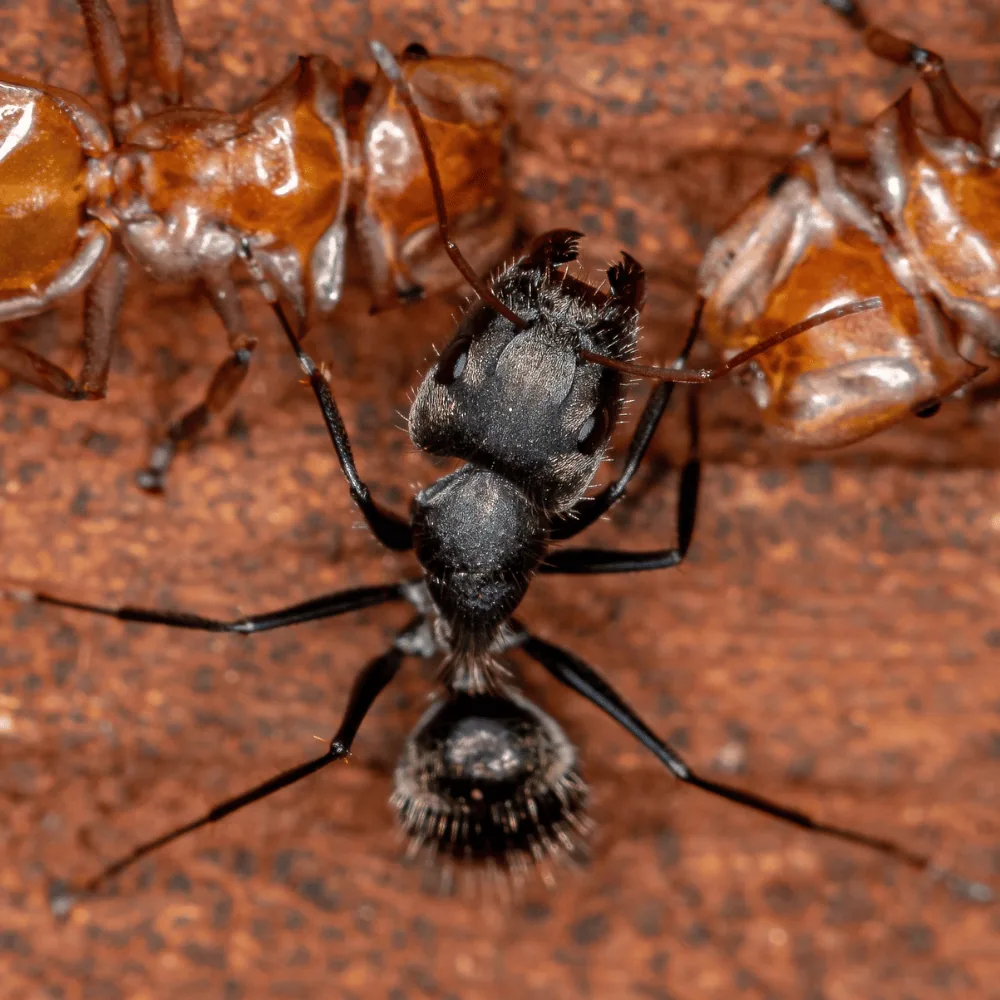
The habit of carpenter ants seeking refuge in homes during winter can lead to surprising discoveries for homeowners. It’s not uncommon to find active ants indoors during the cold months, a sign of a nearby nest.
Prevention and management
To prevent carpenter ants from settling in during the winter, it is advised to:
– Eliminate sources of moisture and rotting wood around the home.
– Seal cracks and openings through which ants could infiltrate.
– Consult a pest management professional if you suspect the presence of a nest inside your home.
Carpenter ants demonstrate an incredible ability to adapt to the cold, allowing them to survive the harshness of winter. Understanding their behavior during these months can help better manage their presence and protect our homes from potential damage.
FAQ
Do carpenter ants hibernate in winter?
No, they do not hibernate but enter diapause, reducing their activity and metabolism to survive the cold.
How do carpenter ants survive without food in winter?
They survive on fat reserves accumulated during the warmer months and reduce their activity to conserve energy.
What should I do if I find active carpenter ants in my house in winter?
This may indicate the presence of a nest inside. It’s recommended to contact a professional to assess and address the problem.