Woodlouse
The woodlouse is not an insect but a land crustacean. Useful in the garden, where it breaks down organic matter, it becomes a nuisance once it comes indoors. Finding it in a basement, a garage, a bathroom or near a ground-level patio door almost always means excess humidity, wood in contact with soil, an ineffective drain or poor ventilation. In Quebec it is seen mainly in spring and autumn, during humidity peaks or after heavy rain. The woodlouse does not bite, carries no disease and damages no materials: it is an environmental warning, not a danger in itself.
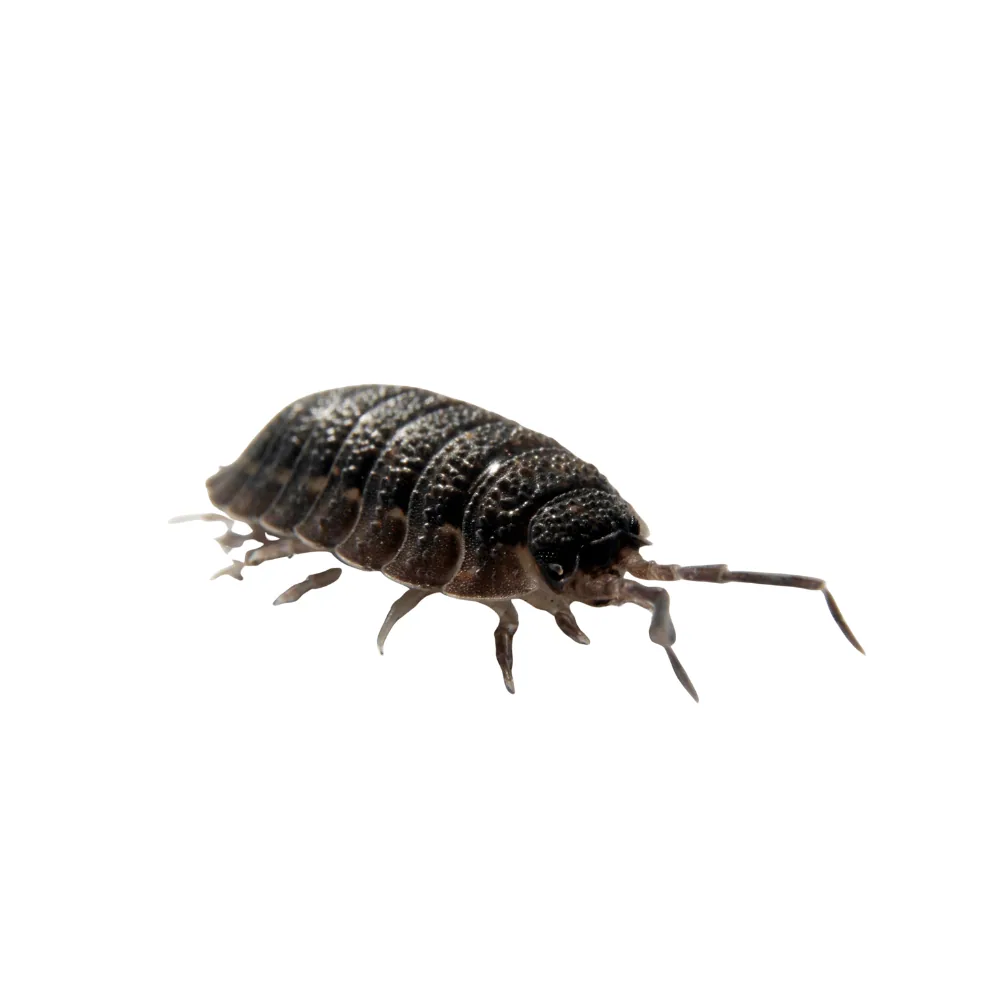
Appearance
- Land crustacean about 1 to 2 cm long, with an oval, flattened, segmented body
- Grey to brownish, sometimes almost black
- Seven pairs of similar legs and two pairs of antennae, only one of which is clearly visible
- A rigid shell of jointed plates, rather like armour
Behaviour
- Nocturnal: it avoids light and seeks out darkness and damp
- Gathers under stones, dead wood, pots and plant debris
- Some species roll into a ball when disturbed
- Does not sting, does not bite and carries no disease
- Moves slowly and dries out quickly in a dry environment
Life cycle
- Breathes through modified gills, which require constant humidity
- The female carries her eggs in a pouch on her underside, where the young develop after hatching
- Most active in spring and autumn in Quebec, during humidity peaks
- Lives in groups in damp microhabitats: crawl spaces, basements, under mulch
Diet
- Decaying plant matter: dead leaves, rotten wood, garden debris
- Organic matter in damp soil
- Mould and waterlogged plant material
- Occasionally young shoots or ripe fruit lying on the ground
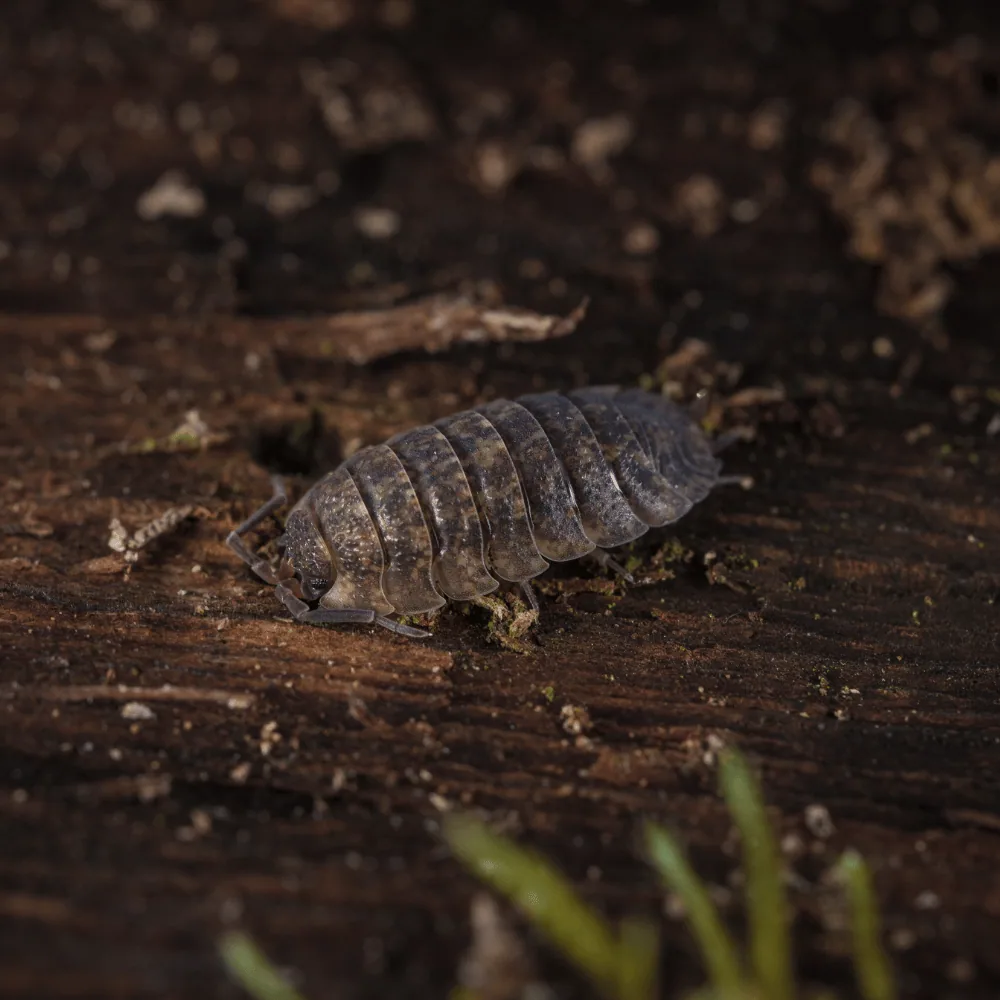
UNDERSTAND, PREVENT, ACT
The woodlouse is a symptom. The usual mistakes: spraying insecticide indoors, which is both ineffective and unnecessary; sealing cracks without correcting the humidity; and ignoring the sources outside — thick mulch banked against the foundation, wood stored directly on the ground. What works in Quebec is drying the place out and cutting the damp routes: a dehumidifier set between 45 and 50% relative humidity in basements, proper ventilation in wet rooms, insulation on cold surfaces, repairs to leaks and shower joints, drainage outside (grading the ground, extending downspouts), mulch and soil pulled back from the foundation, wood and cardboard raised off the floor, and little-used floor drains cleaned and their traps topped up with water. Sealing the entry points — caulk, thresholds, window-well screens — comes after the humidity is corrected, otherwise the intrusions simply move elsewhere. A professional visit can confirm the causes (seepage through a crack, rising damp, a missing vapour barrier) and set the priorities. Most situations resolve without any chemical treatment once the environment is put right.
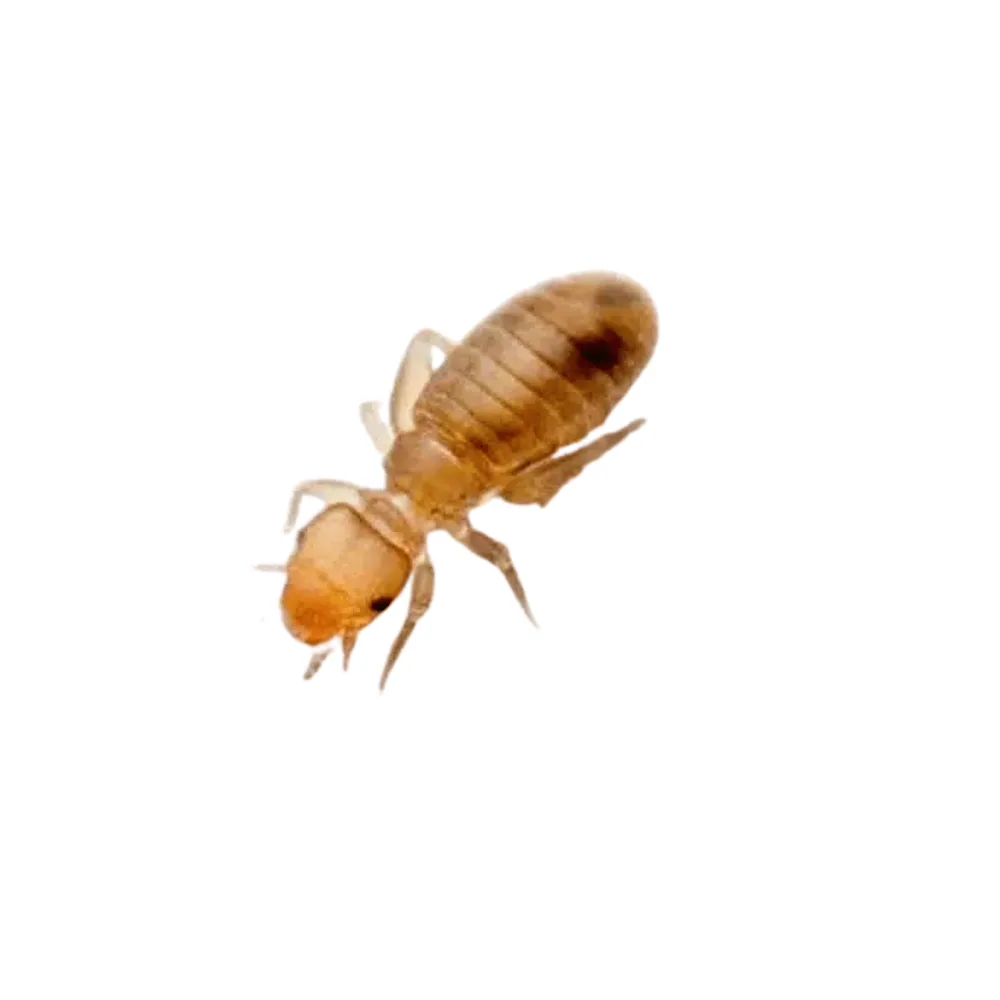
Related species
Request a quote
Need help? We’re here!
A certified technician assesses your situation and proposes a treatment plan suited to it.