Moisture Bugs: How to Identify the Species and Eliminate the Problem
Spotted a small insect in your bathroom, on a damp wall, or in your basement — and not sure what it is? You’re not alone. Moisture insects are among the most common household pests in Quebec, particularly in poorly ventilated spaces or areas prone to water infiltration. The good news: in most cases, identifying the species and correcting the humidity problem is all it takes to resolve the situation durably, without harsh chemicals.
Identifying your moisture insect
Before choosing a solution, you need to know what you’re dealing with. Here are the most common species found in Quebec homes, along with their distinguishing features.
Silverfish
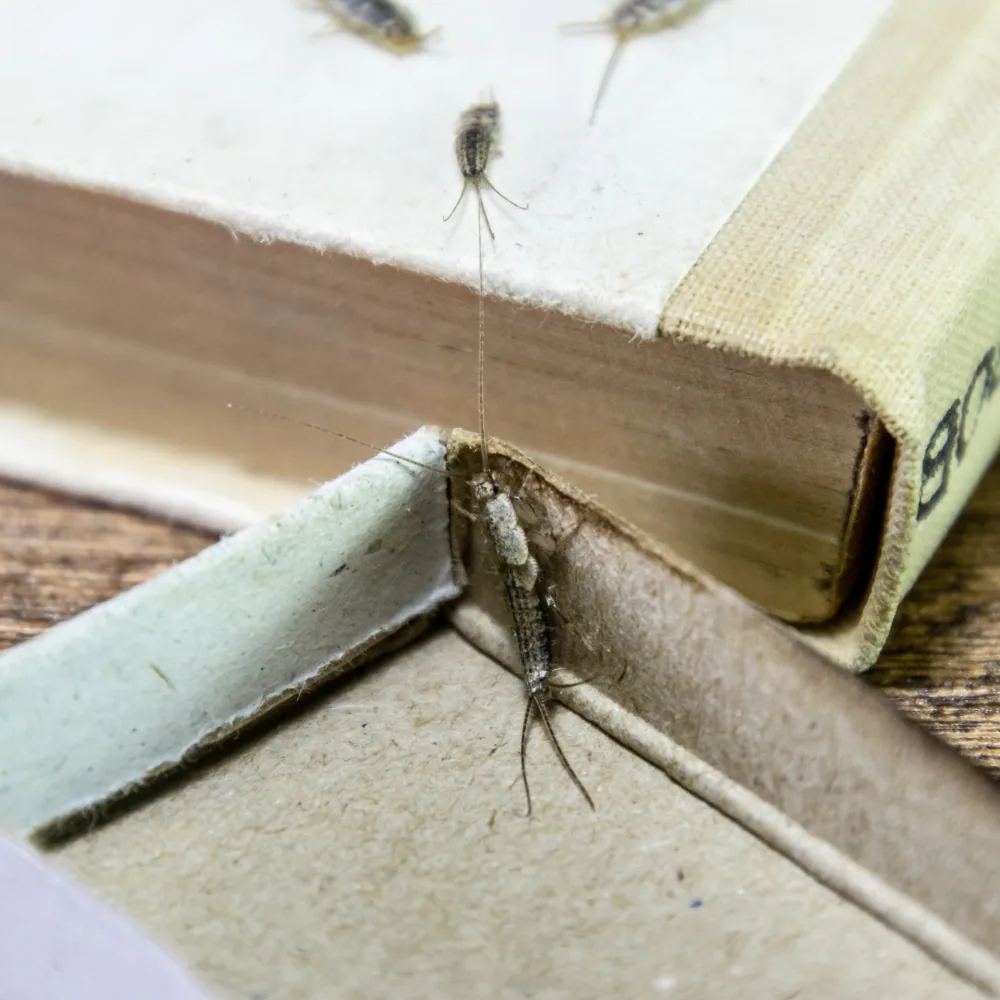
Silverfish are among the most widespread moisture insects in homes. Recognizable by their silvery-gray colour and undulating, fish-like movements, they measure roughly 1 to 2 cm in length. Wingless and very fast, they flee from light and are almost exclusively active at night. They’re most commonly found in bathrooms, basements, and kitchens — wherever humidity regularly exceeds 75%. Silverfish feed on starchy materials including paper, glue, and textiles, and can damage books, wallpaper, and clothing if an infestation goes unchecked.
Earwigs
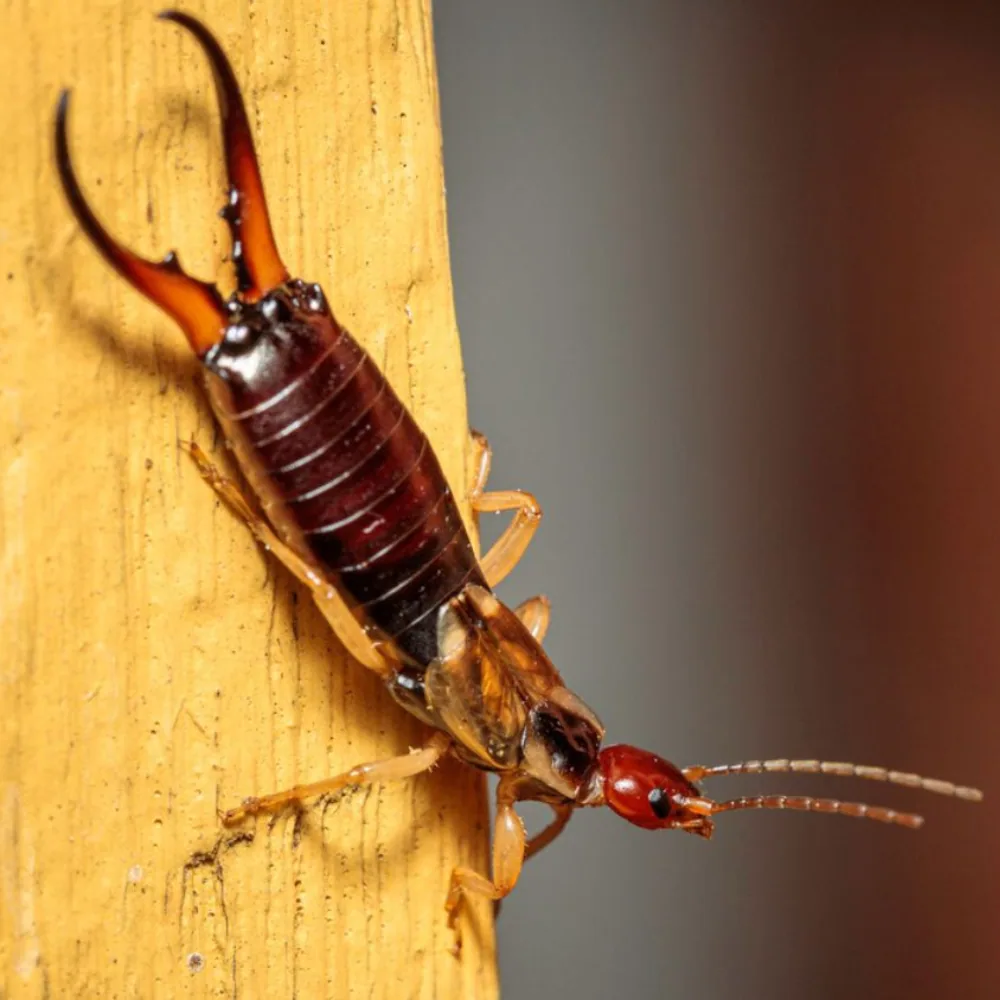
Earwigs are easy to identify thanks to their elongated reddish-brown body and the distinctive pincers at the tip of their abdomen. Nocturnal by nature, they prefer damp, dark environments: basements, bathrooms, gardens, and spaces under mulch. They feed on decomposing organic matter and occasionally on other small insects. While they pose no danger to humans, their presence indoors in significant numbers is a reliable indicator of excess moisture that needs to be addressed. Damage to indoor plant leaves is often the first visible sign of an earwig presence.
Sowbugs and pillbugs
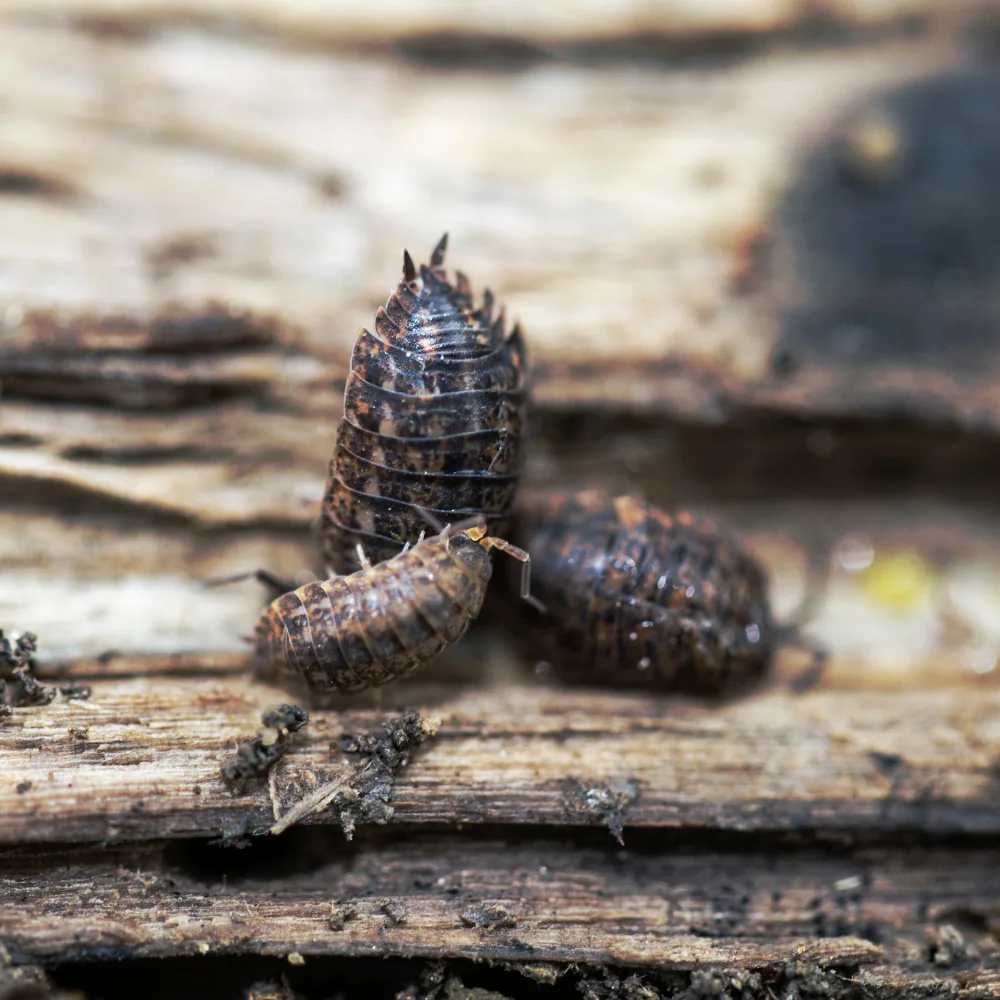
Technically, sowbugs and pillbugs are not insects but crustaceans — relatives of lobsters and crabs, adapted to life on land. Their oval, segmented, slate-gray body and their ability to roll into a tight ball when threatened make them easy to identify. They’re commonly found in basements, bathrooms, garages, and under sinks. Completely harmless to both humans and home structures, their presence is nonetheless a clear signal: ambient humidity is too high and needs to be reduced.
House centipedes
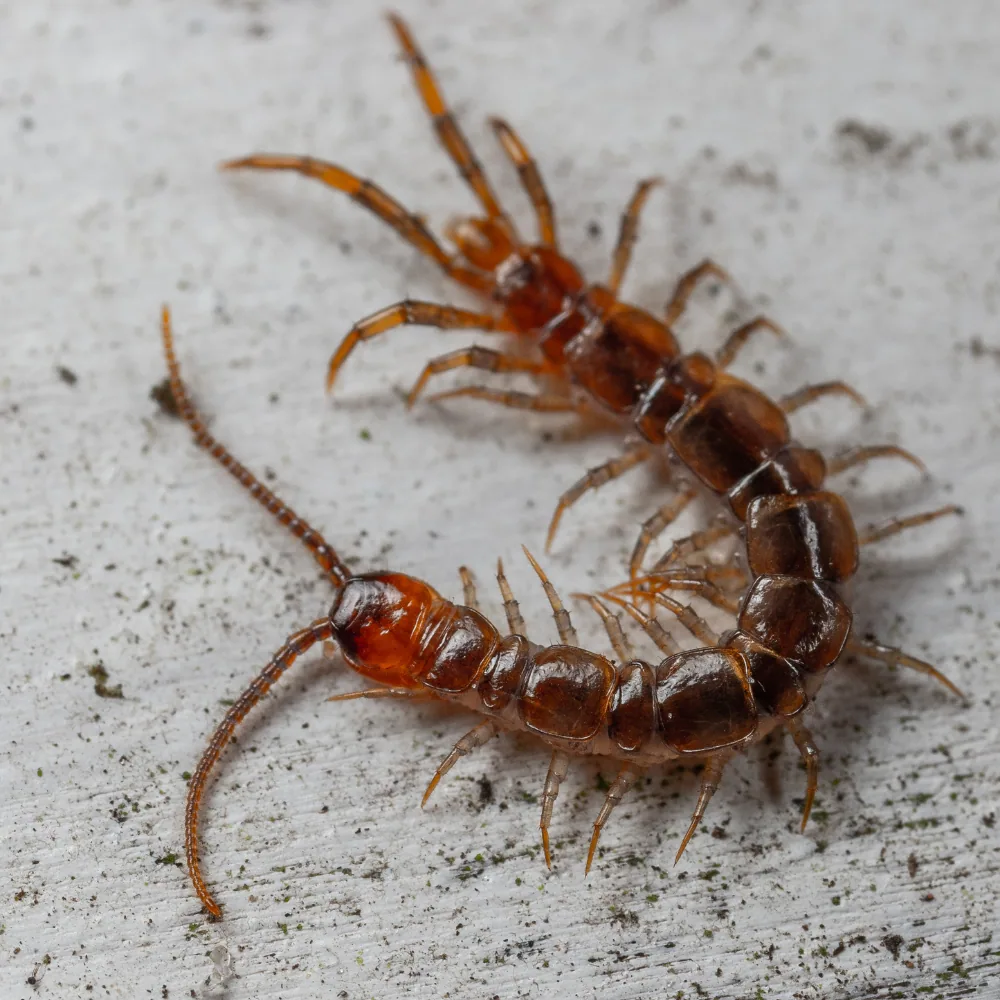
House centipedes are often the ones that provoke the strongest reactions — their long body, numerous legs, and surprising speed can startle even the calmest homeowner. That said, they’re actually one of the most beneficial insects to have in a home: they actively hunt spiders, cockroaches, and other small pests. They prefer basements and bathrooms, where they hunt at night. They pose no threat to humans. Their recurring presence simply indicates that other insects — their prey — are also living in the home.
Book lice (psocids)
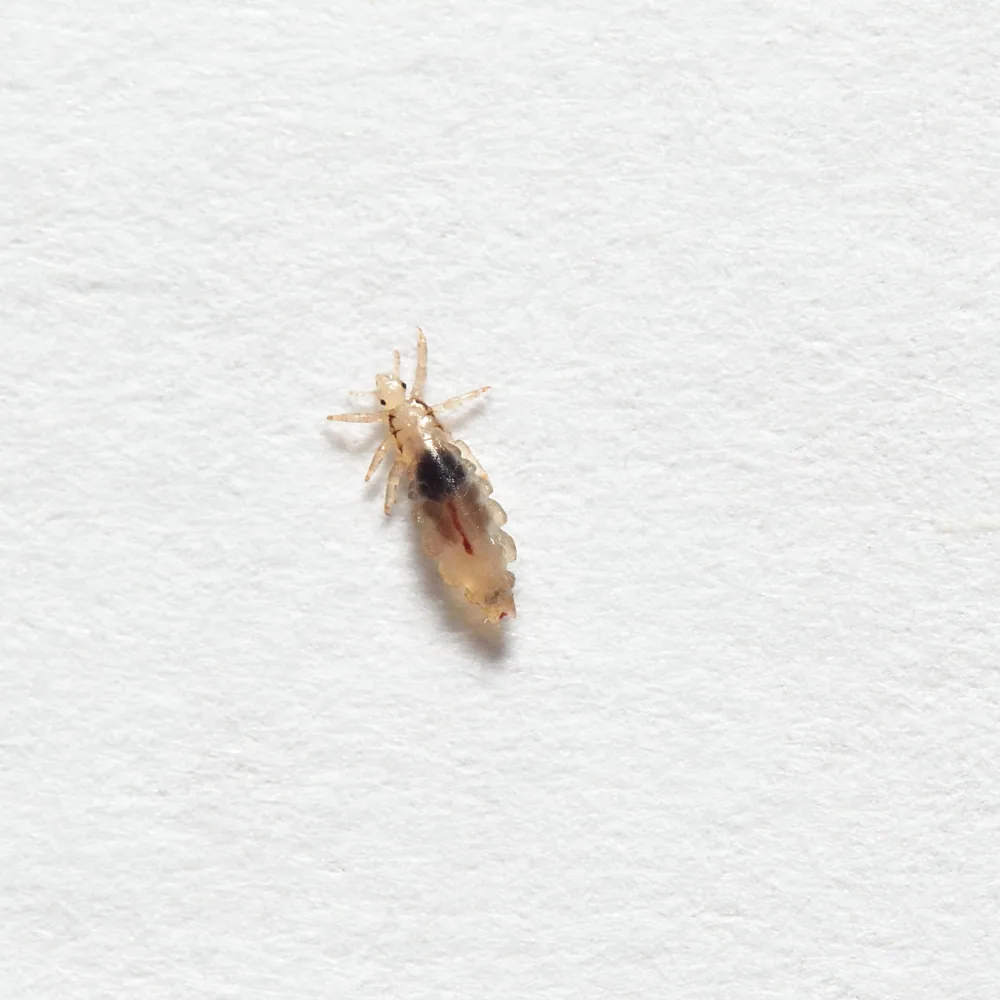
Book lice are tiny — often barely visible to the naked eye — with a soft, pale, translucent body. They’re found in very damp, musty spaces: basements, attics, and behind damp walls. They feed on mold and fungi, which means their presence is frequently a sign of a hidden mold problem rather than just a humidity issue. Harmless to humans, they can nonetheless damage books and paper documents stored in damp areas.
Springtails
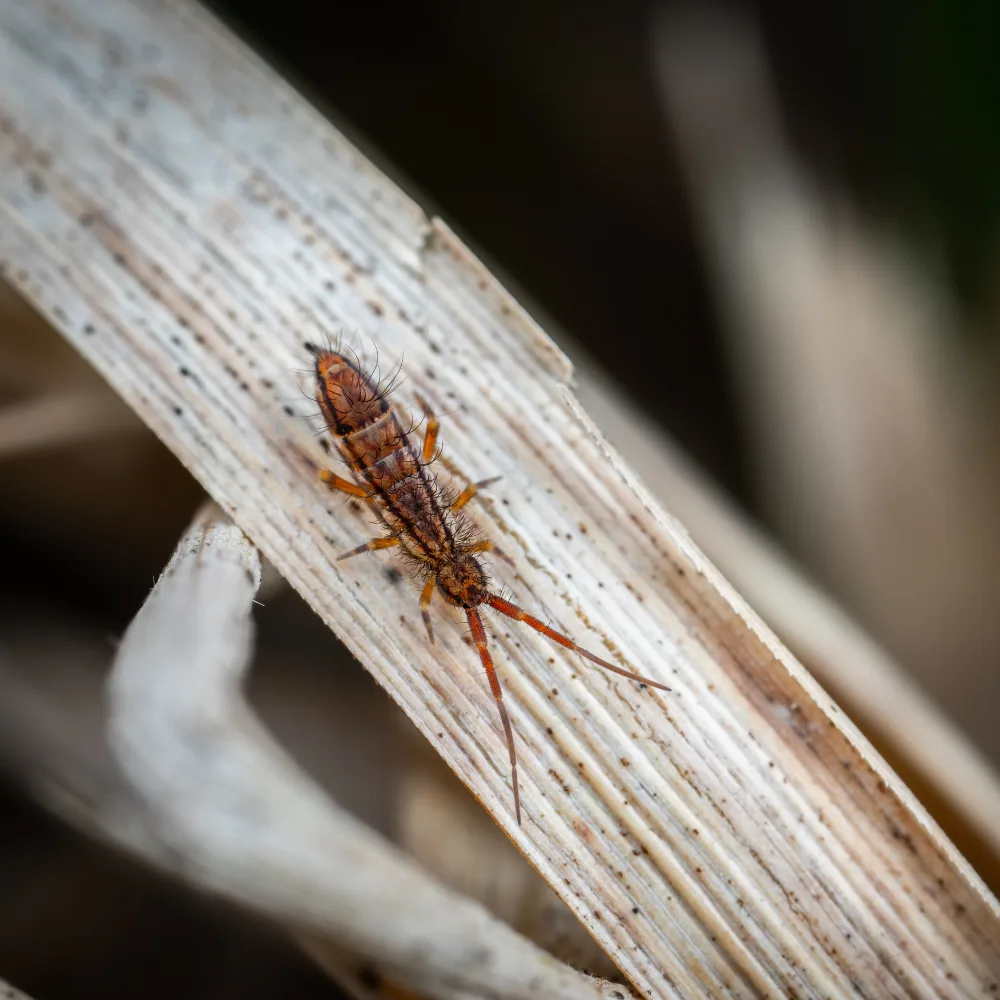
Springtails are tiny white or gray insects, often mistaken for fleas because of their ability to jump — they have a forked tail folded under their abdomen that launches them into the air when disturbed. They’re found in soil, leaf litter, and very damp areas of the home, including indoor plant trays and bathroom floors. They feed on fungi, algae, and decomposing organic matter. Harmless to humans, they become a nuisance when they appear indoors in large numbers — usually after a period of high humidity or following an undetected water leak.
Carpenter ants
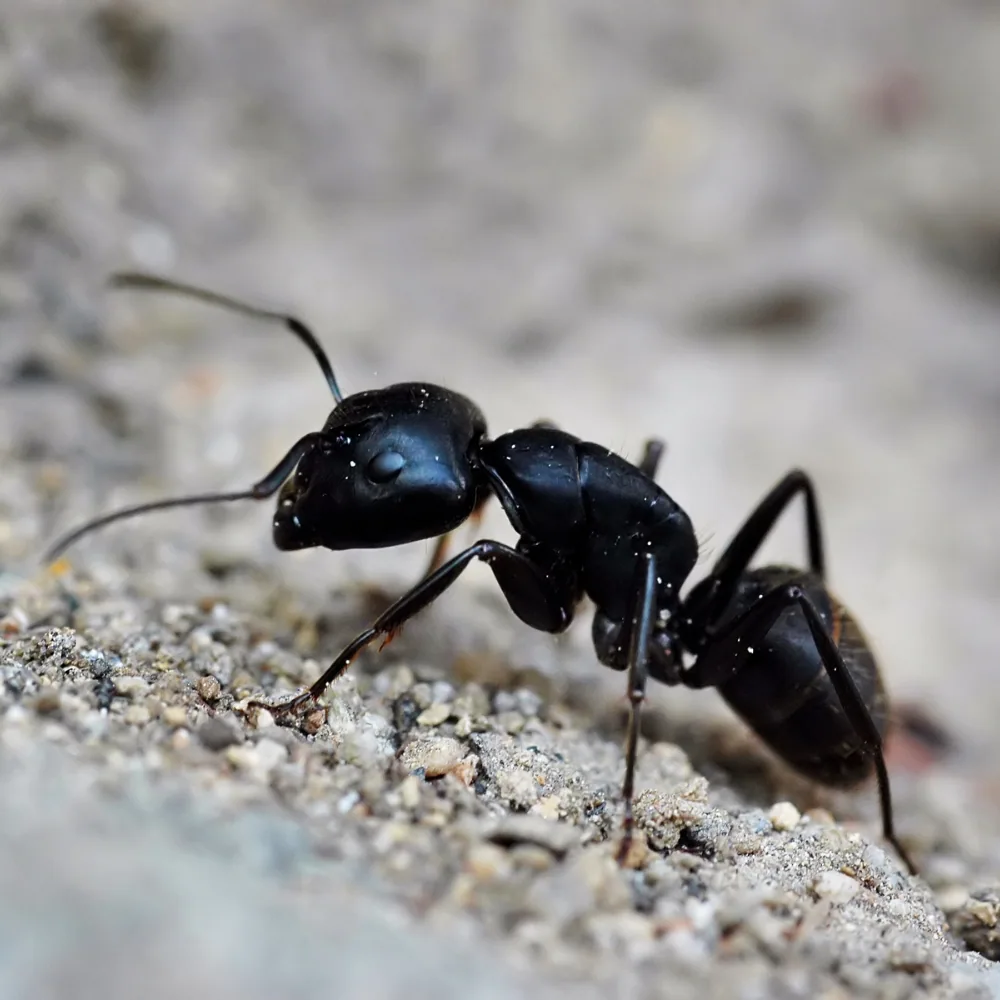
Carpenter ants deserve a special mention: unlike the other insects on this list, their presence can indicate a serious structural problem. These large black or bicoloured ants are attracted to damp or water-damaged wood — around windows, rooflines, sinks, and foundations. They don’t eat wood, but they excavate it to build their nests, which can compromise structural integrity over time. Signs of an infestation include fine sawdust-like material called frass, faint rustling sounds inside walls, and the appearance of large winged ants in spring.
Cockroaches
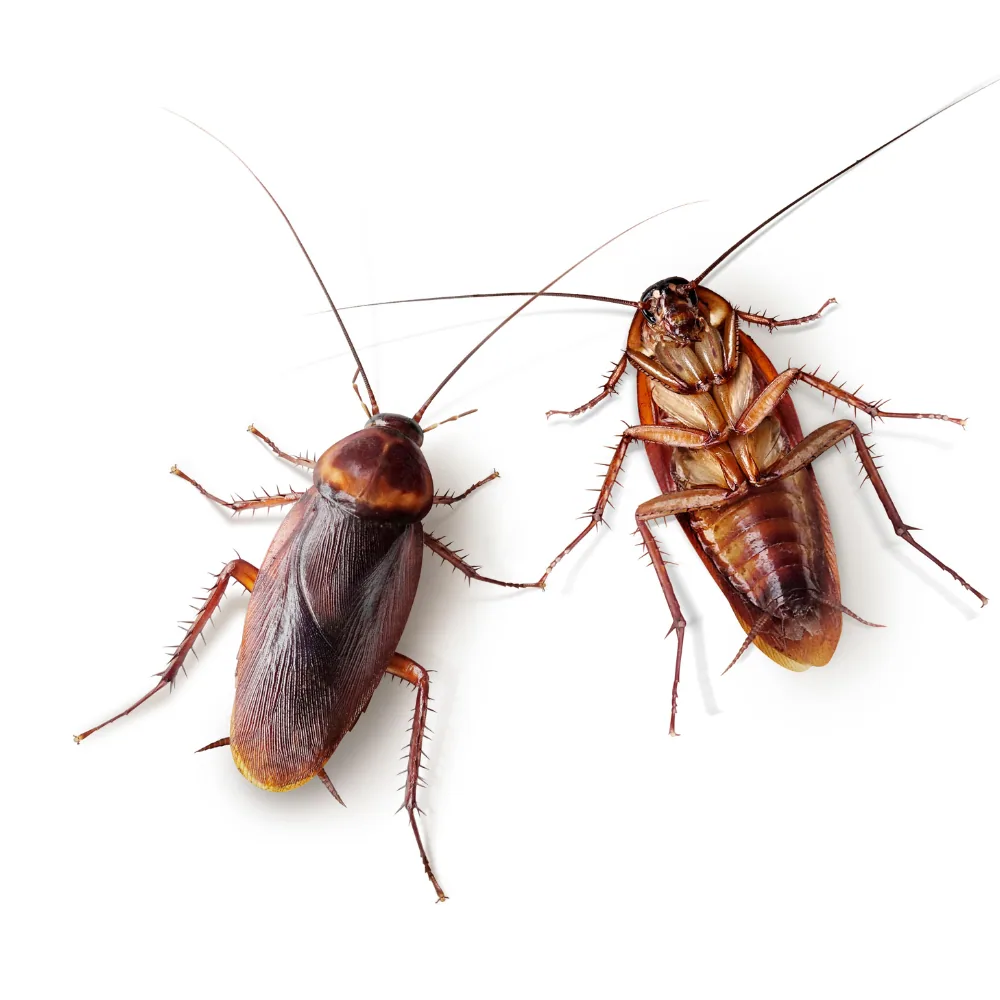
Cockroaches are the most concerning species on this list from a health standpoint. They thrive in damp environments — kitchens, bathrooms, basements — and are drawn to sources of water and food. Their flattened body, long antennae, and rapid movements make them recognizable. They can carry pathogens and contaminate food surfaces. Signs of an infestation include small dark droppings, egg cases (oothecae), and a persistent musty odour. Unlike the other insects in this guide, a cockroach infestation almost always requires professional treatment.
| Insect | Size | Where to find them | Dangerous? |
| Silverfish | 1–2 cm | Bathroom, basement, kitchen | No — damages paper and textiles |
| Earwigs | 1–2 cm | Basement, garden, bathroom | No |
| Sowbugs / pillbugs | 1–2 cm | Basement, garage, under sinks | No |
| House centipedes | 2–4 cm | Basement, bathroom | No — beneficial (eats other pests) |
| Book lice | < 1 mm | Basement, attic, damp walls | No — sign of mold |
| Springtails | 1–2 mm | Plant trays, bathroom, soil | No |
| Carpenter ants | 6–13 mm | Damp wood, windows, roofline | Yes — structural damage |
| Cockroaches | 1–4 cm | Kitchen, bathroom, basement | Yes — health risks |
Where to find them and why: by room
Where you spot the insect is often the best clue for identifying the species and understanding what’s causing it. Here are the most commonly affected areas in a Quebec home and the insects most frequently found there.
Moisture insects in the bathroom
The bathroom is the room most vulnerable to moisture insects. Showers, baths, and sinks generate steam continuously, and if ventilation is inadequate, humidity accumulates in grout lines, behind tiles, and under vanities. The most common species in bathrooms are silverfish, sowbugs, and house centipedes. If you notice these insects regularly, start by checking your exhaust fan — it should run during and for at least 20 minutes after every shower. Also inspect the caulking around the tub and shower: peeling or blackened caulk is a direct source of moisture infiltration.
Insects on walls
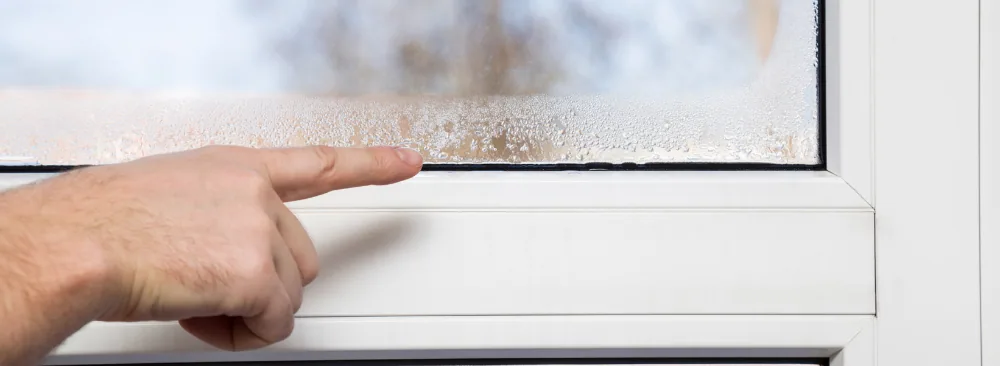
Insects moving along walls — particularly at night — generally indicate moisture inside the wall itself: a plumbing leak, a thermal bridge causing condensation, or an undetected water infiltration. Silverfish and house centipedes are the species most often observed in this situation. If dark stains are appearing on the wall at the same time as the insects, mold may be present — in that case, a professional inspection is recommended to locate the source before treating.
Insects in the basement
The basement is the natural habitat of the majority of moisture insects. In direct contact with the ground, it’s vulnerable to capillary rising, foundation infiltrations, and chronically poor ventilation. You’ll frequently find sowbugs, earwigs, house centipedes, springtails, and book lice there. A basement with humidity consistently above 60% is a standing invitation for these species. A properly sized dehumidifier and caulking of foundation cracks are the two most important first steps.
Tiny insects that are hard to identify
If the insect you’re seeing is very small — nearly invisible or no bigger than a grain of sand — it’s likely springtails or book lice. Both species tend to appear suddenly in large numbers, often following a period of high humidity or after an undetected leak. Springtails jump when disturbed; book lice do not. In both cases, the solution is the same: reduce ambient humidity and eliminate any mold sources.
DIY solutions to get rid of them
For the vast majority of moisture insects — with the exception of cockroaches and carpenter ants — home solutions are enough to resolve the problem, as long as you also address the root cause: the humidity itself.
Diatomaceous earth: the most effective solution
Diatomaceous earth is a natural powder made from fossilized algae. When insects come into contact with it, the microscopic abrasive particles damage their exoskeleton and cause dehydration. It’s effective against silverfish, earwigs, sowbugs, and springtails. Sprinkle it around the perimeter of affected rooms, in cracks, and near entry points. One important note: diatomaceous earth loses its effectiveness when wet — in a very humid room, combine it with a dehumidifier for best results. It’s completely safe for humans and pets.
White vinegar: for cleaning and deterring
A solution of equal parts white vinegar and water is useful on two levels. First, it cleans surfaces of the mold and algae that some insects — like springtails and book lice — feed on. By eliminating their food source, you reduce their presence. Second, its acidic scent disrupts the scent trails of ants and deters several other species from settling in. Apply it around window sills, under sinks, and along bathroom grout lines.
Homemade earwig trap
For earwigs specifically, a simple and effective trap involves filling a shallow dish with a mix of soy sauce and a few drops of olive oil. The soy sauce attracts earwigs, and the oil prevents them from climbing back out. Place the trap near areas where you’ve observed them, empty it each morning, and repeat until activity decreases.
Essential oils: a complement, not a solution on their own
Essential oils of peppermint, lavender, and tea tree have a repellent effect on certain species, particularly ants and silverfish. Dilute a few drops in water and spray around entry points and in affected areas. These solutions are safe for humans and pets, but their effectiveness remains limited if the underlying humidity problem isn’t corrected at the same time.
| Solution | Target insects | Effectiveness |
| Diatomaceous earth | Silverfish, earwigs, sowbugs, springtails | High |
| White vinegar | Springtails, book lice, ants | Medium — primarily preventive |
| Soy sauce trap | Earwigs | High for the targeted species |
| Essential oils | Ants, silverfish | Low to medium — complement only |
Prevention: reducing humidity at the source
Treating the insects already present without addressing the humidity is like bailing out a leaking boat without plugging the hole. Lasting prevention requires controlling indoor humidity. The goal: maintain a humidity level between 30% and 50% throughout the home.
Improve ventilation
Ventilation is the first line of defence against moisture. In bathrooms and kitchens, exhaust fans should be used consistently during and for at least 20 minutes after any steam-generating activity. If your bathroom fan is old or too noisy to use regularly, it’s worth replacing — a quiet, efficient model pays for itself quickly in pest prevention alone. For basements and attics, additional vents or a mechanical ventilation system may be necessary to maintain adequate air circulation.
Use a dehumidifier
In basements and poorly ventilated spaces, a dehumidifier is often indispensable — particularly in Quebec, where summers are warm and humid. Choose a model sized for the square footage of the room — an undersized unit won’t do the job. Empty the reservoir regularly or connect the unit directly to a floor drain. A hygrometer (under $20 at most hardware stores) lets you monitor humidity room by room and adjust the dehumidifier accordingly.
Repair leaks and infiltrations
Undetected plumbing leaks and foundation infiltrations are the leading causes of excess indoor humidity in Quebec homes. Inspect visible pipes, the joints under sinks, and around toilet bases regularly. Any discolouration on a wall or ceiling should be investigated promptly — don’t wait to see if it gets worse. Outside, make sure gutters are clear and that water drains well away from the foundation. Seal any foundation cracks with an appropriate product.
Reduce exterior moisture sources
Exterior maintenance plays an important role as well. Remove dead leaves, compost, and firewood piles stacked against the house — these materials retain moisture and serve as both shelter and food for several moisture-loving species. Trim vegetation growing too close to walls to improve air circulation. If your property slopes toward the house, regrading the soil may be enough to significantly reduce infiltration.
When to call a professional
For most moisture insects, DIY solutions and humidity correction are sufficient. However, some situations call for a certified technician:
- Presence of cockroaches — they reproduce quickly and require targeted professional treatment
- Presence of carpenter ants — structural damage is possible and inspection must be carried out by a professional
- Recurring infestation despite your efforts — the moisture source hasn’t been identified or corrected
- Visible mold — combined with insects, this indicates a serious moisture problem beyond DIY treatment
- Insects coming from inside walls — a thermal imaging camera or professional moisture meter may be needed to locate the source
A certified technician can inspect your entire property, identify moisture risk areas invisible to the naked eye, and recommend a treatment tailored to your situation. Contact Exterminatek for an assessment — we serve residential and commercial properties across Quebec.
Frequently Asked Questions (FAQ)
1. I have a tiny insect in my bathroom — what is it?
If the insect is very small, white or translucent, and jumps when disturbed, it’s most likely a springtail. If it’s slightly larger, silvery in colour, and moves very quickly, it’s probably a silverfish. In both cases, the cause is the same: humidity levels in the room are too high. Improve ventilation, check the caulking around the tub and sink, and sprinkle diatomaceous earth near affected areas.
2. Why do I have insects on my walls?
Insects moving along walls — especially at night — usually indicate moisture inside the wall itself: a plumbing leak, condensation from a thermal bridge, or water infiltration. Silverfish and house centipedes are most frequently observed in this situation. If dark stains are also appearing on the wall, have the area inspected by a professional to rule out mold before treating.
3. How do I get rid of moisture insects naturally?
Diatomaceous earth is the most effective natural solution — sprinkle it around the perimeter of affected rooms and in cracks. Complement it with diluted white vinegar to clean surfaces of the mold that some species feed on. For earwigs, a soy sauce and olive oil trap is highly effective. In all cases, correct the humidity problem at the same time — without that step, the insects will return.
4. Are moisture insects dangerous?
Most common moisture insects — silverfish, sowbugs, earwigs, springtails, house centipedes — are harmless to humans. They don’t spread disease and don’t cause structural damage. However, cockroaches pose genuine health risks, and carpenter ants can cause serious structural damage to wood. Both of these species require professional intervention.
5. Why do moisture insects keep coming back?
If insects keep returning despite your treatments, the moisture source hasn’t been corrected. Check the humidity level with a hygrometer — if it regularly exceeds 60%, install a dehumidifier and improve ventilation. Also inspect joints, pipes, and foundation walls for an undetected leak or infiltration.
6. What humidity level should I maintain to avoid moisture insects?
The ideal indoor humidity range is between 30% and 50%. Above 60%, conditions become favourable for most moisture insects — and for mold. A digital hygrometer, available at hardware stores for under $20, lets you monitor humidity easily, room by room.
7. When should I call an exterminator for moisture insects?
Call a professional if you have cockroaches or carpenter ants, if the infestation persists despite your efforts, if visible mold is present, or if insects appear to be coming from inside walls — which may indicate a hidden moisture source. Exterminatek can inspect your property, identify the source of the problem, and implement a treatment plan adapted to your specific situation.