Indian meal moth
The Indian meal moth is a small night-flying moth whose larvae contaminate a wide range of stored dry foods. Very common in pantries, food warehouses and grocery stores, it causes significant loss by feeding on nuts, cereals, flour and dried fruit. In Montreal it is among the food pests most often encountered, in homes as well as in processing and distribution businesses.
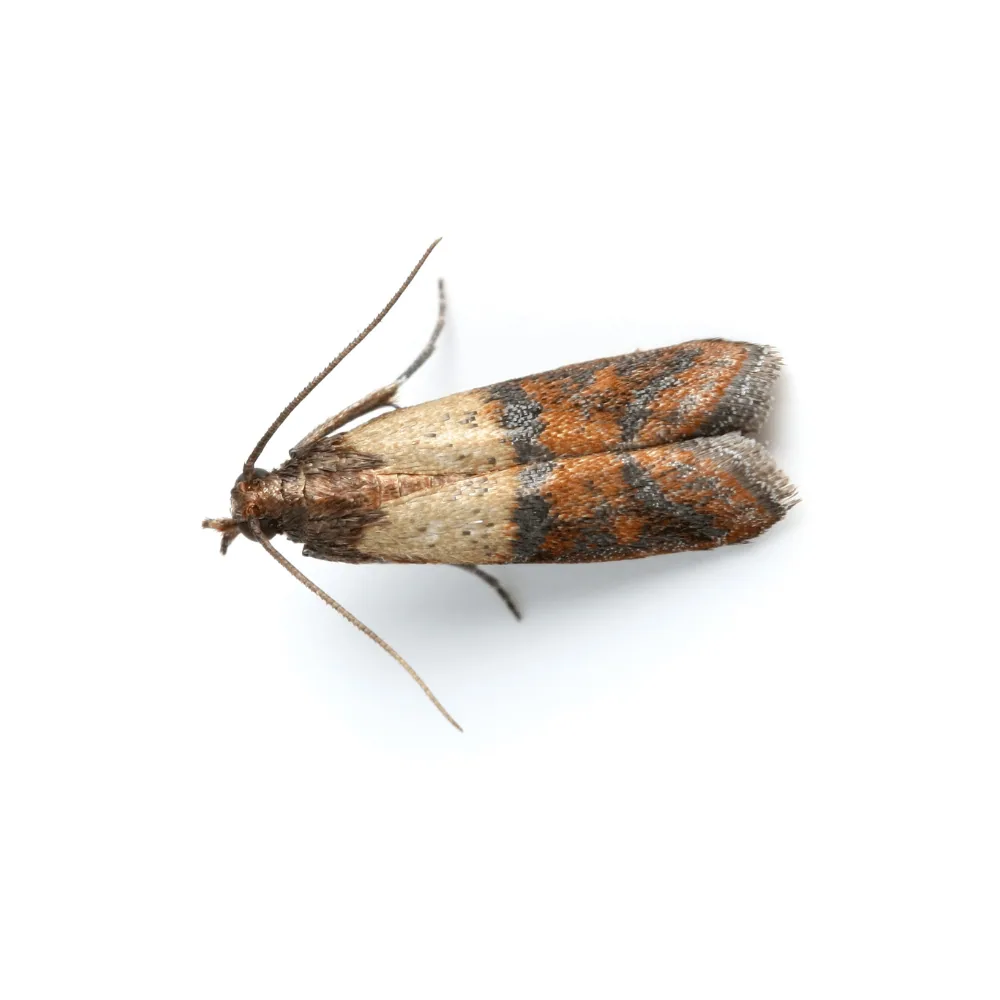
Appearance
- Adults 8 to 10 mm long
- Forewings brownish with darker cross bands
- Hindwings paler, fringed at the edges
- Elongated body, usually seen at rest with wings held roof-like
- Whitish larvae with a brownish head, up to 15 mm long
Behaviour
- The adult does not feed: its short life is given over to breeding
- Active at dusk and at night, with an irregular, zigzagging flight
- On reaching maturity the larva leaves the infested food and often climbs towards the ceiling or a cupboard corner to pupate
- Larvae spin silk threads that clump the food together and give them away
Life cycle
- Cycle length: 4 to 6 weeks, faster in summer
- A female lays between 100 and 400 eggs
- Eggs hatch in 2 to 14 days depending on temperature
- Larvae pass through 5 to 7 stages
- Pupation in cracks or away from the food itself
Diet
- Dried fruit (raisins, figs, dates, apricots)
- Nuts and seeds (almonds, pistachios, sunflower seeds)
- Cereals and flour
- Pasta, rice, semolina
- Chocolate, sweets, pet kibble
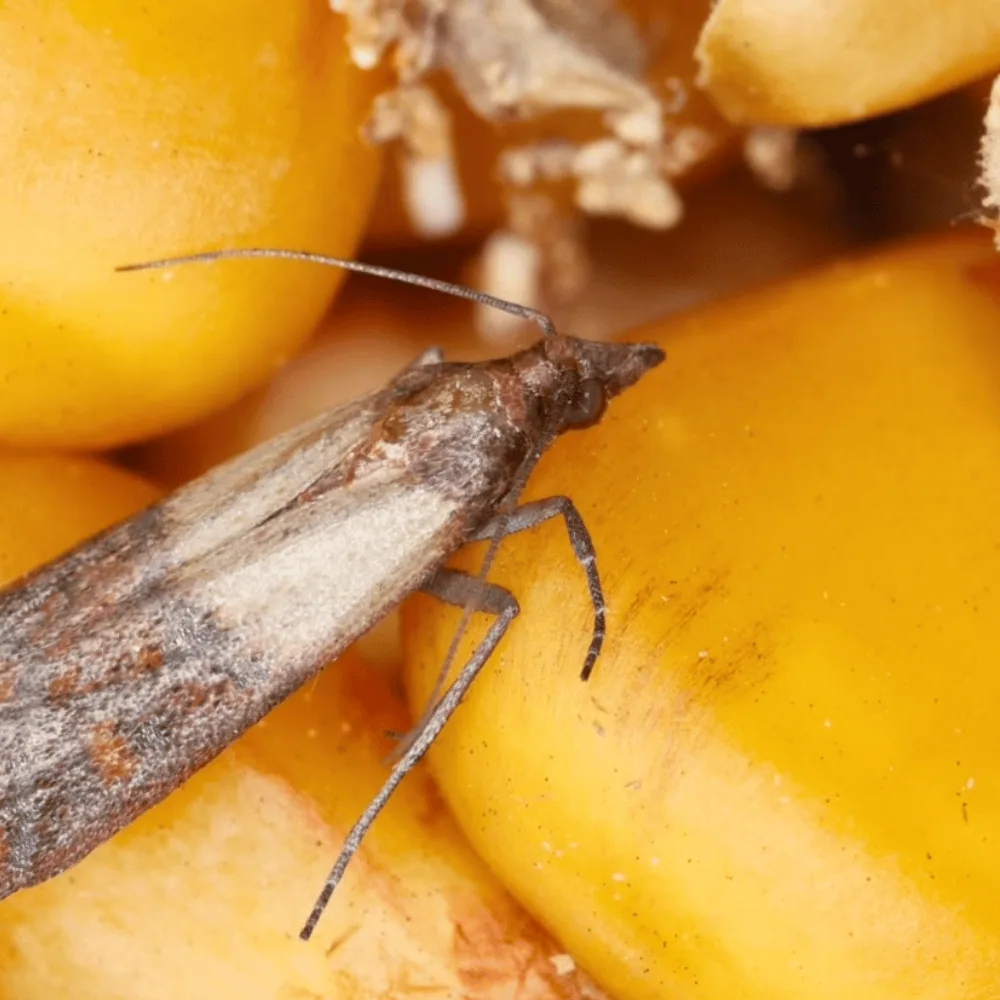
UNDERSTAND, PREVENT, ACT
Moths usually arrive with a perforated package, a forgotten item or a product that was already contaminated when bought. A visual check is not always enough, since eggs and young larvae can be invisible to the naked eye. Clean storage areas and rotating stock are what keep them out.
Signs and common mistakes:
- Signs of infestation: silken threads, cocoons in the corners of a cupboard, brown moths flying around the kitchen
- Common mistakes:
- Throwing out only the product you can see: eggs may be in the others
- Keeping food in its original packaging: larvae chew through it
- Cleaning with water alone: larvae survive in cracks that were never disinfected
Recommended measures:
- Discard every suspect or opened product
- Vacuum and disinfect cupboards and drawers thoroughly
- Store food in airtight containers, glass or rigid plastic
- Check bulk purchases and anything stored a long time
- Use pheromone traps to detect the adults or hold their numbers down
An untreated infestation can return weeks after cleaning if one contaminated product is missed, so stay watchful in the weeks that follow.
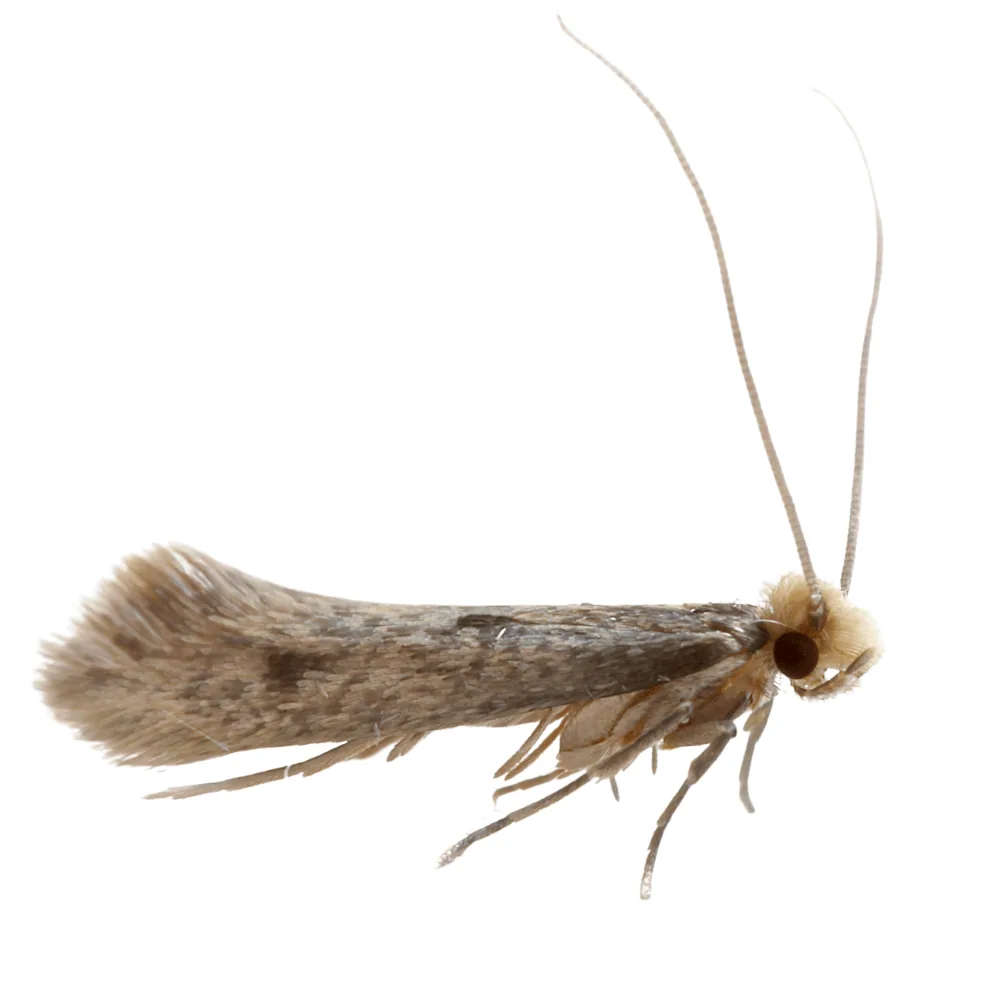
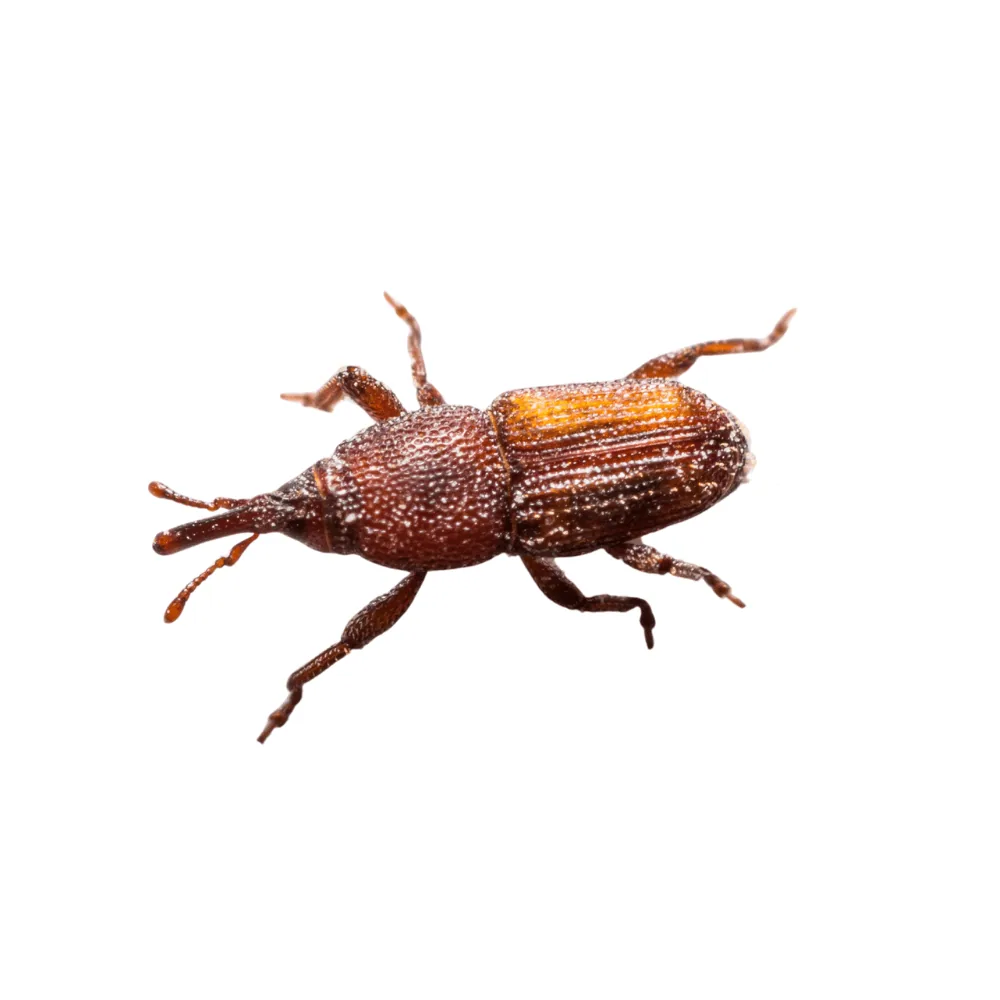
Related species
Request a quote
Need help? We’re here!
A certified technician assesses your situation and proposes a treatment plan suited to it.