How to get rid of mice in your home
Having mice in your home, whether in the attic, the garage or the kitchen, is far from ideal. If you spot one mouse, chances are a whole family is hiding nearby, and more will follow the same route in. Since mice breed very quickly, you need to act at the first signs, before a major infestation takes hold. This guide explains why mice get into houses, how to confirm they’re there, and how to get rid of mice and keep them away for good.
Why Do Mice Get Into Houses?
Mice look for shelter in homes for three main reasons: food, protection and warmth. A house gives them easy access to leftovers and household waste, shelter from predators and bad weather, and the heat they need to get through the winter. They don’t need a big opening either: according to Health Canada, a mouse can squeeze through a crack the size of a dime.
The Risks of Mice in the House
Mice are more than a nuisance. They gnaw on wood, plastic and even electrical wiring, which can lead to short circuits and fires. They also damage food and other belongings.
They can also spread disease to people, such as leptospirosis and hantavirus (the deer mouse is the most common carrier of hantavirus). They contaminate food and kitchen surfaces with their droppings, urine and saliva, and the mites, ticks and fleas they carry can transmit disease as well.
Recognizing the Signs of a Mouse Infestation

Mice are mostly active at night, so you’ll usually notice their traces before you see them.
Scratching Noises
Scratching in the walls, ceilings or under the floors, especially after sunset, is often the first sign. Our article on mice in walls explains how to confirm they’re there and deal with them without opening every wall.
Mouse Droppings
This is one of the most obvious signs. Mouse droppings are small, black and rod-shaped. You’ll find them on countertops, in cupboards or along walls. To identify them and clean them up safely, see our article on mouse droppings.
Nests
Mice build nests from paper, cardboard and fabric in out-of-the-way places like cupboards, attics and basements.
Gnaw Marks
Their very sharp teeth leave marks on furniture, wires and food packaging.
Identify the Type of Mouse
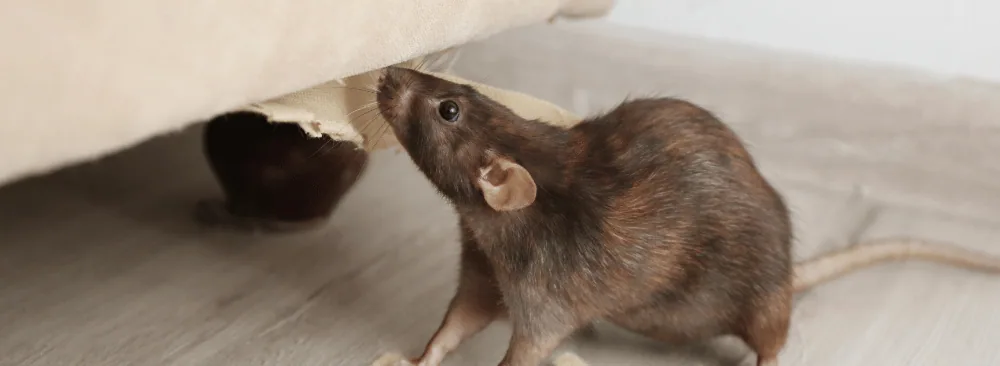
In Quebec, three rodents are most often involved. If you’re not sure whether it’s a mouse or a rat, our guide on how to tell a rat from a mouse will help.
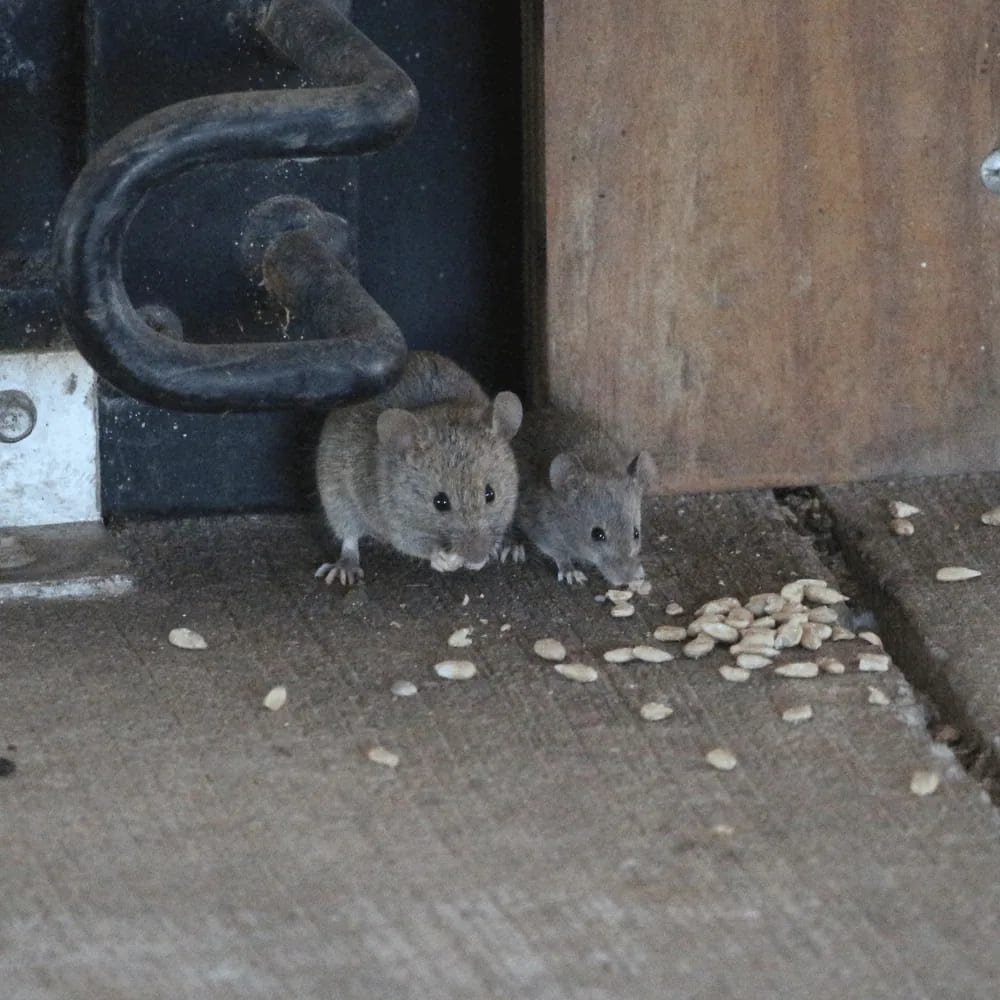
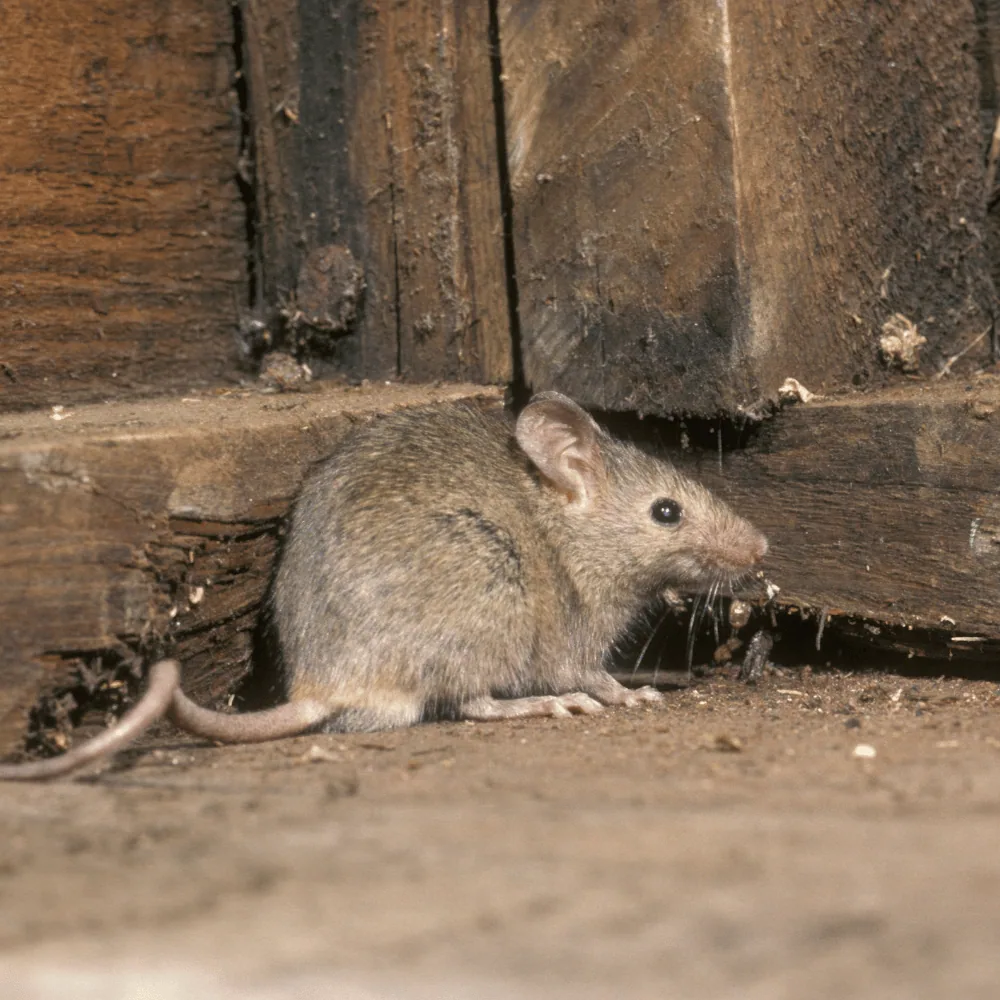
House mouse (Mus musculus): the most common and the most problematic for homes and buildings. It’s small, usually grey, with a long, thin tail. It adapts to all kinds of environments and breeds quickly.
White-footed mouse (Peromyscus leucopus): a close relative of the deer mouse, it usually lives in the woods but can wander into homes, particularly in rural areas. It’s larger than the house mouse, with white feet and belly.
Meadow vole (Microtus pennsylvanicus): often called a “field mouse,” it lives mainly outdoors in fields and meadows. It’s rounder, with a shorter tail than the other two. It rarely comes indoors but can damage vegetable gardens and flower beds.
Find and Block the Entry Points
Before any treatment, find out how they’re getting in. Look for the areas with the most activity: droppings, footprints, gnaw marks. Then seal the openings with materials mice can’t chew through:
- install metal door sweeps;
- caulk windows and foundation cracks;
- stuff steel wool into gaps around pipes before sealing them;
- cover vents with fine metal mesh.
Mice are excellent climbers and can squeeze through very narrow spaces, so no opening is too small to ignore. For details, see our article on caulking against rodents.
Set Mouse Traps
Traps are the basic tool for eliminating the mice already inside. Placement determines how well they work: set them along walls, behind garbage bins and near spots where you’ve found droppings. There are many models (mechanical, electric, glue, live-catch), each with its own price, mechanism and design.
Snap Traps
The most affordable and traditional trap, available at any hardware store. Its quick-trigger mechanism catches mice easily. Used properly, snap traps can bring a population under control quickly, but each one only catches one mouse at a time and has to be reset after every catch, so set out several.
Live-Catch Traps
These traps don’t kill mice: a cage or compartment closes behind the rodent until you release it. Check them very regularly so the problem is handled humanely.
Glue Traps
Glue traps hold mice on a sticky surface and can catch several at once. They’re considered less humane, however, and are best avoided except in a major infestation.
Choose the Right Bait
Good bait makes every trap more effective. If no one in the house has an allergy, peanut butter is by far the most common and affordable option. Otherwise, use cheese, birdseed or nuts.
To compare your options, read our article on mousetraps vs rodenticides.
Use Rodenticides Only as a Last Resort
Household rodenticides contain toxic substances that kill the rodent once eaten. Use them with caution: they’re also dangerous to pets and people, especially children, who can swallow them by accident. Dead rodents inside walls can also attract other pests, such as flies. It’s best to keep them for cases where better hygiene, removing food sources and mechanical traps haven’t been enough. If you do use them, follow the manufacturer’s instructions to the letter or call a certified exterminator.
Keep an Eye on the Garage
The garage is a common way in. During cold Canadian winters, the warmth from your car’s engine makes it an ideal spot for mice. Act at the first signs: a mouse chewing the wires under the hood can seriously damage your vehicle or even create a dangerous situation on the road. Set a few traps and seal any holes or passages between the garage and the house.
If you use the garage for storage, don’t keep things directly on the floor, and keep shelves tidy to prevent nesting spots. If your garbage bins are stored there, make sure the lids are tight and the bins aren’t overflowing.
Protect the Attic
To keep mice out of the attic, seal every potential opening (cracks, holes, gaps around pipes and wires) with rodent-resistant materials such as metal or cement. Don’t store food in the attic, and make sure the plumbing is watertight. Get rid of clutter, like old boxes and piles of clothes, that can serve as nesting sites, and keep the space well ventilated. Our tips for eliminating mice in the attic walk you through it.
Keep Mice Away for Good
Once the mice are gone, prevention is the best way to keep them from coming back.
- Regular cleaning: mice survive on very little food each day. Vacuum and wipe down surfaces to get rid of crumbs in the kitchen and pantry.
- Pet food: clean up where your pets eat after every meal; it’s one of the main food sources that attracts mice.
- Airtight containers: store dry goods, cereal and seeds in tightly sealed containers.
- Blocked access: check every fall for cracks in walls, floors and ceilings, and for worn door sweeps.
What about a cat? Cats are natural predators, but they’re not a reliable fix: not every cat is a good hunter, and some mice end up living alongside them. Don’t count on one to solve an infestation.
Frequently asked questions
How do I get rid of mice fast?
Set several snap traps baited with peanut butter along walls and near droppings, and seal the entry points at the same time with materials mice can’t chew. Without sealing, new mice will simply replace the ones you catch.
How do I keep mice away from my house?
Take away what they’re looking for: food, shelter and warmth. Store food in airtight containers, clean up crumbs and pet bowls, declutter the garage and attic, and seal cracks, door bottoms and pipe openings.
Will a cat keep mice away?
No. Not every cat is a good hunter, and some mice end up living right alongside them. A cat may catch a few, but it won’t replace traps or sealing entry points.
Are mice dangerous to your health?
They can be. Mice contaminate food and surfaces with their droppings, urine and saliva, and can transmit diseases such as leptospirosis and hantavirus. They also chew electrical wiring, which is a fire hazard.
Need a Mouse Exterminator?
If your efforts aren’t enough, or you still hear mice in the walls despite the traps, it’s time to call a pest control professional. A mouse exterminator has the knowledge and equipment to find the entry points, eliminate mice effectively and safely, and advise you on keeping them out. To get an idea of the budget, see our article on the cost of a mouse exterminator, then contact Exterminatek.