How to Get Rid of Earwigs in Your Home?
Spotting earwigs in your kitchen, bathroom or garden? These insects are harmless to people, but they can become a real nuisance when they move in by the dozens. Here are the most effective ways to get rid of them and stop them from coming back.
How to Get Rid of Earwigs in Your Home
The right approach depends on how bad the infestation is. Most people start with natural methods and move on to commercial products if needed.
Natural Methods: What Actually Works
The oil trap is the simplest and most effective natural option. Fill a shallow container (a jam jar lid works perfectly) with a mix of vegetable oil and a few drops of soy sauce. Bury it at ground level in the garden, or set it along interior walls where you’ve been seeing earwigs. They’re drawn in and drown. Check and refresh the trap every couple of days.
Diatomaceous earth is a fine natural powder made from fossilized algae. It damages the earwigs’ exoskeleton on contact and causes dehydration. Sprinkle it along baseboards, under appliances, around entry points, and in the garden around plants you want to protect. It stays effective as long as it’s dry. Reapply after rain or in humid conditions.
Damp newspaper rolls make a simple outdoor trap. Roll up a few sheets of damp newspaper and place them near affected areas before nightfall. Earwigs are drawn to the moisture and darkness and will hide inside overnight. In the morning, collect the rolls and drop them into a bucket of soapy water.
Natural predators such as insect-eating birds (robins, starlings) and toads feed on earwigs. Encouraging their presence in your yard is a low-effort, long-term control strategy.
Commercial Solutions: When Natural Methods Fall Short
Granular baits are the most practical commercial option. Scatter them around the perimeter of the house and throughout the garden. Earwigs ingest the bait and die within 24 to 48 hours. They work especially well for widespread outdoor infestations.
Spray insecticides (pyrethrin- or bifenthrin-based) can be applied directly in active areas: under appliances, along baseboards, and around windows and doors. Always follow the label instructions, especially if children or pets use the treated areas.
Perimeter insecticide barriers applied around the foundation are an effective way to prevent earwigs from getting inside in the first place. This type of treatment is best done at the start of summer, before populations peak.
When to Call a Pest Control Professional
Professional treatment is worth considering when:
- Earwigs keep appearing indoors in large numbers despite home treatments
- The infestation comes back every year without improvement
- Garden plants are taking significant damage
- You can’t figure out where they’re getting in
A certified technician will start with a thorough inspection to pinpoint activity zones, identify entry points, and assess the extent of the infestation. From there, a targeted treatment is applied based on your specific situation, along with prevention advice to reduce the risk of earwigs returning.
Why Do Earwigs Invade Your Home in Summer?
In Quebec, earwigs are active from June through September, with numbers peaking in July and August. Knowing what draws them in helps you take targeted action rather than treating blindly. For a closer look at why earwigs tend to move indoors during the summer months, see our article on earwig intrusion in Quebec homes during summer.
What Attracts Them
Earwigs are after three things: moisture, darkness, and food. When summer temperatures get extreme, whether from heat or drought, they naturally move toward cooler, damper indoor spaces. The conditions that attract them most:
- Damp areas: basement, bathroom, kitchen, crawl space
- Decomposing organic matter: compost, dead leaves, moist wood near the house
- Outdoor lighting: earwigs are drawn to light at night. Switch to yellow bulbs or warm-spectrum LEDs, which are far less attractive to insects
- Garden debris piled against the foundation
Common Entry Points
Earwigs are small enough to squeeze through surprisingly narrow gaps:
- Cracks in the foundation or exterior cladding
- Gaps under doors and around window frames
- Pipe and cable penetrations through walls
- Worn or detached window weatherstripping
- Newspapers, cardboard boxes, or gardening supplies brought in from outside
Identifying and Understanding Earwigs
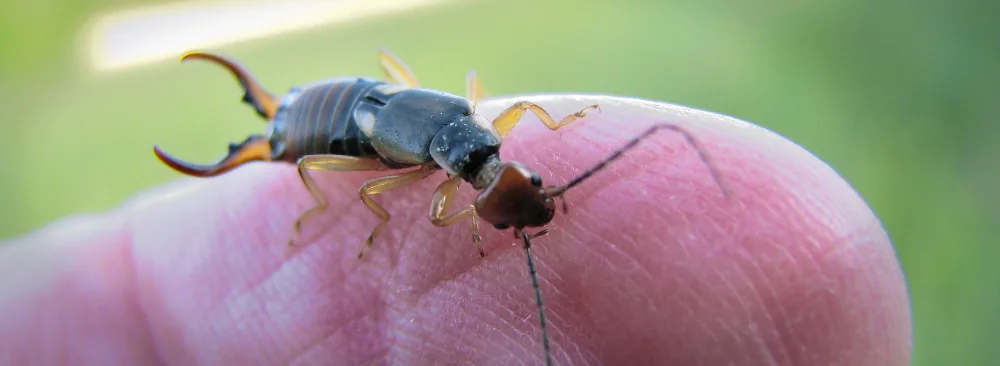
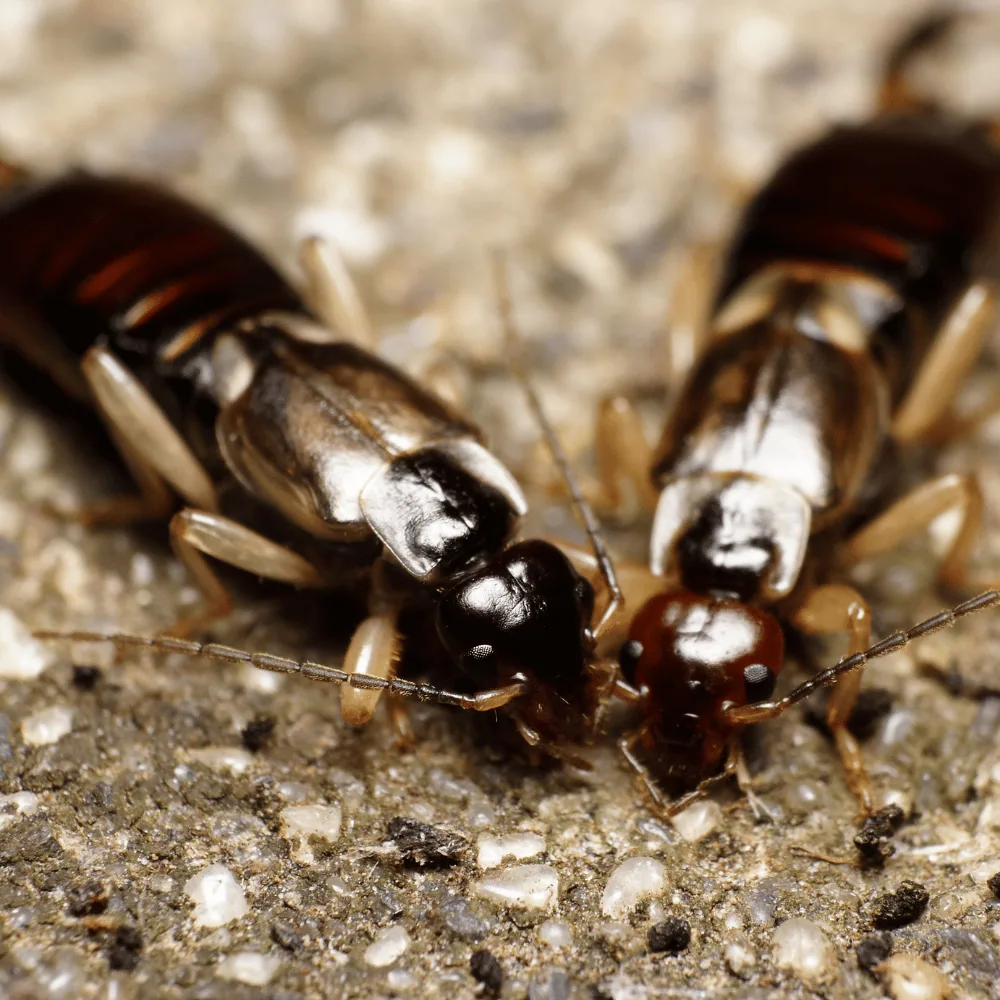
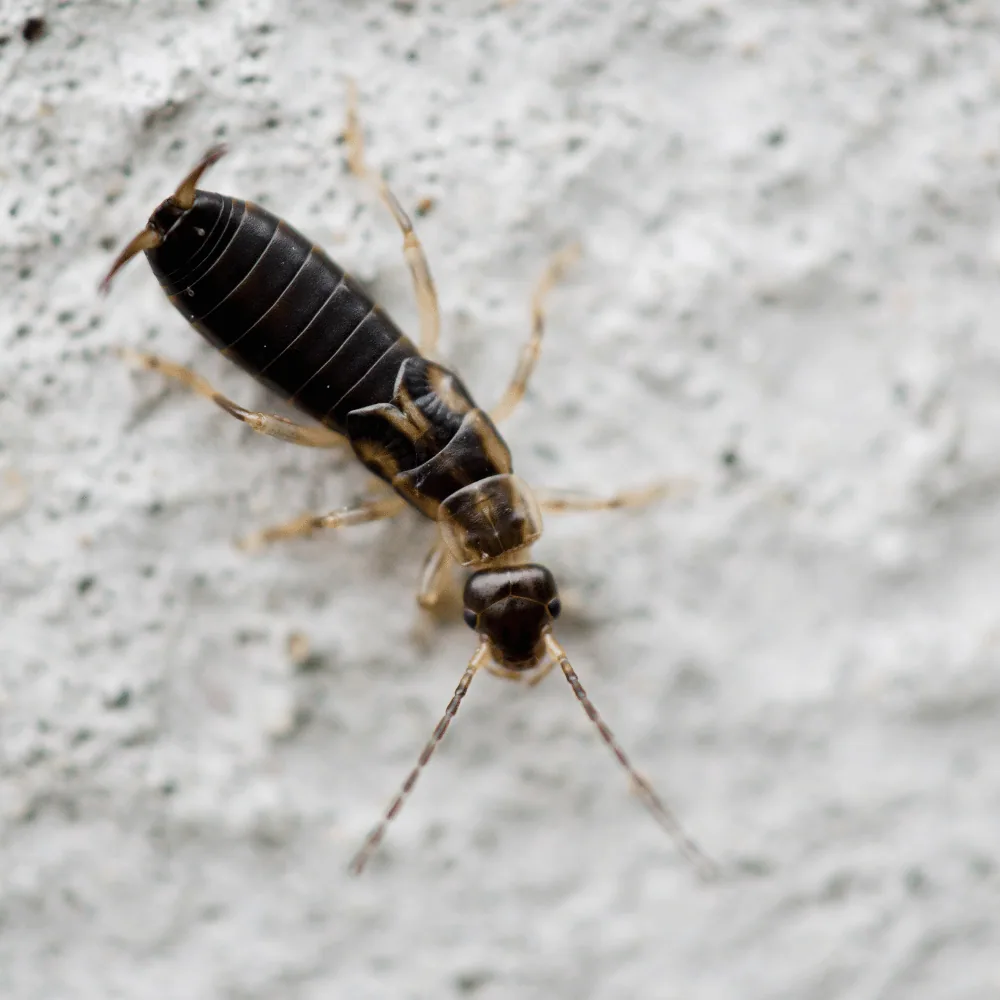
The earwig (Forficula auricularia) is a small insect (10 to 15 mm long), dark brown in colour, and easy to recognize by the pincer-like appendages at the rear of its body. These pincers are used for defence and catching prey. They pose no danger to people.
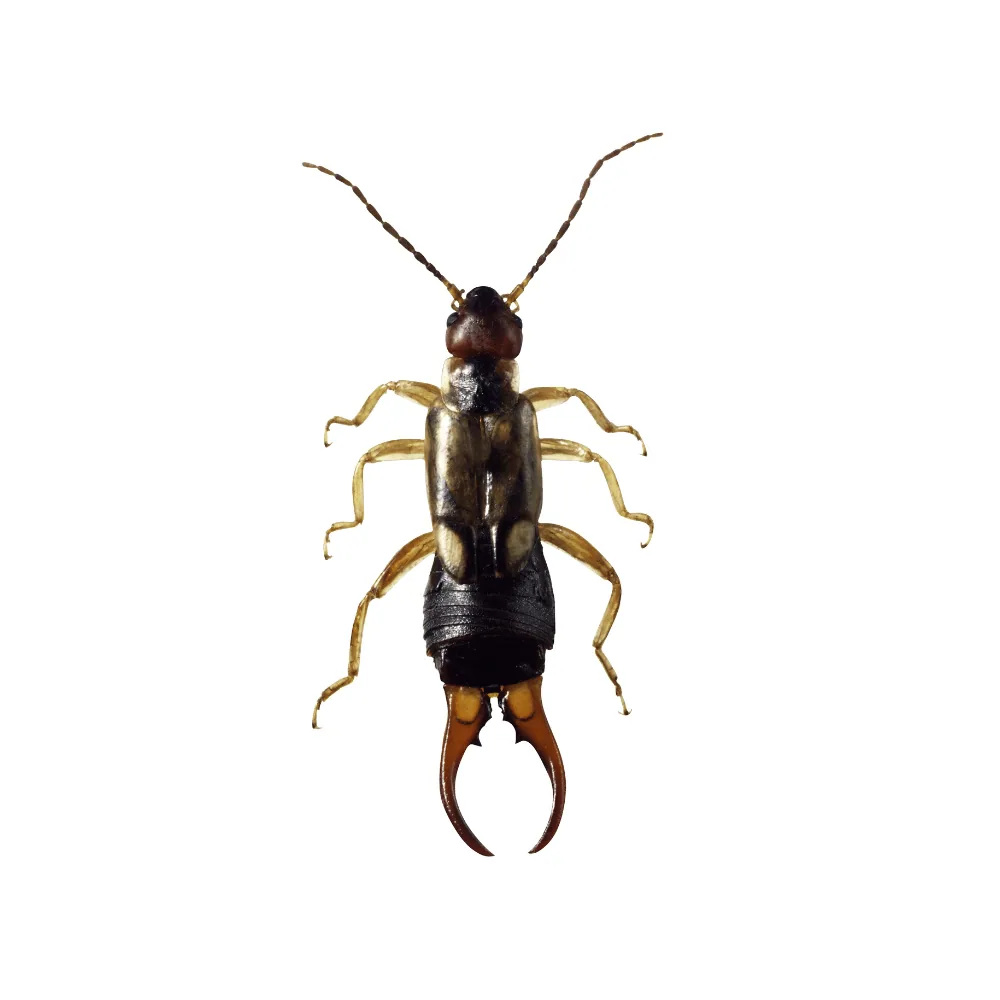
Earwigs are nocturnal and spend the day tucked into dark, damp hiding spots. In Quebec, females lay eggs in the fall or winter in the soil. The eggs hatch in spring as nymphs, which reach adulthood by summer. Adults typically live about a year.
According to Health Canada, earwigs are not considered a human health risk, but they can damage garden plants when present in large numbers.
Preventing a Re-infestation
Once the infestation is dealt with, a few simple adjustments can make your property much less welcoming to earwigs:
- Remove potential shelters: clear away leaf piles, firewood, and garden debris stored against the foundation
- Manage moisture: fix leaks, improve ventilation in the basement and crawl space, and use a dehumidifier where needed
- Seal entry points: caulk foundation cracks, replace worn window weatherstripping, and install door sweeps
- Adjust outdoor lighting: swap white bulbs for yellow or warm-spectrum LEDs, which are far less attractive to night-flying insects
- Create a gravel border about 15 to 30 cm wide around the foundation. This dry, inhospitable zone discourages earwigs from getting close to the house
For year-round residential pest protection, a preventive treatment at the start of summer with a certified technician is worth considering.
Frequently Asked Questions
Why do I have earwigs in my home in summer?
In summer, earwigs are trying to escape the heat and dryness outside. They move toward cooler, more humid indoor spaces like basements, bathrooms, and kitchens. They get in through small cracks and gaps around doors, windows, and pipe penetrations. Reducing indoor moisture and sealing entry points are the most effective preventive steps.
What is the most effective natural method for getting rid of earwigs?
The oil trap is the simplest and most reliable natural option. A shallow container filled with a mix of vegetable oil and soy sauce, placed at ground level in active areas, draws earwigs in and drowns them within hours. Diatomaceous earth is a great complement for ongoing control along high-traffic zones.
Do I need a pest control professional for earwigs?
For a minor infestation, DIY methods like oil traps, diatomaceous earth, and granular baits are usually enough. If earwigs keep coming back year after year despite your efforts, or if the infestation is severe inside, professional treatment is the better call. A technician will track down the source and entry points for a lasting result.