LADY BEETLES INVADING? OUR TIPS FOR GETTING RID OF THEM
Every fall and spring, thousands of Quebec homeowners find themselves dealing with ladybugs inside their homes. The good news: in most cases, you can handle the situation on your own, without chemical products and without calling a professional. The key is knowing which species you’re dealing with — because not all ladybugs behave the same way, and the most effective removal methods vary accordingly.
Native or Asian lady beetle: how to tell them apart
Before choosing a removal method, it helps to identify which species has moved into your home. Native ladybugs and Asian lady beetles (Harmonia axyridis) behave very differently — and they don’t pose the same problems.
The native ladybug is the one most of us picture instinctively: bright red with seven well-defined black spots. It overwinters outdoors, under leaf litter or tree bark, and rarely makes its way indoors in large numbers. If you find one or two inside, it’s most likely accidental — and it won’t be back.
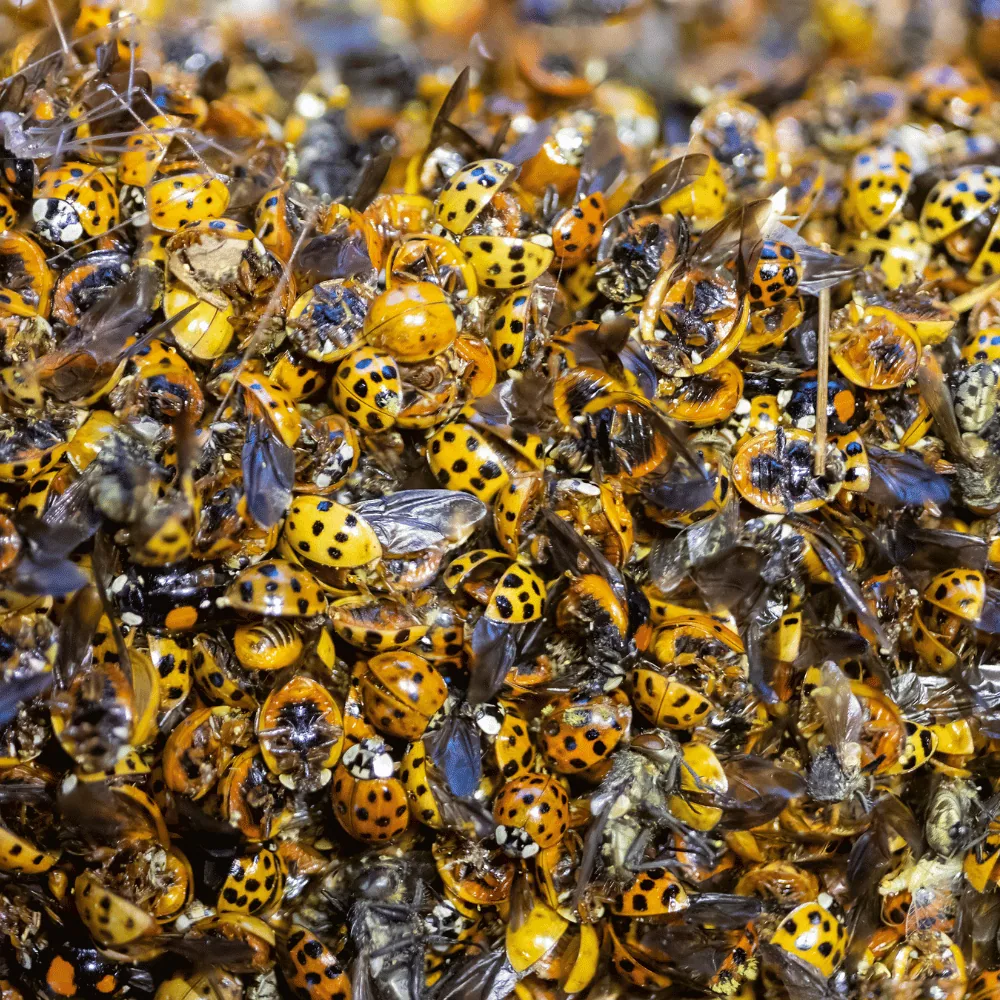
The Asian lady beetle, on the other hand, is the primary culprit behind fall invasions. It’s slightly larger than its native cousin, and its colour ranges from pale yellow to bright orange, with anywhere from zero to twenty-two spots on its back. A key identifying feature: a distinctive « M » or « W » shaped marking just behind the head. Unlike native ladybugs, Asian lady beetles strongly prefer to overwinter inside buildings, and they release a sharp odour along with a yellowish fluid when disturbed or crushed.
In the vast majority of infestation cases in Quebec, the Asian lady beetle is the species responsible. The rest of this guide focuses primarily on this species.
How to get rid of ladybugs in the house
Once you’ve identified the species, let’s move on to practical solutions. The most important rule to keep in mind: never crush them. Beyond staining surfaces, crushing a ladybug releases aggregation pheromones that attract other beetles to the same spot. In other words, crushing one ladybug can make the problem worse rather than better.
Vacuum: the fastest method
For visible clusters on walls, ceilings, or window sills, vacuuming remains the quickest and most practical solution. Use the hose attachment to reach difficult corners. To avoid injuring or crushing the insects inside the machine — which would release the unpleasant odour into the motor — slip a nylon stocking inside the nozzle and secure it with a rubber band on the outside. The ladybugs collect in the stocking without being crushed.
Once you’ve finished, tie off the stocking and release the beetles outside, as far from the house’s facade as possible. On cold days, wait for a milder afternoon to give them a better chance of surviving outdoors.
Broom and dustpan: simple but effective
For accessible groups of ladybugs on the floor or window ledges, a simple broom and dustpan are all you need. Work gently to avoid crushing them, then transfer them to a sealed container before releasing them outside. This method is particularly handy when a vacuum with a hose attachment isn’t readily available.
Light traps: for larger infestations
When the number of beetles is too high for a vacuum or broom to keep up — particularly in attics or hard-to-reach spaces — light traps are the best option. These devices attract ladybugs with a low-intensity light source and contain them in a catch tray. Commercial models are available at most hardware stores, but a homemade version works just as well: cut the top off a 2-litre plastic bottle, invert it inside as a funnel, and place a small LED light at the bottom. Position the trap in areas where beetles congregate and empty it regularly.
Cleaning pheromone traces after removal
This step is frequently overlooked, yet it’s one of the most important: after removing the ladybugs, wipe down the areas they occupied with a solution of white vinegar and water. Asian lady beetles leave aggregation pheromones on surfaces — chemical signals that can persist for months and tell future individuals that the spot is a safe place to overwinter. Without this cleaning step, you’re likely to face the same situation the following year, in the exact same locations.
Avoid bleach and ammonia: despite being strong cleaners, these products don’t neutralize pheromones effectively and can damage surfaces in the process.
What doesn’t work against ladybugs
Online, you’ll find no shortage of advice recommending aromatic herbs or essential oils to repel ladybugs. It’s worth being straightforward about this: unlike many other insects, Asian lady beetles are relatively insensitive to these scents. Their survival instinct — clustering together, seeking warmth, entering diapause — is far stronger than any repellent effect from peppermint or lavender.
These methods may have a marginal effect as part of a broader strategy, but they are not a sufficient solution on their own. Similarly, aerosol insecticides used indoors are generally ineffective against ladybugs in a dormant state, and they carry real health risks for people and pets. They’re best avoided.
In short, here’s what doesn’t work — or works poorly:
- Essential oils alone (peppermint, lavender, citronella) — marginal effect at best
- Aromatic herbs (basil, clove) — insufficient as a standalone measure
- Indoor aerosol insecticides — ineffective on dormant insects
- Crushing the beetles — counterproductive, releases pheromones and odour
How to keep ladybugs from coming inside
The most effective way to manage a ladybug invasion is to prevent it from happening in the first place. The ideal time to act is as early as September, before temperatures drop below 12°C — the threshold at which Asian lady beetles begin seeking shelter for the winter. Acting early also means milder weather for any exterior work you need to do.
Inspect and seal entry points
Ladybugs can squeeze through surprisingly small openings. Start by thoroughly inspecting both the interior and exterior of your home, and seal every gap you find:
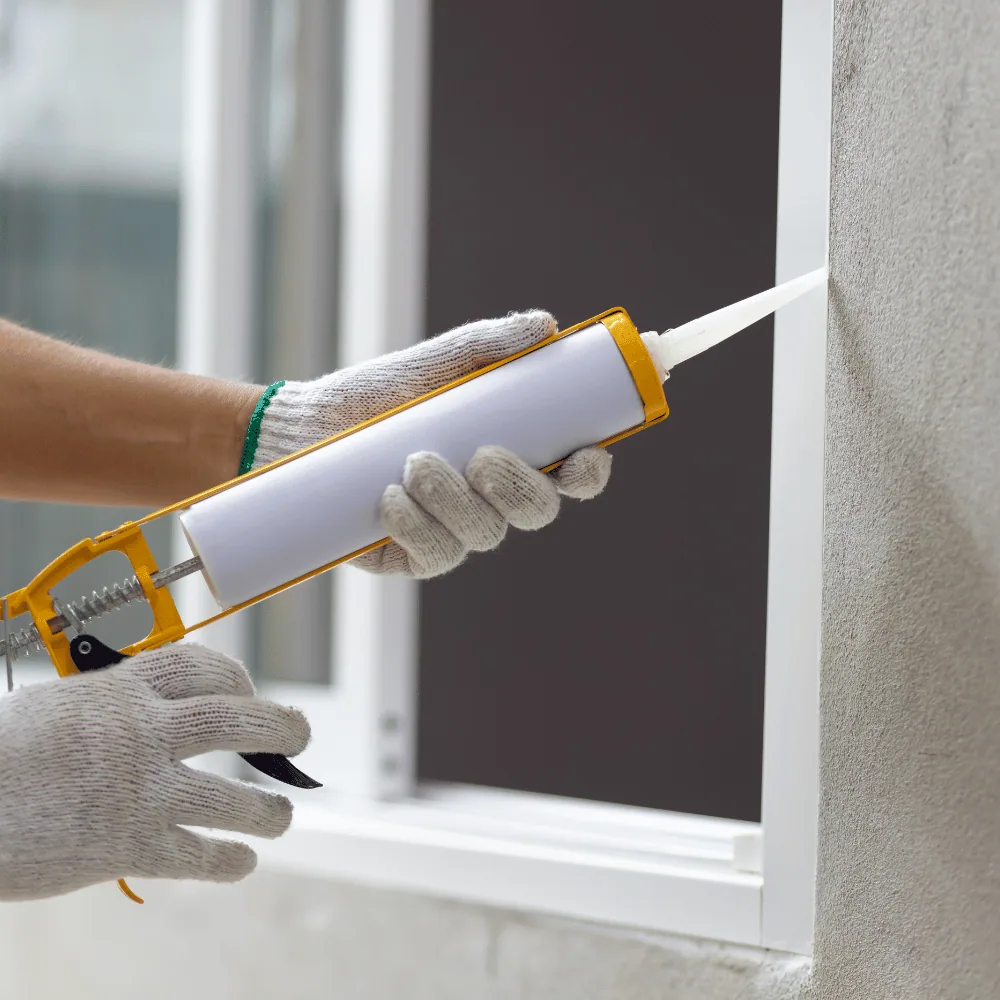
- Apply silicone or acrylic-latex caulk around window frames, door trim, and siding joints
- Check and replace worn or damaged weatherstripping around doors and windows
- Install a rubber door sweep under the front door and garage door
- Repair or replace any damaged window or door screens
- Fit fine mesh screens over attic vents and ventilation grilles
Focus your efforts first on the southwest-facing wall of your home — that’s where ladybugs tend to cluster most heavily in the fall, drawn by the heat stored in the wall surface throughout the day.
Inspect plants before bringing them inside
An often-overlooked entry point: before bringing outdoor plants inside for the winter, inspect them carefully. Ladybugs frequently hide among foliage and can be accidentally introduced into the home without you noticing. Shake each plant gently outside and check the underside of leaves and the surface of the soil before bringing anything in.
Winterize your home earlier
If you already go through a fall home preparation routine — caulking, door sweeps, weatherstripping — simply shift it earlier in the season, to September rather than October or November. This one adjustment creates an effective barrier before ladybugs begin their migration toward your walls. It’s one of the simplest and most cost-effective steps you can take to avoid an infestation.
When to call an exterminator for ladybugs
In the vast majority of cases, the methods described above are enough to resolve the problem. An occasional ladybug invasion in spring or fall is a common occurrence in Quebec and generally doesn’t require professional intervention.
That said, some situations do warrant calling an exterminator:
- The infestation is severe and recurring — despite cleaning and sealing, ladybugs return in large numbers every year
- You can’t locate the entry points — the beetles are getting in through openings you haven’t been able to identify or seal
- Household members are experiencing allergic reactions — prolonged exposure to Asian lady beetles can trigger respiratory symptoms in sensitive individuals
In these situations, a certified technician can inspect the full building envelope, identify hard-to-find risk areas, and apply a targeted treatment. Contact Exterminatek for a complete assessment — our technicians serve the greater Montreal area and across Quebec, for both residential and commercial properties.
Frequently Asked Questions (FAQ)
1. How do I know if I have Asian lady beetles or native ladybugs in my home?
Asian lady beetles are slightly larger than native ladybugs, range in colour from pale yellow to bright orange, and have a distinctive « M » or « W » marking behind the head. They also emit a sharp odour and release a yellowish fluid when disturbed. If you’re finding dozens or hundreds of ladybugs inside, it’s almost certainly the Asian species — native ladybugs overwinter outdoors and rarely enter homes in large numbers.
2. Why are there ladybugs in my house in winter?
Asian lady beetles enter homes in the fall to overwinter — a dormant state called diapause. They seek warmth and shelter, and your sun-exposed walls offer exactly that. If they keep returning to the same spots year after year, residual pheromones from previous infestations are almost certainly the cause. Clean those areas with white vinegar and seal entry points before September to break the cycle.
3. What should I do if I have a ladybug infestation in my attic?
A heavily infested attic calls for a combined approach: set up light traps in dark corners to capture the beetles present, then clean affected surfaces with white vinegar once they’ve been removed. After that, inspect the attic vents and soffits and install fine mesh screens to block re-entry. If the infestation is severe or recurring, a professional inspection of the full building envelope is the most reliable next step.
4. Are ladybugs in the house dangerous?
Asian lady beetles are not dangerous in the traditional sense — they don’t spread disease and don’t cause structural damage. However, they can bite mildly, stain surfaces with their secretions, and trigger allergic reactions in sensitive individuals, including respiratory symptoms with prolonged exposure. Outside of these cases, their presence is primarily a nuisance.
5. What does a ladybug invasion in the house mean?
A fall ladybug invasion simply means your home offers ideal overwintering conditions: warmth, a light-coloured exterior, and accessible entry points. It’s not a bad omen or a sign of poor hygiene. It is, however, a clear signal that some caulking is overdue and that pheromone traces from a previous infestation are likely still present on your walls or window frames.
6. Will ladybugs go away on their own in the spring?
Yes — as temperatures rise in the spring, ladybugs come out of diapause and look to return outdoors to feed and reproduce. However, if you’ve sealed the entry points well, they may struggle to get back out and die inside, causing stains and odour. It’s better to actively remove them with a vacuum before the end of winter rather than waiting for them to leave on their own.
7. Should I call an exterminator for ladybugs?
In most cases, no. A vacuum with a nylon stocking, light traps, and proper caulking are enough to resolve the problem. Consider calling a professional if the infestation is severe, if it recurs every year despite your best efforts, or if household members are experiencing allergic reactions. Exterminatek can inspect your home, identify hard-to-find entry points, and implement a treatment plan tailored to your specific situation.