IDENTIFICATION AND ROLES OF CARPENTER ANTS
Found a large ant in your home and trying to figure out what species it is? This article walks you through the visual characteristics of carpenter ants found in Quebec, their species, colony structure, and the times of year when they are most active.
Carpenter Ants — Who Are They?
Carpenter ants are among the largest ants found in Quebec homes. They are known for their ability to excavate wood to establish their nests, which can cause significant structural damage to buildings. Contrary to a common misconception, they do not eat wood — they hollow it out to build their galleries, leaving behind a fine, powdery sawdust that is one of their most recognizable signs.
They are found outdoors in stumps and dead trees, as well as indoors in areas where wood has been weakened by moisture. According to Health Canada, carpenter ants are among the most destructive wood-infesting insects in the country.
Identification of Different Species
Two species are most commonly encountered in Quebec. Here is how to identify them visually.
Black Carpenter Ant (Camponotus pennsylvanicus)
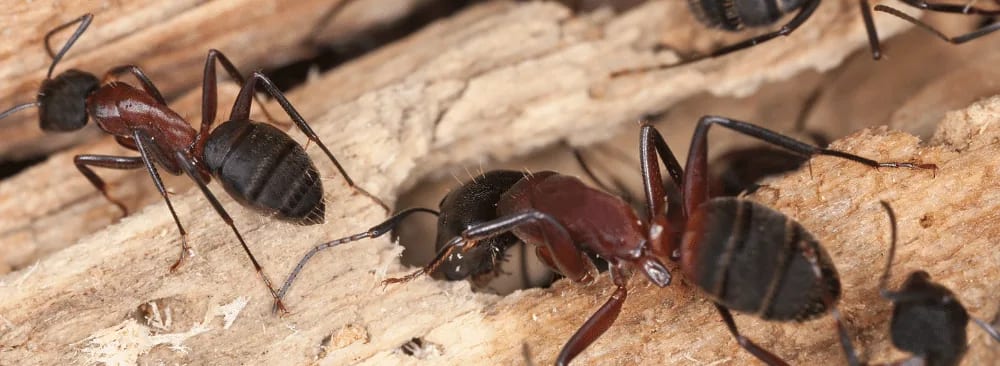
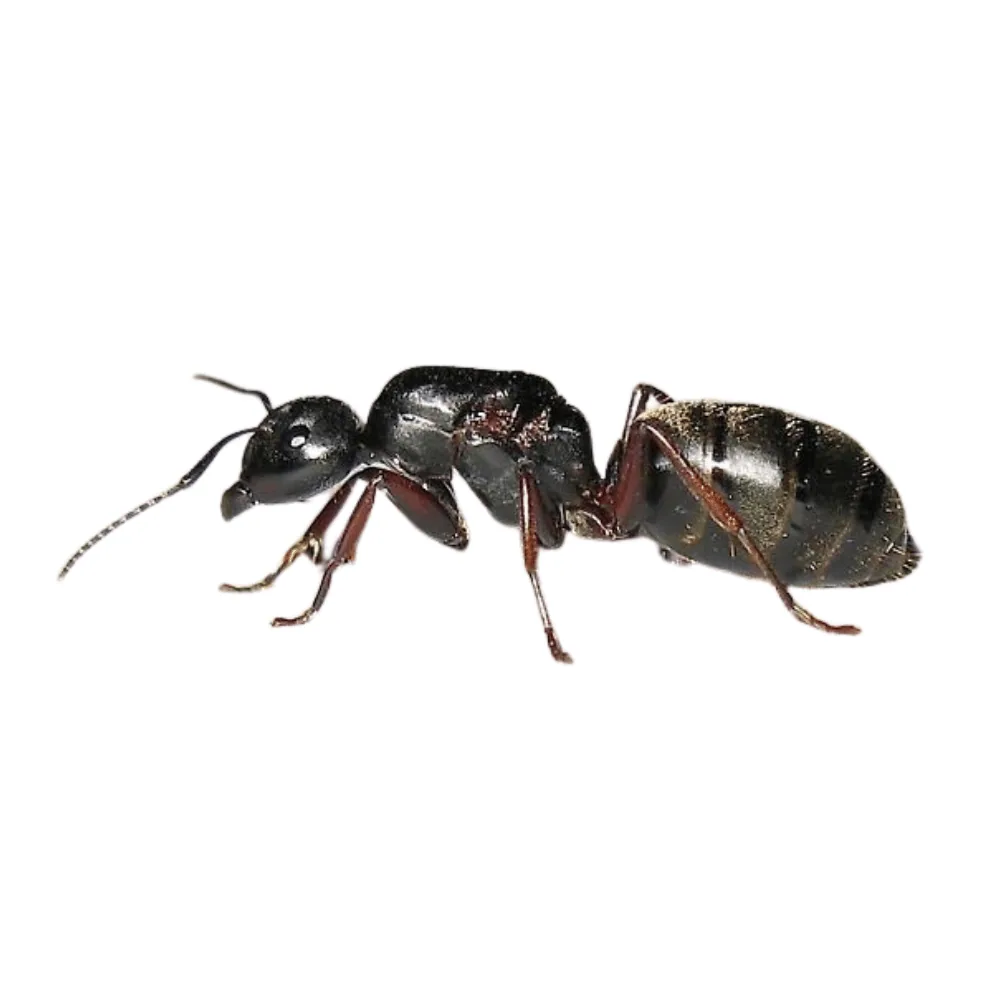
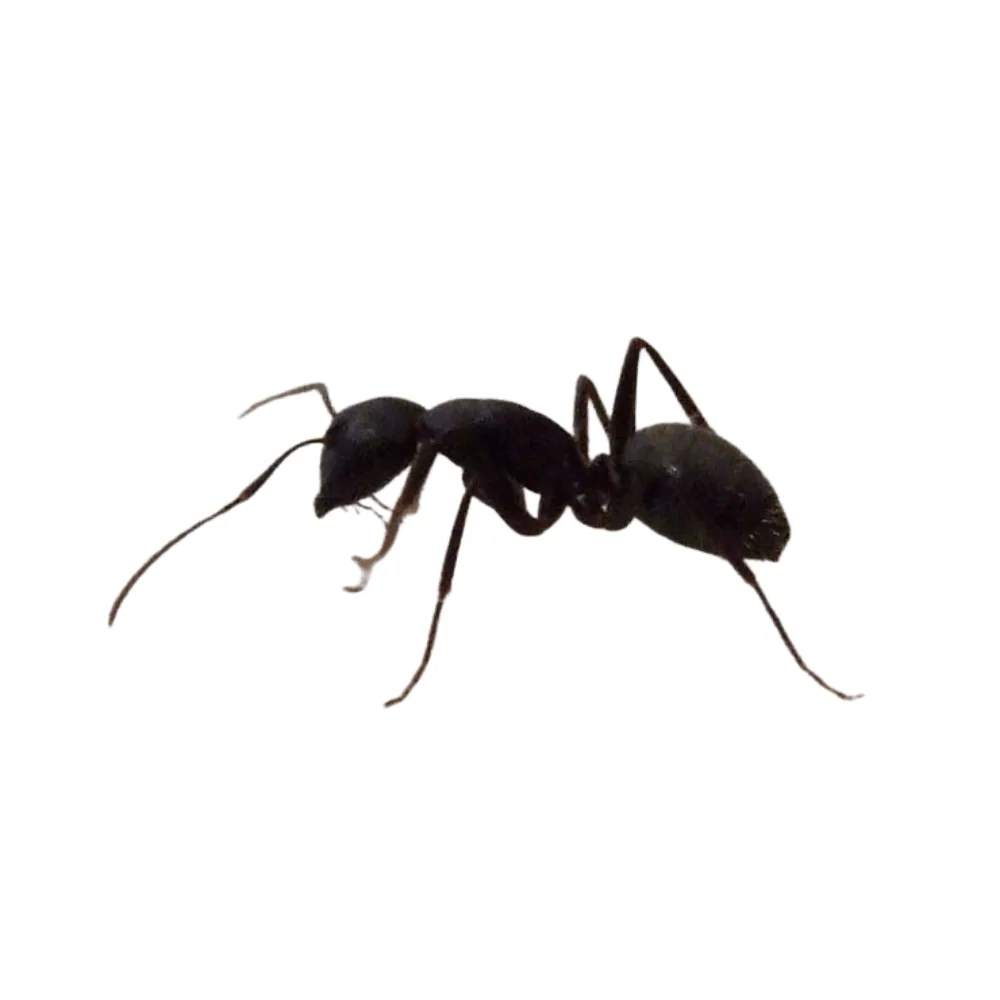
This is the most common species in Quebec. It is recognized by its uniform, shiny black colour and impressive size. Major workers can reach up to 13 mm in length. In photos, it is identifiable by its rounded, entirely black abdomen and its evenly arched thorax with no bumps or irregularities.
Red and Black Carpenter Ant (Camponotus chromaiodes)
Less common, this species has a clearly visible reddish thorax and a black abdomen — the colour contrast is immediately noticeable in photos. It generally prefers outdoor environments and is less likely to nest inside residential structures.
Common Visual Characteristics
Whether you are dealing with one species or the other, here are the key features to look for in person or in a photo:
- Size: 6 mm (minor workers) to 13 mm (major workers and queens) — noticeably larger than most household ants
- Thorax: evenly arched and smooth, with no bumps or protrusions — the most reliable visual identifier
- Junction node: a single petiole connects the thorax to the abdomen
- Antennae: elbowed, with 12 segments
- Sawdust: fine, powdery frass near wood surfaces is the easiest activity sign to spot
How to Tell Carpenter Ants Apart from Pavement Ants or Termites
Misidentification is common — and costly if it delays treatment. Here are the two most frequent cases of confusion in Quebec.
Carpenter Ant vs. Pavement Ant — 3 Key Differences
The pavement ant (Tetramorium caespitum) is much smaller (2 to 3 mm), dark brown, and causes no structural damage. It nests in sidewalk cracks, under paving stones, or in concrete joints — never in wood. The three distinguishing features at a glance:
- Size: carpenter ants are 3 to 5 times larger
- Nesting location: pavement ants never excavate wood
- Sawdust: only present around carpenter ant nests
For the difference between carpenter ants and black ants, see our dedicated comparison guide.
Carpenter Ant vs. Termite — A Costly Mix-Up
Confusion is possible during swarming season, when both insects produce winged individuals. Termites are rare in Quebec, but here is how to tell them apart with certainty:
- Antennae: elbowed on ants, straight and beaded on termites
- Wings: the ant’s 4 wings are unequal in size; the termite’s wings are all the same length
- Body: similar in size, but the termite’s body is softer and paler
- Damage signs: carpenter ants leave visible sawdust outside the wood; termites consume wood from the inside with no visible frass
If you are unsure, an inspection by a certified technician will quickly confirm the species and prevent an ineffective treatment.
Understanding Roles in the Colony
The Queen
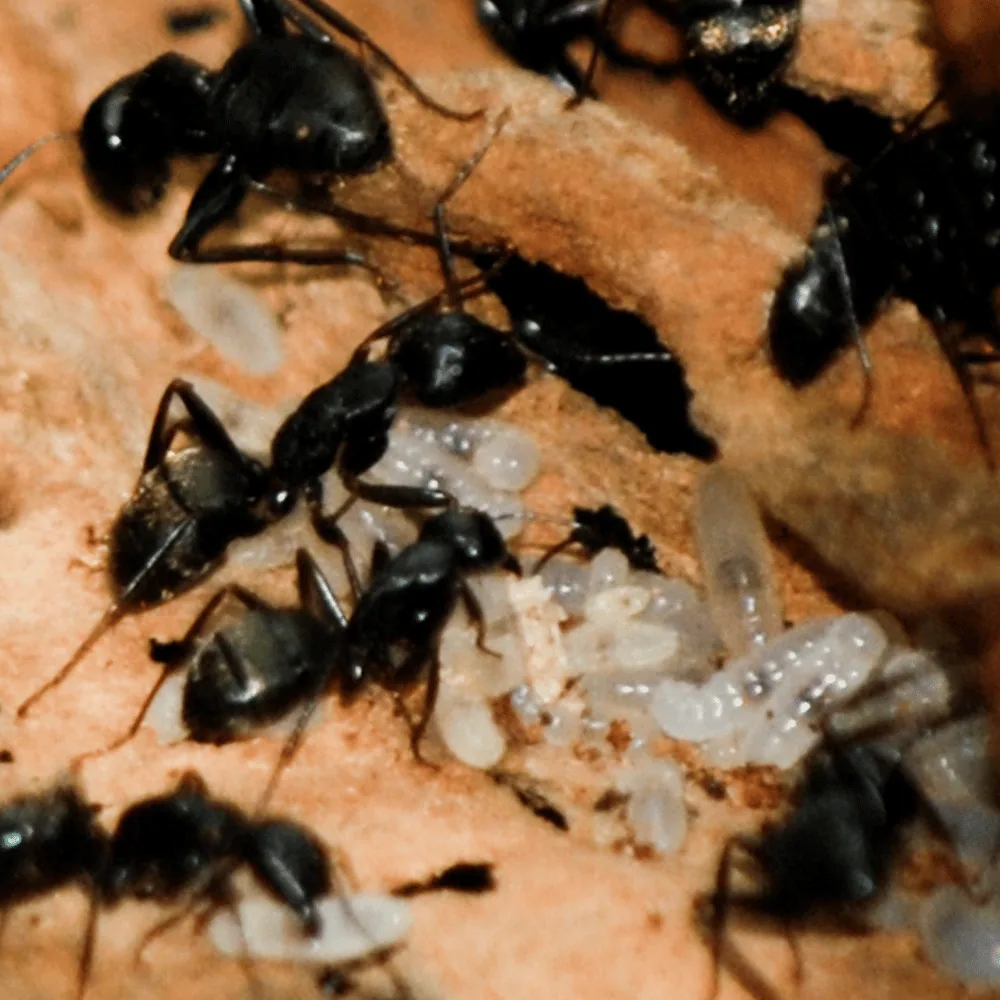
The queen is the largest ant in the colony and its sole reproductive member. Her primary role is to lay eggs to ensure the survival and growth of the colony. A queen can live up to 25 years and lay thousands of eggs throughout her lifetime. She leaves the nest only once — during the spring nuptial flight — before founding a new colony.
The Workers
Workers are all sterile females. They vary in size depending on their role: minor workers care for larvae and maintain the nest, while major workers — larger in size — handle defence and foraging. These are the ants typically seen moving through the home, most often at night.
Parent Colony vs. Satellite Colony
The two-colony structure is one of the most important things to understand when managing an infestation:
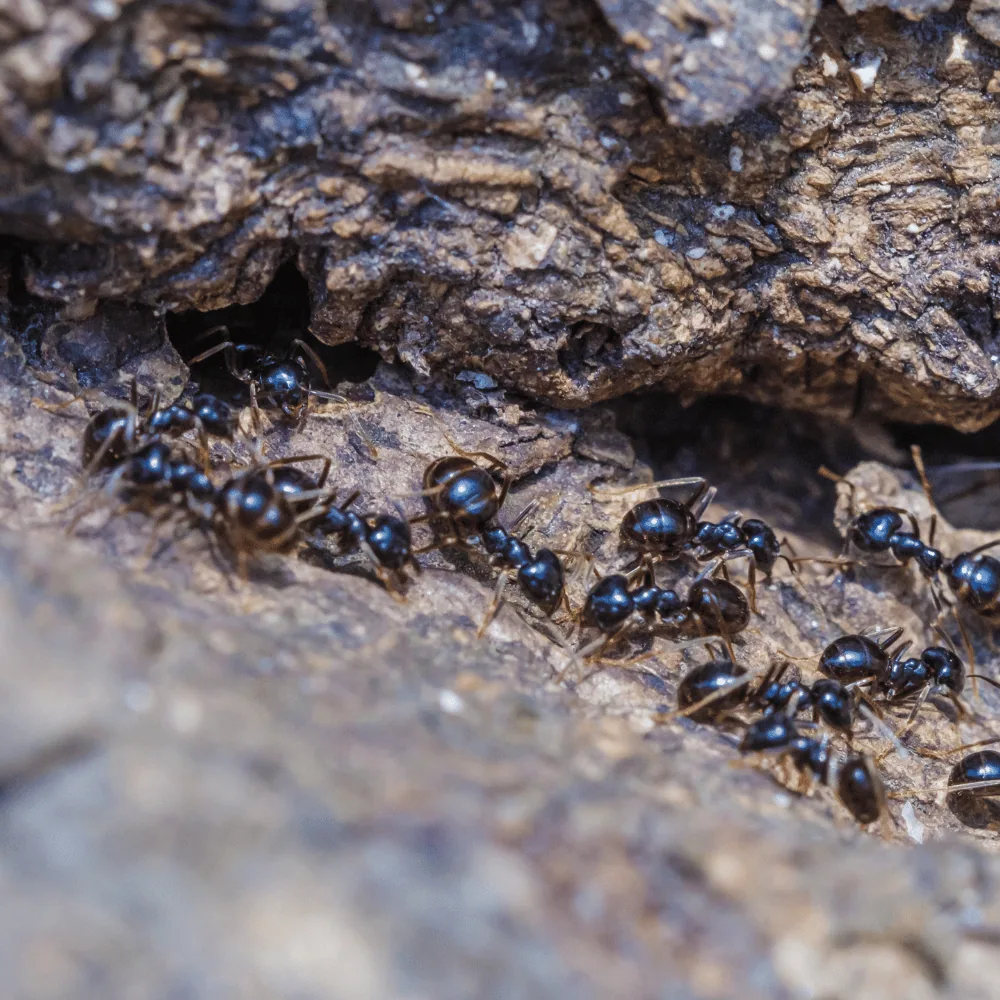
- The parent colony is located outdoors, in a moist or decaying stump or log. It contains the queen, eggs, and larvae, and requires high humidity to survive.
- Satellite colonies are established inside heated structures. They consist mainly of workers and mature larvae, and can be located dozens of metres from the parent colony.
This structure explains why partial treatment so often fails: eliminating the satellite colony without reaching the parent colony leads to rapid re-infestation.
When Are Carpenter Ants Active in Quebec?
The seasonal behaviour of carpenter ants is often misunderstood, leading many homeowners to react too late — or to worry unnecessarily at certain times of year.
The Spring Swarm: When and Why
In Quebec, swarming typically occurs between May and July, as temperatures rise consistently. During this period, the colony produces winged individuals — males and reproductive females — that leave the nest to mate and found new colonies.
If you see winged ants inside your home in spring, this is a serious warning sign: it means a colony is already established within the structure, not outside it. Winged ants coming from outdoors fly away — they do not enter homes.
Winter Activity Inside Heated Structures
Contrary to popular belief, carpenter ants do not disappear entirely in winter. Satellite colonies established inside heated walls or framing remain active year-round. An infestation discovered in January or February typically indicates a colony that has been established for months — or even years — and warrants prompt professional treatment.
Signs of a Carpenter Ant Infestation
Catching the signs early limits structural damage. The main indicators to watch for:
- Sawdust (frass): fine and powdery, often mixed with small debris. It accumulates below nest openings, at the base of walls, or under floors.
- Scratching or rustling sounds inside walls or ceilings, especially at night when workers are active.
- Winged ants indoors in spring — a clear sign of an established colony inside the structure.
- Worker ants seen regularly, especially near moisture sources (basement, kitchen, bathroom).
- Wood that sounds hollow when tapped: excavated galleries create cavities inside structural members.
If several of these signs appear at the same time, an inspection to locate the nest becomes a priority before starting any treatment.
Frequently Asked Questions
How do I identify a carpenter ant from a photo?
The two most reliable features in a photo are size (6 to 13 mm — noticeably larger than other household ants) and the evenly arched thorax with no bumps. Colour varies by species: entirely black for Camponotus pennsylvanicus, reddish thorax with black abdomen for Camponotus chromaiodes. The presence of fine, powdery sawdust nearby confirms their nesting activity.
What is the risk of having carpenter ants in my home?
The main risk is structural. By excavating wood to build their galleries, carpenter ants can weaken beams, joists, and load-bearing walls over several years. An untreated colony can grow to several thousand individuals and cause costly damage.
Why do I see winged carpenter ants in spring?
The appearance of winged ants (called swarmers or reproductives) signals that the colony is mature and looking to reproduce. If these winged ants are seen indoors, it confirms that a colony is already established inside the structure — one of the clearest signs of an active infestation.
What is the difference between a parent colony and a satellite colony?
The parent colony is the main nest, located outdoors in moist or decaying wood. It contains the queen and the eggs. Satellite colonies are extensions established inside heated buildings, made up of workers and mature larvae. They are connected to the parent colony by foraging trails. Treating only the satellite colony without reaching the parent will result in rapid re-infestation.
How can I prevent a carpenter ant infestation?
The most effective preventive measures are: eliminating moisture sources (leaks, poor ventilation, wood in contact with soil), removing stumps and dead wood near the home, sealing cracks in foundations and around pipe penetrations, and trimming tree branches that touch the roof or walls. An annual inspection by a professional can catch early signs before the colony becomes established.