What Do Bed Bugs Look Like? Pictures of Eggs, Nymphs and Signs
A small brown insect in the mattress seam, black spots on the bed frame: is it really a bed bug? Knowing what bed bugs look like at every stage of their life, and recognizing the signs they leave behind, is the best way to confirm an infestation early, before it takes over the whole home. Here is a picture guide based on what our technicians see and on Health Canada’s fact sheets.
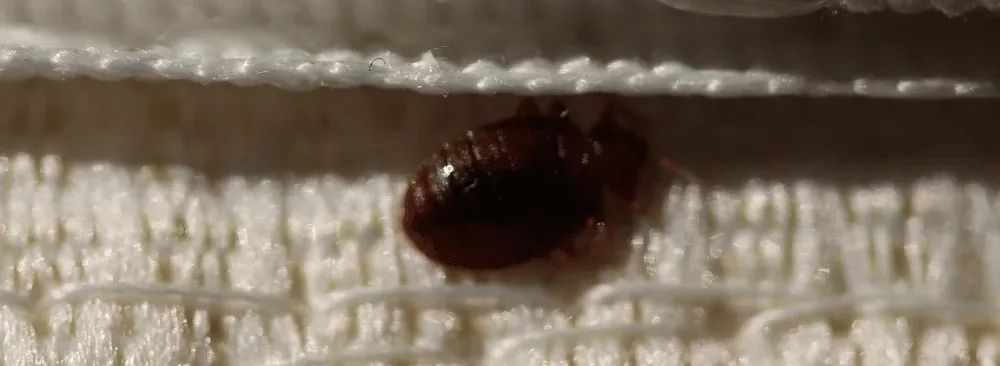
Adult bed bugs: size, colour and shape
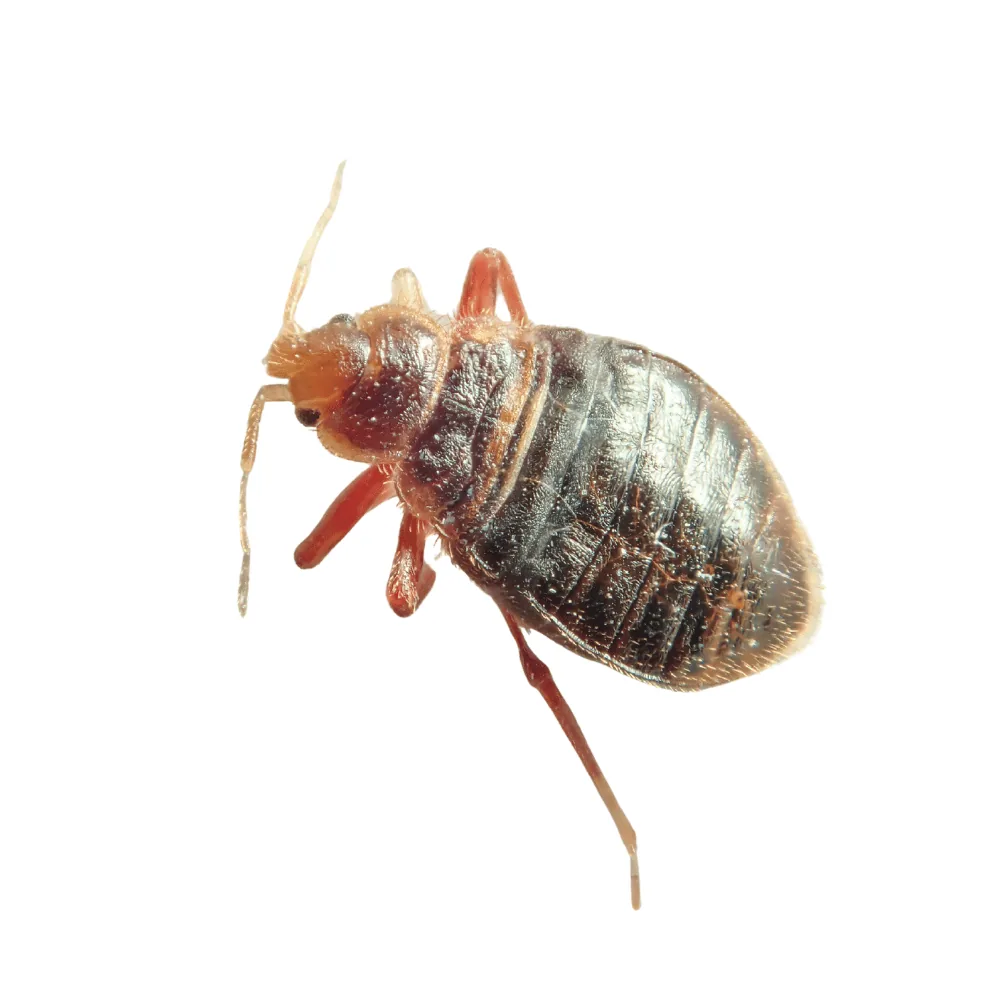
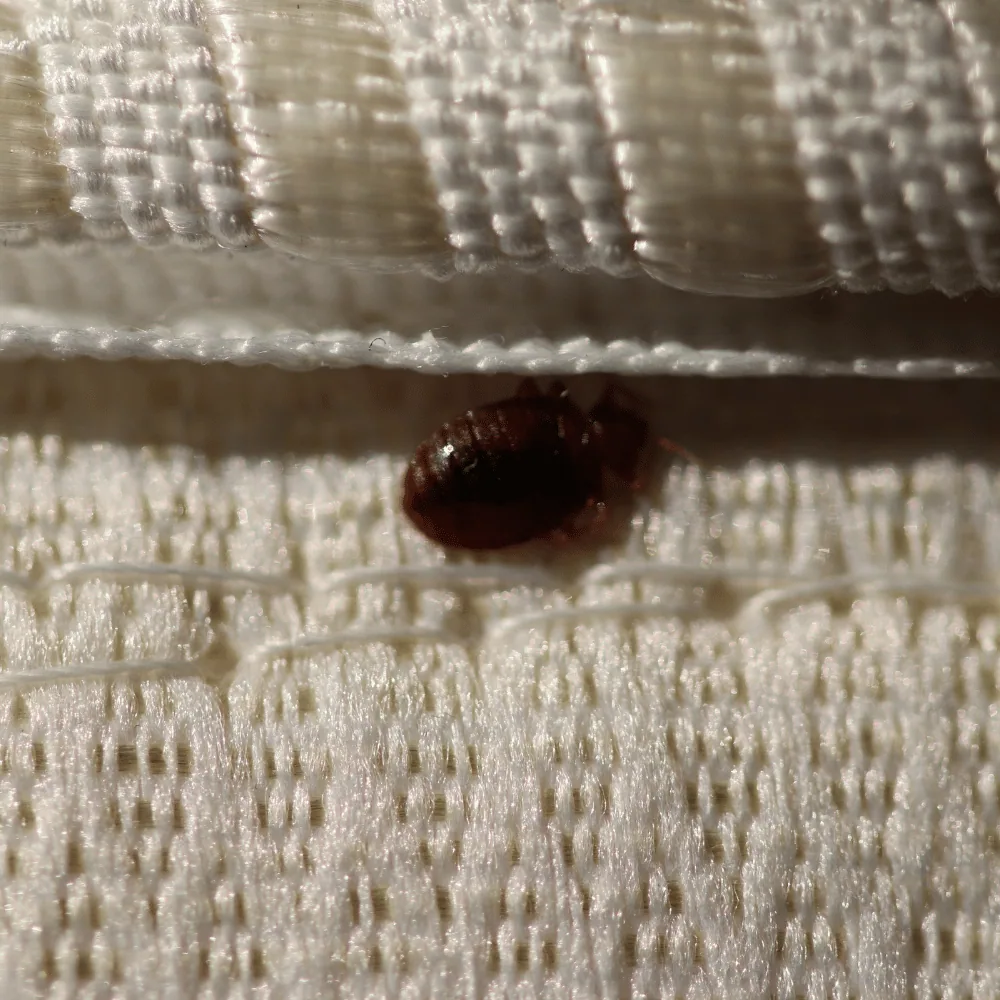
- Size: 5 to 7 mm, like an apple seed. After a blood meal, it can reach 10 mm.
- Shape: oval, wide and very flat when unfed, which lets it slip into a gap as thin as a credit card. After feeding, its body stretches and swells.
- Colour: brown, turning dark red after feeding.
- Other features: six legs, two antennae, no wings. It doesn’t jump or fly.
Nymphs, or bed bug “larvae”
What many people call a bed bug larva is actually a nymph: a young bed bug that already has the adult’s shape, only smaller. When it hatches, it measures about 1.5 mm and is pale, almost translucent, which makes it very hard to see on a white sheet. It turns bright red right after a blood meal. A nymph goes through five stages before becoming an adult, and each moult requires a blood meal.
Bed bug eggs
The eggs are pearly white, shaped like a grain of rice and about 1 mm long. The female glues them in small clusters in cracks, seams and corners near the bed. They hatch in 6 to 17 days. A female lays 1 to 5 eggs at a time and up to 500 eggs in a year, which explains how quickly an infestation takes hold. Nearly invisible on most surfaces, eggs often survive the first treatment, which is why a second visit matters.
The signs bed bugs leave behind
Bed bugs hide during the day, so their traces are often what gives them away first.
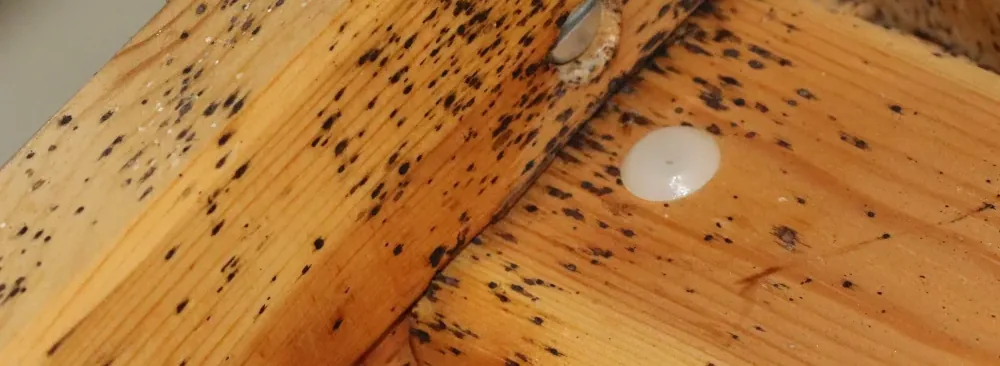
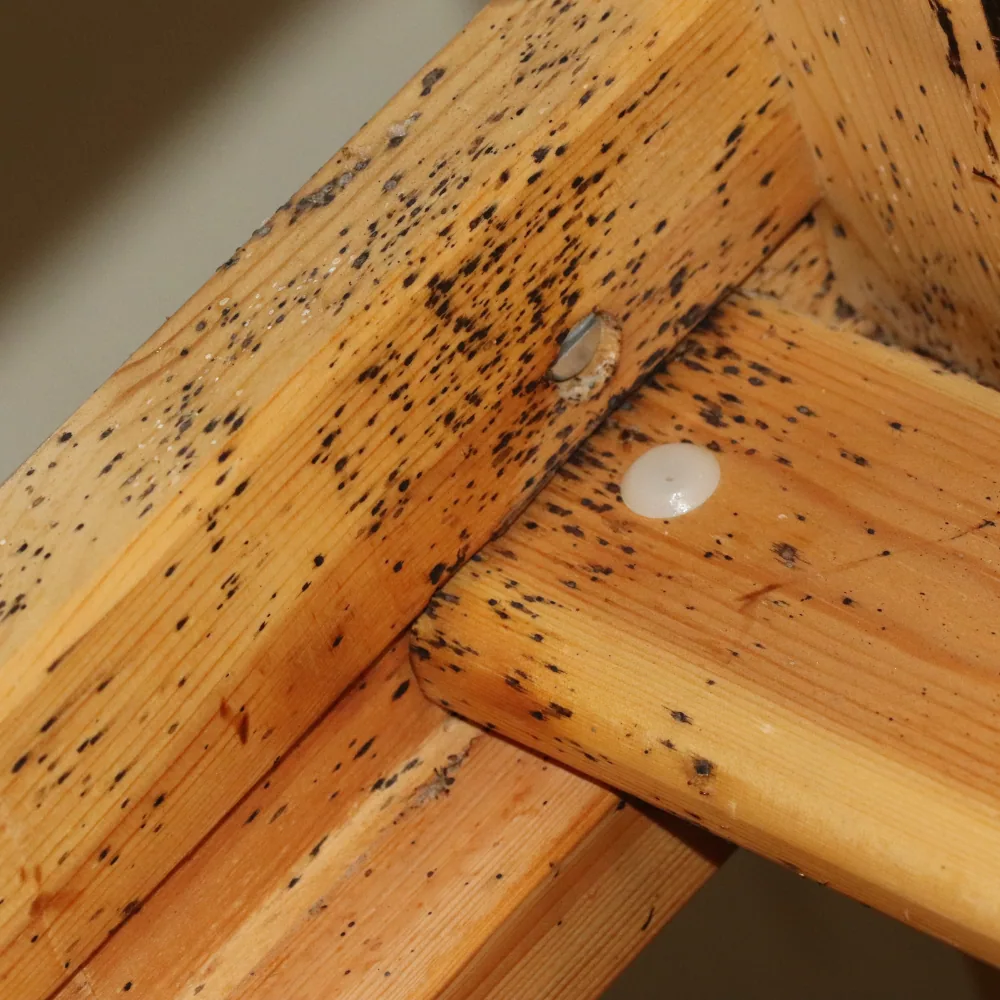
Black spots on the mattress
These are bed bug droppings: digested blood. They form small black or dark brown dots, the size of a pencil tip, that soak into the fabric like ink rather than sitting on the surface. You will find them clustered in mattress seams, on the box spring and on the wood of the bed frame. The more there are, the longer the hiding spot has been occupied.
Small blood stains on the sheets
Tiny red or rust-coloured stains on sheets, pillowcases or pyjamas appear when a bed bug full of blood gets crushed during the night.
Translucent shed skins
As they grow, nymphs leave their old shell behind: an empty, golden, translucent casing with exactly the shape of the insect. Shed skins pile up near hiding spots.
Signs on the walls
In a more advanced infestation, the black spots spread beyond the bed: along baseboards, around electrical outlets, behind picture frames and under peeling wallpaper.
A distinctive odour
A heavy infestation gives off a sweet, musty smell, sometimes compared to overripe raspberries or coriander.
Where to find them in your home
Bed bugs stay within a few metres of where you sleep. Inspect in this order: mattress seams and tags, the underside of the box spring, the bed frame and headboard, nightstands, baseboards around the bed, electrical outlets and, in the living room, the seams of sofas and armchairs. Our complete guide explains how to inspect your bedroom and what to do next.
Insects often mistaken for bed bugs
Several insects common in Québec homes look like a bed bug at first glance:
- The carpet beetle larva: elongated and hairy, it also leaves shed skins, but it doesn’t bite.
- The booklouse: tiny and pale, it lives in damp areas, books and cardboard boxes.
- The flea: smaller, flattened side to side rather than top to bottom, and it jumps.
- The young cockroach: longer, it runs fast and prefers the kitchen to the bed.
- The tick: it has eight legs and stays attached to the skin instead of leaving after feeding.
You found a suspicious insect
- Catch it with clear tape or in a small sealed bag.
- Take a close-up photo next to a coin for scale.
- Note where you found it and how long you have been noticing bites.
- Have it identified by a technician before starting any treatment.
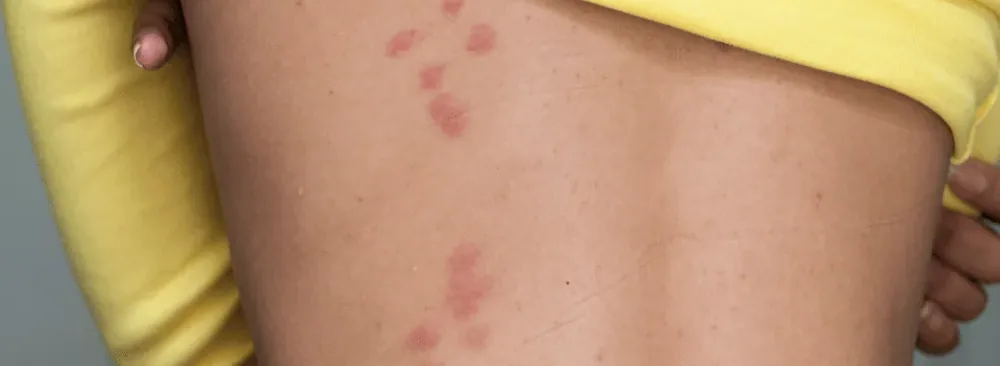
If you also have bites, our article on bed bug bites will help you tell them apart from those of other insects.
Frequently asked questions
Can you see bed bugs with the naked eye?
Yes. Adults are easy to see, about the size of an apple seed. Nymphs and especially eggs, which measure about 1 mm, are much harder to spot without a flashlight.
What colour are bed bugs?
Adults are brown when unfed and turn dark red after a blood meal. Nymphs are pale, almost translucent, and eggs are white.
Do bed bugs fly or jump?
Neither. They have no wings and move only by crawling, or by travelling in luggage, clothing and furniture.
Does one bed bug mean an infestation?
Not necessarily, but it is a warning sign to take seriously. A single fertilized female is enough to start an infestation. Inspect the bed for other signs and have the species confirmed by a professional.
Need a confirmation?
Found signs or a suspicious insect? Our certified technicians identify the species and recommend the right treatment across Greater Montreal. Learn about our bed bug extermination service, call us at 514-677-7526 or request a quote.