GET RID OF ANTS IN YOUR HOME: A COMPLETE GUIDE TO ANT CONTROL IN 2025
Ant infestations are a common nuisance for homeowners, who are often frustrated when they invade kitchens, bathrooms and other rooms in search of food and water. As social insects, ants live in colonies that can number from a few dozen to thousands of individuals, making them difficult to control once they’ve established themselves indoors. Understanding ant behavior is essential to effectively manage and prevent infestations.
By 2025, advances in pest control have led to the introduction of innovative solutions that combine traditional methods with modern technology. Integrated pest management (IPM) strategies are at the forefront of ant control, focusing on prevention, monitoring and targeted treatments to minimize environmental impact while effectively reducing ant populations. These strategies focus on identifying entry points, eliminating food sources and using non-repellent baits and insecticides to target entire colonies.
Ants are attracted to homes primarily by food and moisture. Common entry points include cracks in walls, gaps around windows and doors, and power lines. Once inside, ants can quickly establish trails to food sources, leading to a rapid increase in their numbers. Therefore, maintaining cleanliness, sealing entry points and resolving moisture problems promptly are essential preventive measures.
For homeowners facing persistent ant problems, professional pest control services offer tailor-made solutions that address specific ant species and infestation levels. These services often include in-depth inspections, species identification and the application of environmentally-friendly treatments that ensure long-term control while preserving the environment.
This comprehensive guide explores different methods for preventing and eliminating ant infestations, providing practical advice for homeowners on maintaining a pest-free living space. Whether you’re facing a minor ant problem or a major infestation, understanding the options available and implementing effective strategies will help you free your home from these unwelcome invaders.
Identify ant species and behavior
Recognizing common ant species
Identifying ants can be like distinguishing two identical twins, except that one is a carpenter ant and the other a pharaoh ant. In Quebec, three species of ants are particularly known for invading homes: carpenter ants, pharaoh ants and cobblestone ants. Each has its own distinct characteristics, making them easy to identify if you know where to look.
Carpenter ants are the giants of the ant world, often black or reddish-black, and can measure up to 20 mm in length. They have a penchant for wood, making them the lumberjacks of the ant community. Unlike termites, they don’t eat wood, but rather dig it up to build their nests, leaving behind telltale traces of sawdust-like droppings.
Pharaoh ants, on the other hand, are the Houdinis of the ant kingdom. These tiny yellowish ants are known for their ability to infiltrate homes and spread bacteria. They measure just 2 mm, but don’t let their size fool you: they can form enormous colonies.
Finally, the sidewalk ants are the city ants, often found nesting under sidewalks and driveways. These ants measure around 3 mm in length and are known for their love of sweets, making them frequent visitors to kitchen counters.
Ant behavior and communication
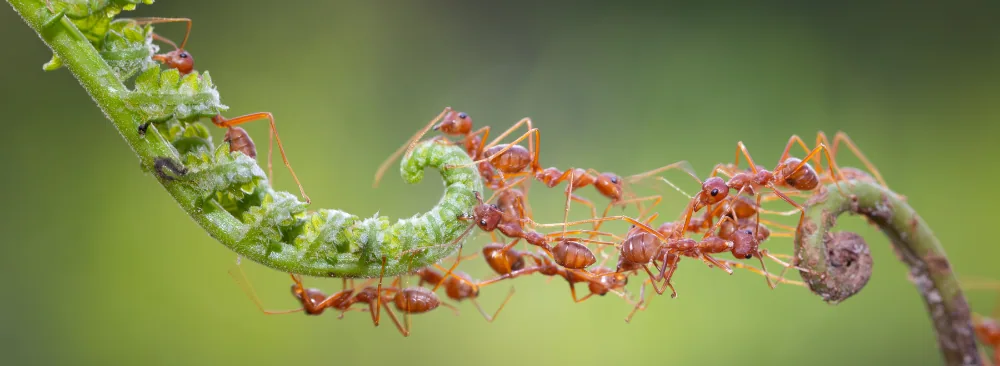
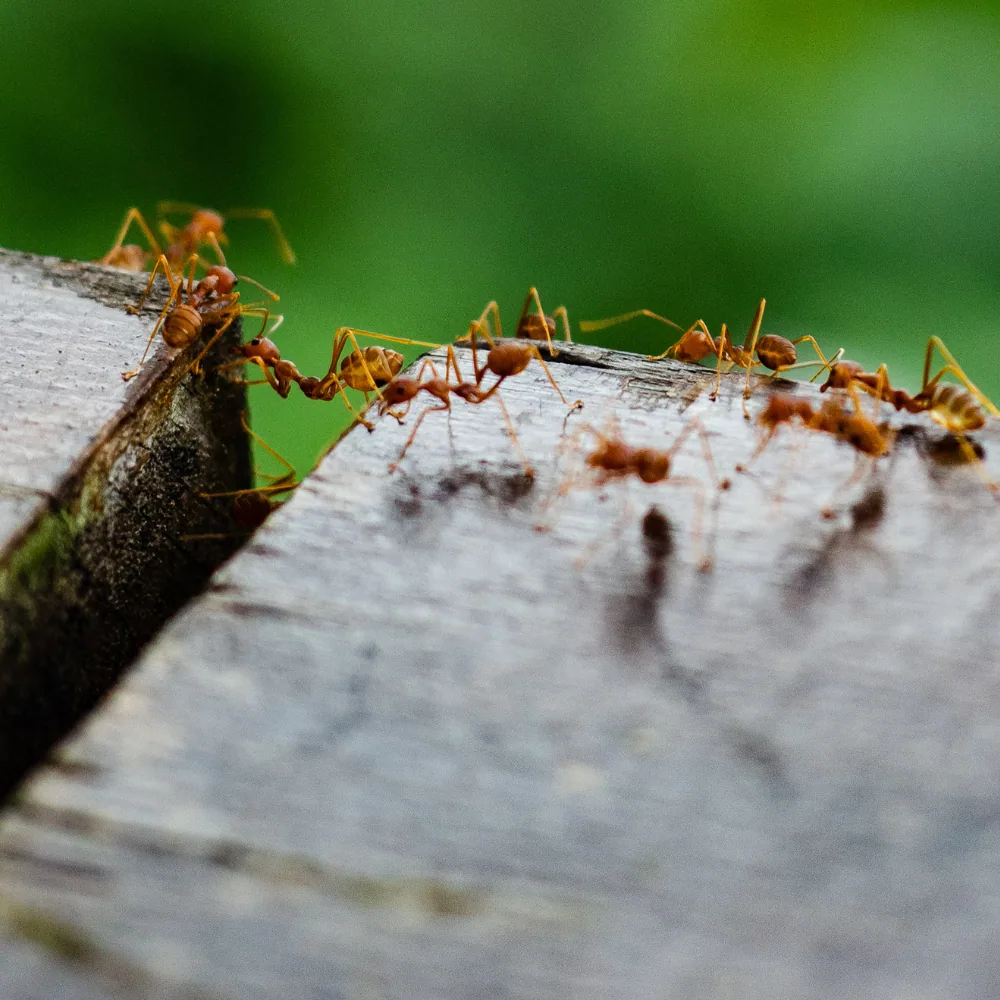
Ants are known for their collaborative behavior and their ability to communicate effectively. They use pheromones, chemical signals, to transmit information within the colony. For example, when a scout ant finds food, it leaves behind a trail of pheromones that allows other ants to follow its path to the food source.
The social structure of an ant colony is similar to that of a well-organized business. The queen is the general manager, responsible for laying eggs and ensuring the colony’s growth. The workers are the hard-working employees, responsible for foraging, caring for the young and maintaining the nest. Then there are the soldier ants, the security team, who protect the colony from intruders. This division of labor is what makes ants such a successful species.
Seasonal variations in behavior
Ants, like humans, have seasonal habits. During the warmer months, ants are more active, taking advantage of the abundance of food and favorable conditions to expand their colonies. That’s when they’re most likely to invade your home, attracted by the presence of sweet food and nesting sites.
During the colder months, ants tend to slow down their activity. Some species, such as carpenter ants, may seek refuge indoors to escape the harsh winter. This can lead to an increase in indoor activity as they seek warmth and food. Understanding these seasonal patterns can help design effective pest control strategies. For example, sealing entry points and eliminating potential food sources can deter ants from making your home their winter haven.
Table: Quick guide to ant identification
| Ant species | Size | Color | Nesting preference | Unique behavior |
| Carpenter ants | 6-20 mm | Black or red | Wood, interior and exterior | Excavate the wood |
| Pharaoh ants | 2 mm | Yellowish | Indoors, hot zones | Rapid infestation |
| Sidewalk ants | 3 mm | From brown to black | Under sidewalks, driveways | Builds mounds of earth |
Foraging habits and food preferences
Ants aren’t picky eaters, but they do have their preferences. Carpenter ants, for example, have a sweet tooth and are often spotted foraging for honeydew, a sweet substance produced by aphids. They are also attracted to protein sources, which explains why they may venture into your pet’s food bowl.
Pharaoh ants are opportunists par excellence. They will eat just about anything, from sweets to fatty foods, and even dead insects. This diverse diet enables them to thrive in a variety of environments, making them particularly difficult to control. Sidewalk ants, true to their name, are often found scavenging food scraps near human dwellings. They have a marked preference for sweet and fatty foods, which is why they are common kitchen invaders.
Understanding these foraging habits can help you develop more effective control strategies. By using baits tailored to the specific food preferences of the ant species you’re dealing with, you can effectively divert them from your larder and guide them towards traps.
Nesting habits and locations
Ants are outstanding architects, capable of building complex nests both indoors and out. Carpenter ants prefer to nest in damp or decaying wood, which is why they are often found in wall cavities, door frames and attics. Their nests can cause significant structural damage if left unchecked.
Pharaoh ants prefer to nest in warm, damp environments. This often leads them to settle in hollow spaces in walls, behind baseboards or even inside electrical outlets. Their nests are small and difficult to locate, making them a persistent problem in homes and buildings.
Sidewalk ants, as their name suggests, like to nest under sidewalks. They often build their nests in cracks in concrete slabs, under stones and along building foundations. These nests can be identified by the small mounds of displaced earth they leave behind.
Ants and their impact on human habitats
While ants play an essential role in the ecosystem, their presence in human habitats can be unwelcome. Carpenter ants, for example, can cause extensive damage to wooden structures, leading to costly repairs. Pharaoh ants, with their ability to spread bacteria, represent a health risk, particularly in hospitals and food preparation areas. Sidewalk ants, although less destructive, can nevertheless be a nuisance, particularly when they invade kitchens in search of food.
Natural methodsant control
Essential oils and their uses
Essential oils are like the Swiss Army knives of natural pest control. Not only do they smell good, they’re also effective at deterring ants. Peppermint essential oil, for example, is the peppermint patty of the ant world: it’s refreshing for us, but a real painkiller for ants. When ants encounter peppermint essential oil, it disrupts their pheromone trails, preventing them from finding their way back to your cookie jar. To use peppermint essential oil, mix a few drops with water in a spray bottle and apply to entry points and ant trails.
Lavender essential oil is another fragrant option that ants find particularly unpleasant. Mixing lavender essential oil with water and spraying it around windowsills and door frames can help keep ants away. What’s more, your home will smell pleasant again, which is a win-win situation.
Diatomaceous earth: an ant’s worst nightmare
Diatomaceous earth (DE) is the granular superhero of natural pest control. Made from fossilized algae, this fine powder is harmless to humans and pets, but a scourge to ants. When ants pass through diatomaceous earth, the sharp edges of the particles cut into their exoskeleton, dehydrating them more quickly. To use diatomaceous earth, sprinkle it around your home, concentrating on entry points such as doors and windows. Remember that diatomaceous earth works best when dry, so avoid using it on rainy days.
For DIY enthusiasts, you can make your own diatomaceous earth shaker by drilling holes in the lid of a jar. This way, you can sprinkle diatomaceous earth with precision. Remember to reapply after rain or heavy watering, as moisture can turn diatomaceous earth into a soggy mess.
Vinegar and citrus: the dynamic duo
Vinegar and citrus form an effective duo in the natural fight against ants. Vinegar, with its strong scent, disrupts ants’ pheromone trails, making them difficult to navigate. To use vinegar, mix equal parts water and white vinegar in a spray bottle and apply to ant trails and entry points.
Citrus peels, on the other hand, contain d-limonene, a compound that is particularly repellent to ants. Simply place citrus peels near entry points, or mix them with water to make a paste and apply to problem areas. Not only will this deter ants, it will also give your home a fresh, pungent aroma. Just be sure to replace the bark regularly, as it can attract fruit flies if left to its own devices.
Coffee grounds: the morning beverage ants fear
Coffee grounds are not only a morning pick-me-up, they’re also a natural ant repellent. Ants find the smell of coffee grounds as appealing as a lukewarm cup of coffee from the night before. To use coffee grounds, sprinkle them around the perimeter of your home or directly on the ant hills. This method is particularly effective for outdoor use, as it not only deters ants, but also enriches the soil.
Cinnamon: a natural aroma to repel ants
Cinnamon is another staple that ants can’t stand. Its strong scent acts as a natural repellent, making communication and navigation difficult for ants. To use cinnamon, sprinkle ground cinnamon around entry points or create a cinnamon-stick barrier. If you’re feeling crafty, you can even make a cinnamon spray by boiling cinnamon sticks in water and using the cooled mixture as a natural ant repellent.
Table: Natural ant repellents
| Repellent | Instructions for use | Additional benefits |
| Peppermint oil | Mix with water and spray on entry points | Refreshing fragrance |
| Lavender oil | Mix with water and spray around windowsills | Relaxing aroma |
| Diatomaceous earth | Sprinkle around perimeter and entry points | Safe for humans and pets |
| Vinegar | Mix with water and spray on ant tracks. | Disrupts pheromone traces |
| Citrus peel | Place near entry points or mix into paste | Fresh, spicy aroma |
| Coffee grounds | Sprinkle around the perimeter or on anthills | Enriches the soil |
| Cinnamon | Sprinkle with ground cinnamon or use as a spray | Vacation fragrance |
Borax: the sweet trap
Borax, when combined with sugar, creates a sweet trap that ants can’t resist. The sugar attracts them, while the borax acts as a slow-acting poison, allowing the ants to take it back to their colony and share it with their friends. To make a borax trap, mix equal parts borax and powdered sugar, and place the mixture in shallow containers near ant trails. Just be sure to keep these traps out of reach of pets and children, as borax is not part of a balanced breakfast.
Neem oil: the bitter pill
Neem oil is a natural insecticide that ants find as appealing as a bitter pill. It disrupts their hormonal balance, making it difficult for them to grow and reproduce. To use neem oil, mix it with water and a few drops of washing-up liquid, then spray it on the ants’ runways and entry points. Although neem oil is generally safe for humans and pets, it’s best to avoid using it near edible plants, as it can alter their taste.
Baking soda: a common solution
Baking soda, when combined with powdered sugar, creates a fizzy solution that ants find irresistible. The sugar attracts them, while the baking soda reacts with their acid stomach, causing them to swell and die. To make a baking soda trap, mix equal parts baking soda and powdered sugar, and place the mixture in shallow containers near ant trails. This method can be used safely around pets and children.
Preventive measures: keeping ants at bay
Natural repellents are certainly effective, but the best strategy is to keep ants out of your home. Start by sealing cracks and crevices around windows, doors and baseboards. Keep your kitchen clean and crumb-free, as ants are always on the lookout for a free meal. Store food in airtight containers and take out the garbage cans regularly to avoid attracting ants with the smell of leftovers.
Inspect your home regularly for signs of ant activity, and resolve any problems quickly to avoid widespread infestation. By combining natural repellents with preventive measures, you can enjoy an ant-free home without resorting to harsh chemicals.
Chemical treatments and professional extermination
When it comes to ant control, natural methods aren’t always enough. When your home becomes a bustling ant metropolis, it’s time to call in the big guns: chemical treatments and professional exterminators. Let’s find out how the professionals can help you reclaim your territory.
Chemical treatments: the arsenal
Chemical treatments are like the superhero capes of the pest control world. They step in to save the day when ants have overstayed their welcome. But not all chemicals are created equal: it’s all about choosing the right product.
Insecticides: the heavyweights
Insecticides are the solution of choice for many exterminators. These chemicals come in a variety of forms, including sprays, powders and baits. Each type has its own superpower, targeting ants in different ways. For example, sprays can provide immediate relief by killing ants on contact, while baits work more like a Trojan horse, luring ants with a tasty treat mixed with poison. Unsuspecting ants take the bait back to their colony, where it spreads like a viral meme, eventually wiping out the entire nest.
Common active ingredients in insecticides include fipronil and hydramethylnone. Fipronil is often used in gel baits and sprays, disrupting the ants’ central nervous system and causing them to disappear. Hydramethylnone, on the other hand, is a popular bait ingredient that targets the queen and nest, ensuring more complete extermination.
Pyrethroids and pyrethrins: natural imitators
Pyrethroids and pyrethrins play an essential role in pest control. Derived from chrysanthemum flowers, pyrethrins are natural insecticides that paralyze ants, while pyrethroids are their synthetic counterparts. These chemicals are widely used because they are relatively safe for humans and pets, making them a popular choice for households.
Boric acid: slow and steady
Boric acid is the turtle in the race against ants. It’s a slow-acting poison that disrupts ants’ digestive systems. Worker ants unknowingly carry it back to their colony, where it eventually puts an end to the whole operation.
Professional extermination: the experts
When DIY methods aren’t enough, it’s time to call in the professionals. Exterminators are like the ghost hunters of the pest world, armed with knowledge, experience and equipment. They know the ins and outs of ant behavior and can tailor their approach to your specific infestation.
Inspection and identification
The first step in any professional extermination process is inspection and identification. Exterminators play detective, looking for clues to identify the type of ant and the extent of the infestation. This is important, because different ant species require different treatment methods, and if you get it wrong, you risk making the situation worse.
Customized treatment plans
Once the culprits have been identified, exterminators develop a customized treatment plan. This plan is like a recipe for success, combining varioustreatments chemical to effectively target the ants. Exterminators may use a combination of baits, sprays and powders, depending on the situation. They also take into account factors such as the size of the infestation, nest location and environmental problems.
Monitoring and control
Professional extermination is not a one-time operation. Rather, it’s a long-term relationship, with follow-up visits and monitoring to ensure the ants don’t return. Exterminators can schedule regular check-ups to assess the situation and make any necessary adjustments to the treatment plan.
Safety considerations: protecting your home
Although chemical treatments are effective, they come with their own safety precautions. It’s important to follow label instructions and take precautions to minimize exposure to humans and pets. This may mean keeping children and pets out of treated areas until the chemicals have dried, or using protective equipment when applying treatments.
Exterminators are trained to handle these chemicals safely, ensuring your home is protected without putting your family at risk. They can also advise you on how to prepare your home for treatment and what to expect during the process.
Table: Common chemical treatments for ant control
| Chemical treatment | Form | Mode of action | Safety considerations |
| Fipronil | Gel, Spray | Disrupts the central nervous system | Safe when used as directed, keep out of reach of children and pets. |
| Hydramethylnone | Bait | Target the queen and the nest | Effective for large infestations, follow label instructions |
| Pyrethroids | Spray, dust | Paralyzes ants | Low toxicity for humans and pets, avoid inhalation. |
| Boric acid | Powder, bait | Interferes with digestion | Slow-acting, keep away from food and water sources |
The role of Integrated Pest Management (IPM)
Integrated pest management (IPM) is like the Swiss Army knife of pest control strategies. It combines chemical treatments with non-chemical methods to create a holistic approach to ant control. IPM focuses on prevention and long-term management, rather than just a quick fix.
Habitat modification
One of the key elements of integrated ant management is habitat modification. This involves making changes to your home and garden to make them less attractive to ants. It’s like redecorating your space to keep unwanted guests away. Simple changes like sealing cracks, repairing leaks and maintaining a clean environment can go a long way to preventing infestations.
Biological controls
IPM also incorporates biological control measures, using natural predators to control ant populations. It’s like enlisting the help of the natural pest control team. Although this method is not as common for ants as for other pests, it is the subject of ongoing research and development.
Monitoring and assessment
Finally, IPM puts the emphasis on monitoring and evaluation. This means monitoring ant activity and adjusting your control methods as needed. It’s like having a feedback loop, ensuring that your efforts are effective and sustainable.
Preventive measures to avoid ant infestations
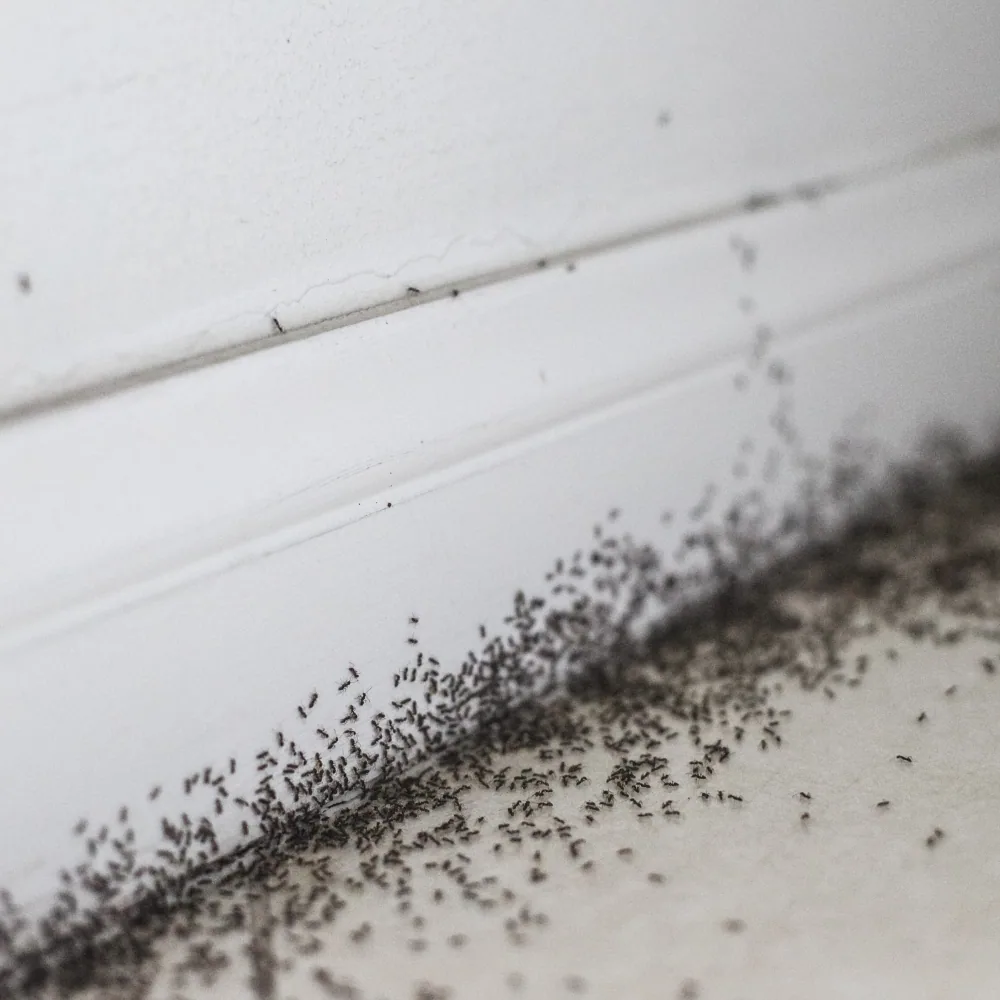
Ants are like those unwelcome guests who turn up at your party, eat all the snacks and then bring their whole family with them. To prevent these little intruders from taking over your home, it’s important to adopt preventive measures. Let’s explore some effective strategies for keeping ants at bay.
Home maintenance and structural barriers
Previous sections have dealt with sealing cracks and crevices, but this section will look at the broader concept of home maintenance as a preventative measure. Think of your home as a fortress, and ants as medieval invaders trying to break through your walls. The first step is to fortify your defenses.
Inspect your home regularly for possible entry points. Ants can squeeze through the smallest gaps, so concentrate on sealing cracks in walls, around windows and door frames with silicone sealant or weather stripping. Don’t forget the sneaky utility entry points through which pipes and wires enter your home. A little steel wool can go a long way to keeping ants at bay.
It’s also essential to maintain the exterior of your home. Prune trees and shrubs that touch your home, as they can act as bridges for ants. Make sure gutters are clean and free of debris, as clogged gutters can lead to a build-up of moisture, attracting ants like a free buffet.
Food hygiene and storage
Although the previous content mentioned the need to keep kitchens clean, this section will develop the broader concept of hygiene throughout the home. To prevent them from taking hold in your home, it’s important to adopt good hygiene habits.
Start by keeping your kitchen spotless. Wipe down countertops, sweep floors and clean up spills immediately. Ants have a knack for sniffing out even the smallest crumbs, so don’t give them the satisfaction. Store food in airtight containers, and make sure pet food is also sealed and stored properly.
Don’t forget to dispose of your garbage. Take out the garbage cans regularly and use garbage cans with tight-fitting lids. Ants have a highly developed sense of smell, and the smell of leftovers can be irresistible to them. By eliminating food sources, you can make your home less attractive to them.
Landscaping and outdoor fences
While previous sections focused on indoor prevention, this section will explore outdoor strategies. Your garden is the first line of defense against ant invasions, so it’s important to create an inhospitable environment for them.
Consider planting natural repellents around your home. Herbs such as mint, lavender and lemongrass not only add a pleasant aroma to your garden, but also act as natural ant repellents. Place them near entry points to create a fragrant barrier that ants will be reluctant to cross.
Mulch and gravel can also be effective in deterring ants. Use these materials to create a barrier around your home’s foundations, as ants are less likely to cross these surfaces. Also, make sure your garden is well drained, as stagnant water can attract ants looking for a drink.
Climate control and humidity management
Previous sections have discussed leak repair, but this section will focus on the broader concept of climate control. Ants like damp environments, so it’s essential to keep your home dry and well ventilated to prevent infestations.
Use dehumidifiers in damp areas such as basements and bathrooms to reduce humidity levels. Make sure your home is well ventilated by using exhaust fans in kitchens and bathrooms. This not only controls humidity, but also improves indoor air quality.
Quickly fix any leak, whether it’s from a dripping faucet or a leaky roof. Ants are attracted to moisture, and a small leak can quickly become a major attraction for them. By keeping your home dry, you can make it less attractive to these thirsty invaders.
Monitoring and early detection
Inspect your home regularly for signs of ant activity. Look for tracks, nests or even a single scout ant. Early detection is essential to avoid widespread infestation. If you spot ants, act quickly to identify their point of entry and eliminate the source.
Consider using ant baits and traps as a monitoring tool. Place them in strategic locations around your home to catch stray ants. This can help you identify problem areas and take action before the situation gets out of hand.
Table: Ant prevention strategies
| Strategy | Description | Benefits |
| Structural barriers | Sealing cracks and gaps, maintaining the exterior of the house | Prevents entry and reduces potential nesting sites |
| Sanitary | Keep the kitchen clean, store food properly, manage waste | Eliminates food sources and reduces attractiveness |
| Landscaping | Plant natural repellents, use mulch/gravel, ensure good drainage | Creates external barriers and reduces humidity |
| Climate control | Use dehumidifiers, repair leaks, ensure ventilation | Reduces humidity and creates an inhospitable environment |
| Monitoring and early detection | Inspect for signs of activity, use baits and traps | Enables early intervention and prevents infestations |
Conclusion
Research into how to get rid of ants in the home highlights the importance of understanding ant species and behaviors, employing natural and chemical control methods, and implementing preventative measures. Key findings include the identification of common ant species such as carpenter ants, pharaoh ants and sidewalk ants, each with distinct characteristics and nesting habits. Recognition of these characteristics enables the development of targeted control strategies. Natural methods such as essential oils, diatomaceous earth and vinegar offer environmentally-friendly solutions, while chemical treatments and professional extermination offer more robust options for severe infestations. Preventive measures, including home maintenance, sanitation and air conditioning, are essential to keep ants at bay.
The implications of these results suggest that a comprehensive approach combining identification, natural and chemical treatments and preventive strategies is the most effective way to manage ant infestations. Owners need to focus on early detection and regular monitoring to prevent minor problems from escalating. By understanding the specific needs and behaviors of different ant species, individuals can tailor their pest control efforts for maximum effectiveness. In the next step, integrating these strategies into a broader pest management plan can ensure long-term success in maintaining an ant-free home. For more detailed pest control advice, visit Exterminatek .
FAQ
What are the most common types of ants in the home? The most common ant species in homes are carpenter ants, pharaoh ants and sidewalk ants. Carpenter ants are large and often nest in wood, causing structural damage. Pharaoh ants are small and can spread bacteria, while sidewalk ants are generally found near concrete surfaces and are attracted by sweets.
How can I keep ants out of my home naturally? Natural repellents include essential oils such as peppermint and lavender, diatomaceous earth, vinegar, citrus peel, coffee grounds and cinnamon. These substances disrupt ants’ pheromone trails or create inhospitable environments, effectively deterring ants without the use of harsh chemicals.
When should chemical treatments be considered? Chemical treatments should be considered when natural methods are not sufficient, particularly in the case of heavy infestations. Insecticides such as fipronil and hydramethylnone, as well as boric acid, are effective in targeting ant colonies. Professional exterminators can offer tailor-made solutions for serious cases.
What preventive measures can I take to avoid ant infestations? Preventive measures include sealing entry points, keeping a clean home, storing food in airtight containers and managing humidity levels. Regular inspections and the use of baits and traps can help with early detection and prevention of infestations.
How do ants communicate and why is this important for control strategies? Ants communicate using pheromones, chemical signals that guide other ants to food sources and nesting sites. Understanding this method of communication is essential for disrupting their tracks and effectively using baits and repellents to control infestations.
What role do professional exterminators play in ant control? Professional exterminators have expertise in identifying ant species and the extent of infestations. They develop customized treatment plans using a combination of chemical and non-chemical methods, and offer follow-up services to ensure long-term control and prevention of ant reinfestations.