Bed Bugs: How to Identify Them and Get Rid of Them
You wake up with itchy bumps lined up on your arm, or you spot a small brown insect in the seam of your mattress. You may be dealing with bed bugs. Don’t panic: an infestation can be solved, as long as it is confirmed quickly and treated properly. This guide sums up what our technicians see every week in homes across Greater Montreal: how to identify bed bugs, what to do at the first signs, which mistakes to avoid and how professional treatment works.
What is a bed bug?
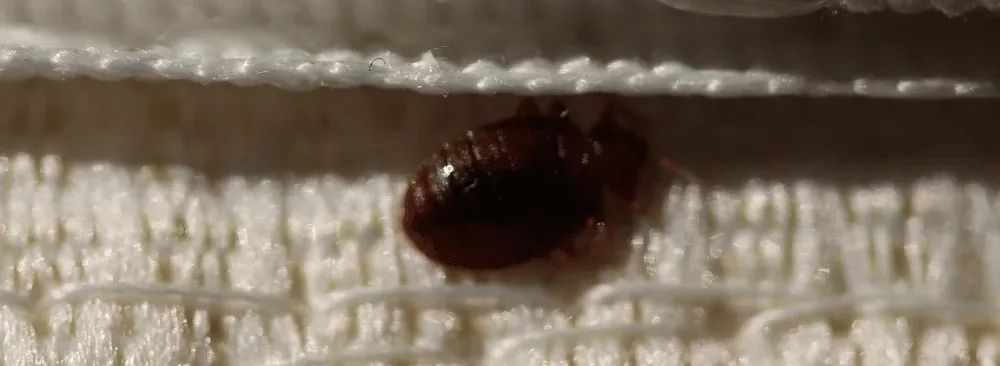
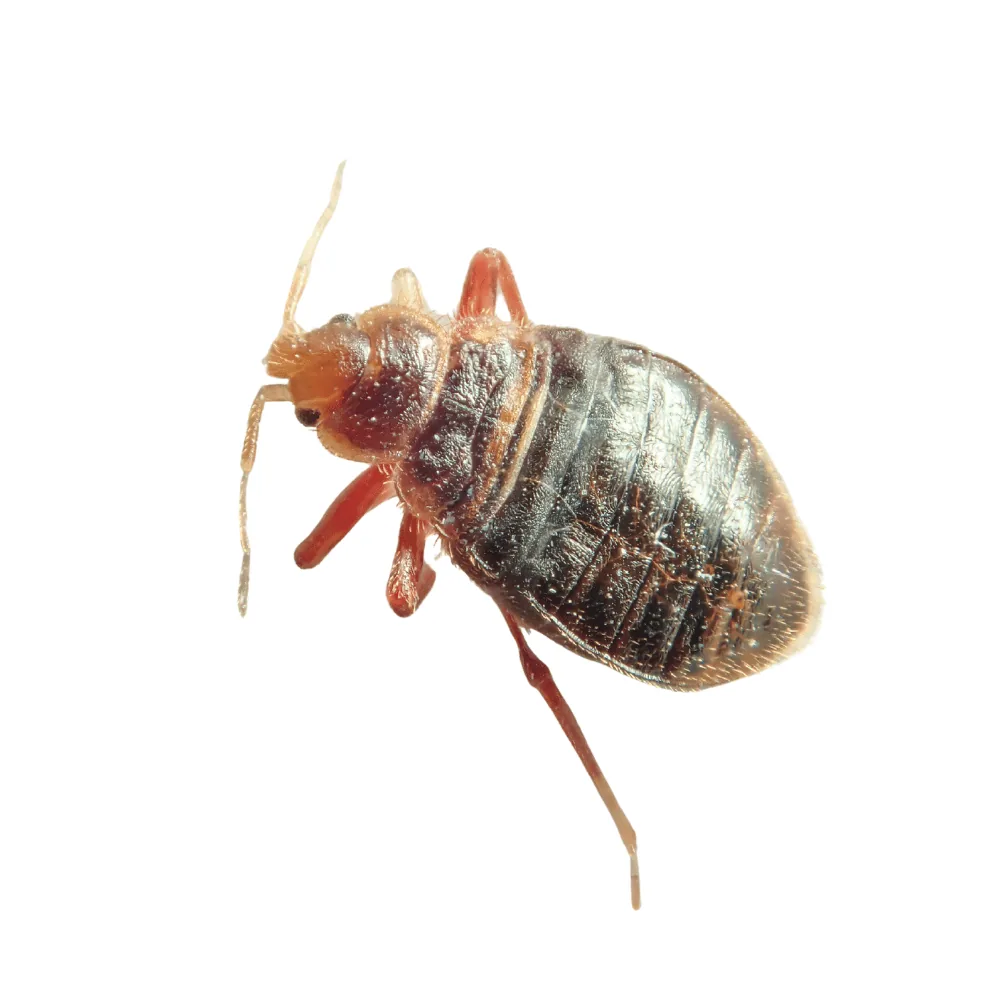
The bed bug (Cimex lectularius) is a small wingless insect that feeds only on blood, usually at night while you sleep. An adult measures 5 to 7 mm, about the size of an apple seed, and can reach 10 mm after feeding. Its body is oval, flat and brown, turning reddish and swollen after a blood meal. It cannot fly or jump: it moves by crawling and, above all, by travelling in our luggage, clothing and furniture.
According to Health Canada, bed bugs are not known to spread disease. Their bites do cause itching, though, and an infestation takes a real toll on sleep and peace of mind. One important point: bed bugs have nothing to do with cleanliness. A spotless home can be infested as easily as any other. For a full description of the insect, see our bed bug identification sheet.
Why is Greater Montreal so affected?
Population density works against us. Bed bugs move from one unit to the next through shared walls, ducts and hallways in apartment buildings. The wave of moves around July 1, used furniture and mattresses left on the curb, and frequent travel (hotels, public transit, student residences) give them plenty of chances to spread.
How do you know if you have bed bugs?
An early infestation is easy to miss. Three kinds of clues should raise a red flag, and it is the combination of them that lets you draw a conclusion.
Bites: a clue, not proof
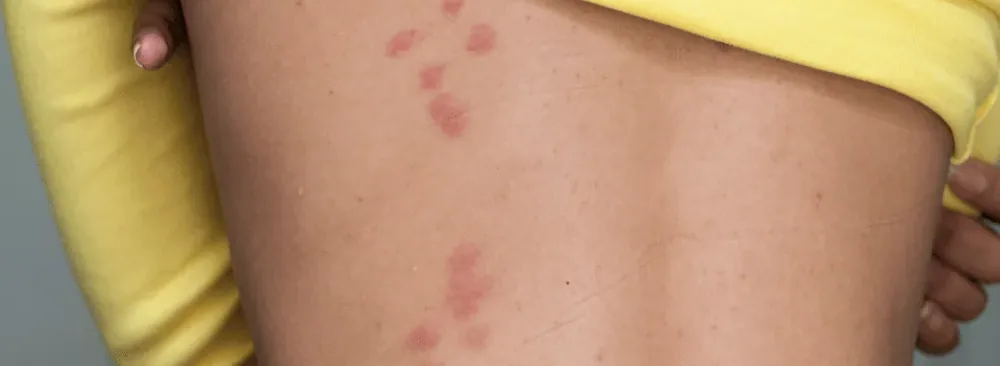
Bed bug bites often appear as small, itchy red welts, lined up in threes or fours or grouped together, on skin left uncovered during sleep. They look a lot like mosquito bites and can take up to 14 days to appear. Some people don’t react at all. Bites alone are therefore never enough to confirm an infestation. We explain how to tell them apart in our article on bed bug bites.
Signs on the mattress and sheets
These are the most reliable clues:
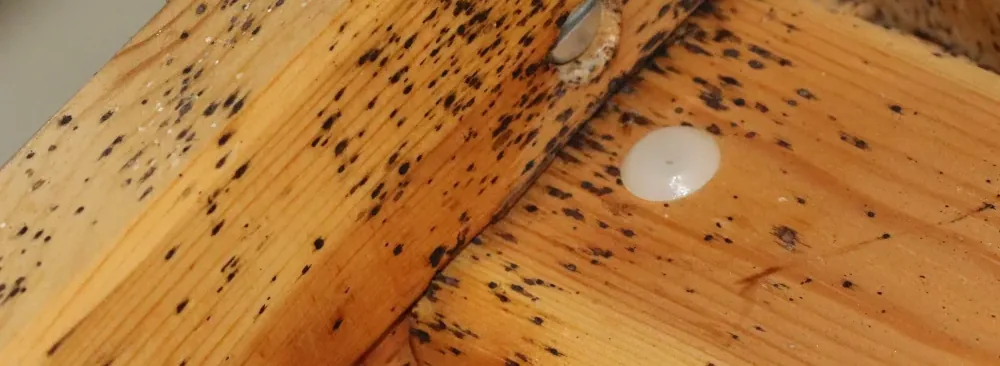
- black spots the size of a pencil tip, often clustered, in mattress seams or on the bed frame: these are droppings;
- small rust-coloured blood stains on sheets or pillowcases;
- shed skins, the empty, translucent shells bed bugs leave behind as they grow;
- white eggs about 1 mm long, glued into cracks;
- in advanced infestations, a sweet, musty odour in the bedroom.
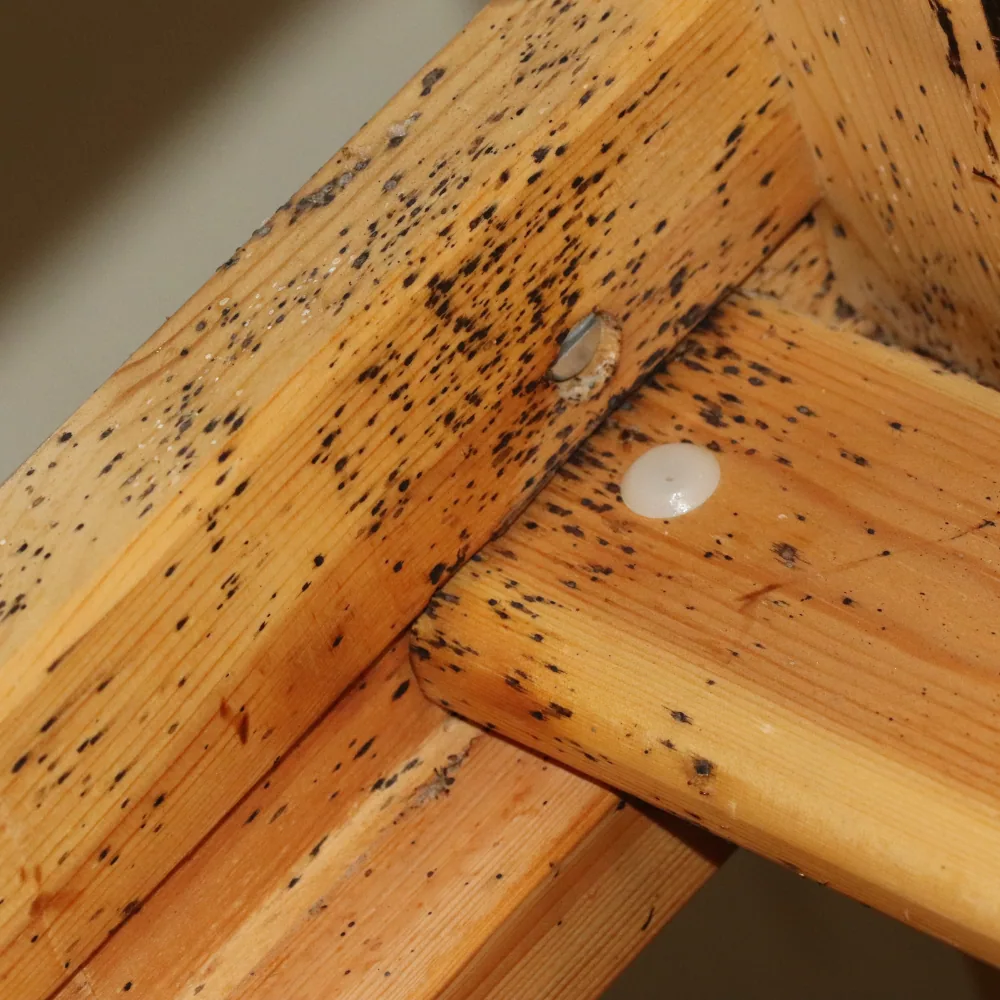
For detailed pictures of each life stage and each sign, see our guide What do bed bugs look like?
Where to look
Bed bugs stay close to where you sleep. Check these spots first:
- mattress seams, tags and piping;
- the box spring, especially under the bottom fabric;
- the headboard, the bed frame and its screws;
- nightstands and their drawers;
- baseboards and the carpet around the bed;
- electrical outlets, the back of picture frames and under peeling wallpaper;
- the seams and underside of sofas and armchairs.
A five-minute inspection
- Strip the sheets and the mattress cover.
- Using a flashlight, follow every seam of the mattress and box spring.
- Slide a stiff card into the folds and cracks of the bed frame to dislodge anything hiding there.
- Check the headboard and nightstands, then the nearest baseboards.
- If you find an insect, catch it with clear tape or in a sealed bag and take a close-up photo. That sample will let a technician confirm the species.
What to do as soon as you find a bed bug
The first hours matter, because the wrong reflexes spread the infestation throughout the home.
- Keep sleeping in your bedroom. Moving to another room or to the couch encourages bed bugs to follow you and spreads the problem.
- Don’t throw your mattress or furniture out on the curb. It is the best way to infest your neighbours, and it is rarely necessary.
- Don’t use over-the-counter insecticides. Aerosol bombs drive bed bugs into neighbouring rooms. The Government of Québec also advises against applying them yourself, since misuse can be dangerous and make bed bugs more resistant.
- Treat your fabrics. Wash bedding and clothing in water at 60 °C, then run them in the dryer on very high heat for at least 30 minutes. Store them in sealed bags afterwards.
- Vacuum around the bed and baseboards, then put the vacuum bag in a sealed plastic bag and take it straight to the outdoor garbage.
- If you rent, notify your landlord right away (see below).
- Have the infestation confirmed by a professional and plan the treatment.
Why home remedies aren’t enough
Bed bugs lay their eggs in cracks you cannot reach, resist several consumer insecticides and can survive up to a year without feeding. Home methods can help alongside a treatment, but they almost never eliminate an infestation on their own.
| Method | What it does well | Its limit |
|---|---|---|
| High-heat dryer | Kills bed bugs and eggs in fabrics | Doesn’t treat the bed or the room |
| Steam | Effective on contact, on surfaces | Doesn’t reach deep cracks |
| Freezing (−18 °C, at least 3.5 days) | Useful for small items | Impossible for furniture |
| Diatomaceous earth | Works slowly along travel paths | Too slow to stop an infestation |
| Over-the-counter insecticides | Kill the bed bugs they hit directly | Scatter the rest and build resistance |
How professional treatment works
1. Inspection and confirmation
The technician confirms the species, assesses how far the infestation has spread and checks nearby rooms. In an apartment building, adjacent units often need to be inspected as well.
2. Preparing the home
This is the step that makes a treatment succeed or fail: furniture pulled away from walls, fabrics bagged, closets emptied. We walk through it step by step in our guide on how to prepare your home for bed bug treatment.
3. The treatment
Depending on the situation, the technician combines several methods: insecticides applied precisely in hiding spots, heat treatment that raises room temperature to a level lethal to every life stage, or a fungal spore biopesticide that keeps working after the technician leaves. During an insecticide treatment, occupants and pets must leave the premises for a few hours.
4. Follow-up
Since eggs often survive the first treatment, a second visit is usually scheduled about three weeks later, once the eggs have hatched. The technician then confirms that the infestation has been eliminated.
How much does bed bug extermination cost?
In Montreal, a standard treatment generally costs between $250 and $700. The price depends on the size of the infestation, the area to treat, the method chosen and the number of visits. We break down each factor in our article on the cost of bed bug extermination in Montreal.
Landlord or tenant: who has to act?
In Montreal, the rules are clear. According to the City of Montreal, tenants must notify their landlord as soon as they discover bed bugs and must not try to treat them on their own. Once notified, the landlord must hire a qualified exterminator right away and give them access to the building to assess the extent of the infestation. Exterminators, for their part, file a declaration for every bed bug intervention on Montreal’s territory. If the landlord doesn’t act, the tenant can contact 311.
Elsewhere in Greater Montreal, in Laval, Longueuil or on the North Shore, bylaws vary from one municipality to the next: check with your city. In every case, acting quickly costs everyone less, because an infestation that reaches neighbouring units takes much longer to eliminate.
Preventing another infestation
- When you get back from a trip, unpack away from the bed and run your clothes through a hot dryer.
- Carefully inspect any used furniture, mattress or clothing before bringing it home.
- Put bed bug-proof encasements on the mattress and box spring: they trap any insects already inside and make a new infestation easier to spot.
- Reduce clutter around the bed, which multiplies hiding places.
- In an apartment building, seal cracks around baseboards and pipe openings.
Frequently asked questions
Can bed bugs go away on their own?
No. A bed bug can live up to a year without feeding, and a female can lay up to 500 eggs in a single year. Without treatment, an infestation only grows.
Do bed bugs spread disease?
According to Health Canada, bed bugs are not known to spread disease. Scratching the bites can cause a skin infection, however, and the infestation itself often leads to insomnia and anxiety.
Do I have to throw out my mattress if I have bed bugs?
Rarely. A mattress in good condition can be treated and then protected with a bed bug-proof encasement. If you really must get rid of it, slash it and wrap it in thick plastic before putting it out on collection day, so no one takes it home.
How many treatments does it take to get rid of bed bugs?
Most infestations require two visits about three weeks apart. A large infestation, or one that has spread to several units, may need more.
How can I tell a flea from a bed bug?
Fleas jump and mostly bite ankles, often in homes with a pet. Bed bugs crawl and bite skin left uncovered during sleep. See our article on how to tell fleas and bed bugs apart.
Need a bed bug exterminator?
Think you have bed bugs? The sooner we step in, the simpler the treatment. Our certified technicians work discreetly across Greater Montreal, from Laval to Longueuil. Learn about our bed bug extermination service, call us at 514-677-7526 or request a quote.